Skip to content
  • Biodiversity
    • Why is Biodiversity Important?
    • Threats to Biodiversity
    • What are Species at Risk?
    • Recovery Planning
    • Environmental Monitoring
  • Species at Risk
    • Species at Risk
      • SAR in the Sydenham
      • Mussels
      • Fishes
      • Snakes
      • Turtles
    • Mussels
      • Eastern Pondmussel
      • Fawnsfoot
      • Kidneyshell
      • Lilliput
      • Mapleleaf
      • Northern Riffleshell
      • Purple Wartyback
      • Rainbow
      • Rayed Bean
      • Round Hickorynut
      • Round Pigtoe
      • Salamander Mussel
      • Snuffbox
      • Threehorn Wartyback
      • Wavy-rayed Lampmussel
    • Fishes
      • Blackstripe Topminnow
      • Eastern Sand Darter
      • Grass Pickerel
      • Northern Madtom
      • Northern Sunfish
      • Pugnose Minnow
      • Pugnose Shiner
      • River Darter
      • Silver Lamprey
      • Spotted Sucker
    • Snakes
      • Eastern Foxsnake
      • Eastern Hog-nosed Snake
      • Eastern Milksnake
    • Turtles
      • Blanding’s Turtle
      • Midland Painted Turtle
      • Northern Map Turtle
      • Snapping Turtle
      • Spiny Softshell
  • Stewardship
    • Healthy Watersheds Program
      • Sydenham Phosphorus Reduction Initiative
    • Managing Phosphorus
    • Phosphorus StoryMap
    • Reducing Pollution in Runoff
    • Best Management Practices Resources
  • Stories
  • Get Involved
    • What Can I Do?
    • Take the Stewardship Survey
    • Test Your ID Skills!
    • Report a Turtle Sighting
  • Resources
  • Contact Us
Sydenham River WatershedSydenham River Watershed
  • Biodiversity
    • Why is Biodiversity Important?
    • Threats to Biodiversity
    • What are Species at Risk?
    • Recovery Planning
    • Environmental Monitoring
  • Species at Risk
    • Species at Risk
      • SAR in the Sydenham
      • Mussels
      • Fishes
      • Snakes
      • Turtles
    • Mussels
      • Eastern Pondmussel
      • Fawnsfoot
      • Kidneyshell
      • Lilliput
      • Mapleleaf
      • Northern Riffleshell
      • Purple Wartyback
      • Rainbow
      • Rayed Bean
      • Round Hickorynut
      • Round Pigtoe
      • Salamander Mussel
      • Snuffbox
      • Threehorn Wartyback
      • Wavy-rayed Lampmussel
    • Fishes
      • Blackstripe Topminnow
      • Eastern Sand Darter
      • Grass Pickerel
      • Northern Madtom
      • Northern Sunfish
      • Pugnose Minnow
      • Pugnose Shiner
      • River Darter
      • Silver Lamprey
      • Spotted Sucker
    • Snakes
      • Eastern Foxsnake
      • Eastern Hog-nosed Snake
      • Eastern Milksnake
    • Turtles
      • Blanding’s Turtle
      • Midland Painted Turtle
      • Northern Map Turtle
      • Snapping Turtle
      • Spiny Softshell
  • Stewardship
    • Healthy Watersheds Program
      • Sydenham Phosphorus Reduction Initiative
    • Managing Phosphorus
    • Phosphorus StoryMap
    • Reducing Pollution in Runoff
    • Best Management Practices Resources
  • Stories
  • Get Involved
    • What Can I Do?
    • Take the Stewardship Survey
    • Test Your ID Skills!
    • Report a Turtle Sighting
  • Resources
  • Contact Us

Recovery Planning

Home BiodiversityWhat are Species at Risk?Recovery Planning

Species at Risk Recovery Planning

Recovery planning is a federally-led process under the Species at Risk Act (SARA) that is required to help rehabilitate and protect populations of Species at Risk (SAR). There are two-phases to the process:


1

Recovery Strategy

A Recovery Strategy is prepared that describes the species and their needs, identifies threats to their survival, and sets population and distribution objectives

2

Action Plans

Action Plans are created to outline the projects or activities needed to achieve the population and distribution objectives identified in the Recovery Strategy

Recovery Strategies and Action Plans must be created for wildlife species listed under the Species at Risk Act as extirpated, endangered, or threatened that have been deemed feasible of recovery. The conservation of species of special concern under SARA are normally addressed through Management Plans.

Recovery Strategies and Action Plans are dynamic documents that can be modified over time. They can also be developed for individual species or using a wider multi-species approach.

Status Reports for Species at Risk

The Committee on the Status of Endangered Wildlife in Canada (COSEWIC) is an independent advisory panel of experts, they compile and analyze the best available information on species’ status in Canada to create COSEWIC Status Reports. COSEWIC Status Reports are important documents that should be taken into consideration with Recovery Strategies and Action Plans.

Recovery Planning in the Sydenham

The Sydenham Recovery Strategy was the first example of an ecosystem approach in Canada.
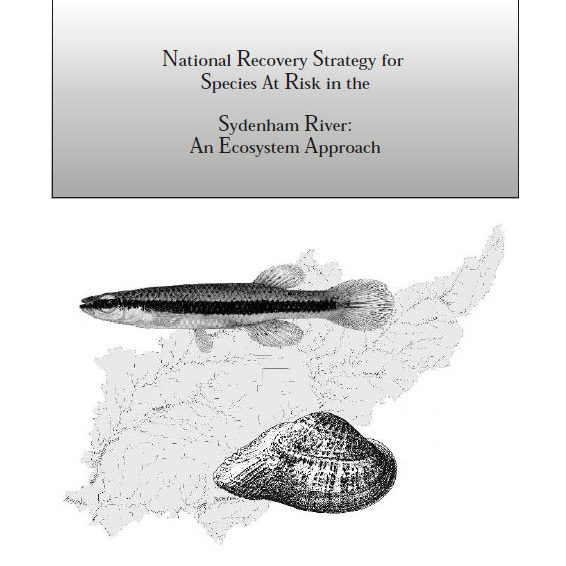
Title page of the 2003 National Recovery Strategy for Species at Risk in the Sydenham River: Ecosystem Approach

Step 1: Recovery Strategy

The Sydenham River Recovery Team was formed in 1999 to undertake recovery planning for aquatic SAR in the Sydenham River. The team adopted an ecosystem approach that considers the species, their interactions, and relationship with the water and lands in a single, holistic strategy. Community members and stakeholders were involved in the process through meetings as well as public information sessions. To aid in the development of the Recovery Strategy, the team completed background reports on the watershed and its Species at Risk. The Sydenham River Recovery Strategy was finalized in 2003 and was the first example of a multi-species watershed Recovery Strategy in Canada.
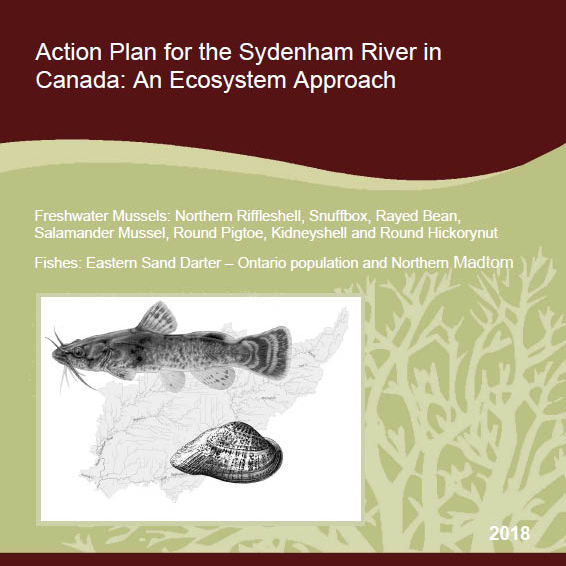
Title page of the 2018 Action Plan for the Sydenham River in Canada: An Ecosystem Approach

Step 2: Action Plan

Phase two of the recovery planning process for the Sydenham began in the spring of 2002, with the development of an Action Plan to implement the Sydenham River Recovery Strategy. The first Action Plan for the watershed was released in 2003 and the updated Action Plan was finalized in 2018. The updated plan builds off the 2003 Sydenham River Recovery Strategy as well as four species-specific SARA Recovery Strategies.

Sydenham Recovery Documents:

  • 2018 Action Plan for the Sydenham River in Canada: An Ecosystem Approach
  • 2003 National Recovery Strategy for Species at Risk in the Sydenham River: An Ecosystem Approach
  • 2019 Recovery Strategy for Northern Riffleshell, Snuffbox, Round Pigtoe, Salamander Mussel and Rayed Bean in Canada
  • 2013 Recovery Strategy for the Round Hickorynut and the Kidneyshell in Canada
  • 2012 Recovery Strategy for the Eastern Sand Darter in Canada: Ontario Populations
  • 2012 Recovery Strategy for the Northern Madtom in Canada
Additional Resources
The 2018 Action Plan for the Sydenham focuses on nine priority aquatic species listed under SARA:
Mussels:

  • Kidneyshell
  • Northern Riffleshell
  • Rayed Bean
  • Round Hickorynut
  • Round Pigtoe
  • Salamander Mussel
  • Snuffbox
Fishes:

  • Eastern Sand Darter
  • Northern Madtom

Critical Habitat

Critical habitat is defined in the Species at Risk Act as:

the habitat that is necessary for the survival or recovery of a listed wildlife species and that is identified as the species’ critical habitat in a recovery strategy or in an action plan for the species.”

Identifying, protecting, and restoring habitat with the involvement and support of community members is vital to the success of the recovery process.

Treasures of the Sydenham
The East Sydenham River is the only Canadian river where the endangered and globally threatened Salamander Mussel is known to occur. The Sydenham is critical habitat for this species.

Learn more!
Picture of a Salamander mussel, a small, elongate, elliptical with a dark brown shell.

Critical Habitat in the Sydenham

The Sydenham watershed contains critical habitat for ten mussels and two fish species. Other watercourses in the region are also home to these and other species at risk but are not classified as critical habitat under SARA.

Critical habitat in the Sydenham watershed includes:

  • East Sydenham River
  • Mouth of Brown Creek
  • Mouth of Fansher Creek
  • North Sydenham River
  • Bear Creek (a tributary of the North Branch)
  • Whitebread Drain/Grape Run Drain
  • Little Bear Creek
  • Maxwell Creek
Map from DFO's website marking watercourses with critical habitat in red; watercourses with extirpated, endangered, or threatened species in purple; and watercourses with species of special concern in green.

Map: The watercourses highlighted in red are areas of critical habitat for SAR in the Sydenham watershed as of February 2021. The watercourses highlighted in purple and green are areas where SAR are also present. This map is for display purposes only, for the most up-to-date information visit Fisheries and Oceans Canada SAR maps.

SAR with Critical Habitat in the Sydenham Watershed:
Mussels:

  • Fawnsfoot
  • Kidneyshell
  • Lilliput
  • Northern Riffleshell
  • Rayed Bean
  • Round Hickorynut
  • Round Pigtoe
  • Salamander Mussel
  • Snuffbox
  • Threehorn Wartyback
Fishes:

  • Eastern Sand Darter
  • Pugnose Minnow

Protecting Habitat

To protect the aquatic environment, it is important to know what activities should be avoided. Working in or around water without proper sediment control, removing vegetation from the banks of watercourses, giving livestock uncontrolled access to watercourses, driving vehicles like ATVs in the river, and the over application of pesticides, fertilizers or winter road salts are all examples of activities that can harm the aquatic environment and result in the destruction of critical habitat.

Working around water?

If you are planning to carry out a project in or near water, you should first determine if there are any aquatic species at risk or critical habitat near your project location by referring to Fisheries and Oceans Canada SAR maps. For additional resources and to find out if your project needs to be reviewed by Fisheries and Oceans Canada, visit: www.dfo-mpo.gc.ca/pnw-ppe/index-eng.html.

Restoring Habitat

Protecting the critical habitat of species at risk is key to their conservation but is not sufficient on its own to achieve SAR population and distribution recovery objectives – the ecosystem also needs to be rehabilitated and restored through voluntary actions and stewardship measures.

Recovery Measures

The Action Plan for the Sydenham includes prioritized measures for:

  • Research and monitoring
  • Management
  • Stewardship and habitat improvements
  • Outreach and awareness

The recovery actions not only benefit the priority fish and mussel species, they also address threats shared by other species and improve the health of the watershed as a whole.

Visit “Stories from the Sydenham” to learn about some of these projects going on in the watershed!

Environmental Monitoring

SAR Recovery

  • Biodiversity
  • Threats to Biodiversity
  • What are Species at Risk?
  • Recovery Planning
  • Environmental Monitoring
  • SAR in the Sydenham
Check out our latest newsletter! Download

© 2026 · St. Clair Region Conservation Authority - The Sydenham River Watershed

  • Privacy

Press Enter to search · Esc to close