• Biodiversity
    • Why is Biodiversity Important?
    • Threats to Biodiversity
    • What are Species at Risk?
    • Recovery Planning
    • Environmental Monitoring
  • Species at Risk
    • Species at Risk
      • SAR in the Sydenham
      • Mussels
      • Fishes
      • Snakes
      • Turtles
    • Mussels
      • Eastern Pondmussel
      • Fawnsfoot
      • Kidneyshell
      • Lilliput
      • Mapleleaf
      • Northern Riffleshell
      • Purple Wartyback
      • Rainbow
      • Rayed Bean
      • Round Hickorynut
      • Round Pigtoe
      • Salamander Mussel
      • Snuffbox
      • Threehorn Wartyback
      • Wavy-rayed Lampmussel
    • Fishes
      • Blackstripe Topminnow
      • Eastern Sand Darter
      • Grass Pickerel
      • Northern Madtom
      • Northern Sunfish
      • Pugnose Minnow
      • Pugnose Shiner
      • River Darter
      • Silver Lamprey
      • Spotted Sucker
    • Snakes
      • Eastern Foxsnake
      • Eastern Hog-nosed Snake
      • Eastern Milksnake
    • Turtles
      • Blanding’s Turtle
      • Midland Painted Turtle
      • Northern Map Turtle
      • Snapping Turtle
      • Spiny Softshell
  • Stewardship
    • Healthy Watersheds Program
      • Sydenham Phosphorus Reduction Initiative
    • Managing Phosphorus
    • Phosphorus StoryMap
    • Reducing Pollution in Runoff
    • Best Management Practices Resources
  • Stories
  • Get Involved
    • What Can I Do?
    • Take the Stewardship Survey
    • Test Your ID Skills!
    • Report a Turtle Sighting
  • Resources
  • Contact Us
Sydenham River WatershedSydenham River Watershed
  • Biodiversity
    • Why is Biodiversity Important?
    • Threats to Biodiversity
    • What are Species at Risk?
    • Recovery Planning
    • Environmental Monitoring
  • Species at Risk
    • Species at Risk
      • SAR in the Sydenham
      • Mussels
      • Fishes
      • Snakes
      • Turtles
    • Mussels
      • Eastern Pondmussel
      • Fawnsfoot
      • Kidneyshell
      • Lilliput
      • Mapleleaf
      • Northern Riffleshell
      • Purple Wartyback
      • Rainbow
      • Rayed Bean
      • Round Hickorynut
      • Round Pigtoe
      • Salamander Mussel
      • Snuffbox
      • Threehorn Wartyback
      • Wavy-rayed Lampmussel
    • Fishes
      • Blackstripe Topminnow
      • Eastern Sand Darter
      • Grass Pickerel
      • Northern Madtom
      • Northern Sunfish
      • Pugnose Minnow
      • Pugnose Shiner
      • River Darter
      • Silver Lamprey
      • Spotted Sucker
    • Snakes
      • Eastern Foxsnake
      • Eastern Hog-nosed Snake
      • Eastern Milksnake
    • Turtles
      • Blanding’s Turtle
      • Midland Painted Turtle
      • Northern Map Turtle
      • Snapping Turtle
      • Spiny Softshell
  • Stewardship
    • Healthy Watersheds Program
      • Sydenham Phosphorus Reduction Initiative
    • Managing Phosphorus
    • Phosphorus StoryMap
    • Reducing Pollution in Runoff
    • Best Management Practices Resources
  • Stories
  • Get Involved
    • What Can I Do?
    • Take the Stewardship Survey
    • Test Your ID Skills!
    • Report a Turtle Sighting
  • Resources
  • Contact Us

Threats to Biodiversity

Home BiodiversityThreats to Biodiversity

What Threatens Biodiversity?

Around the world, the main threats to biodiversity that are a result of human activities can be summarized by the following categories:

  • Habitat loss, fragmentation, and degradation
  • Pollution
  • Human disturbance and overexploitation
  • Invasive species and disease
  • Climate change

Interacting and Compounding Stressors

Threats to biodiversity interact to have a cumulative impact on the health of the environment and the species that live there. For example, the loss of wetlands and vegetation along watercourses increases the amount of pollution that reaches the aquatic environment and the amount of sun rays on the water’s surface. Pollution and rising water temperatures can limit the health and survival of some native species that are not adapted to these conditions and can make them more susceptible to disease. Invasive species can often live in degraded environments and reproduce at higher rates increasing their spread, which further threatens native species as they are outcompeted for food and habitat. Overharvesting, illegal poaching, trade or commercialization of native species are examples of human disturbance and overexploitation that are added stressors and contribute to populations becoming unstable.

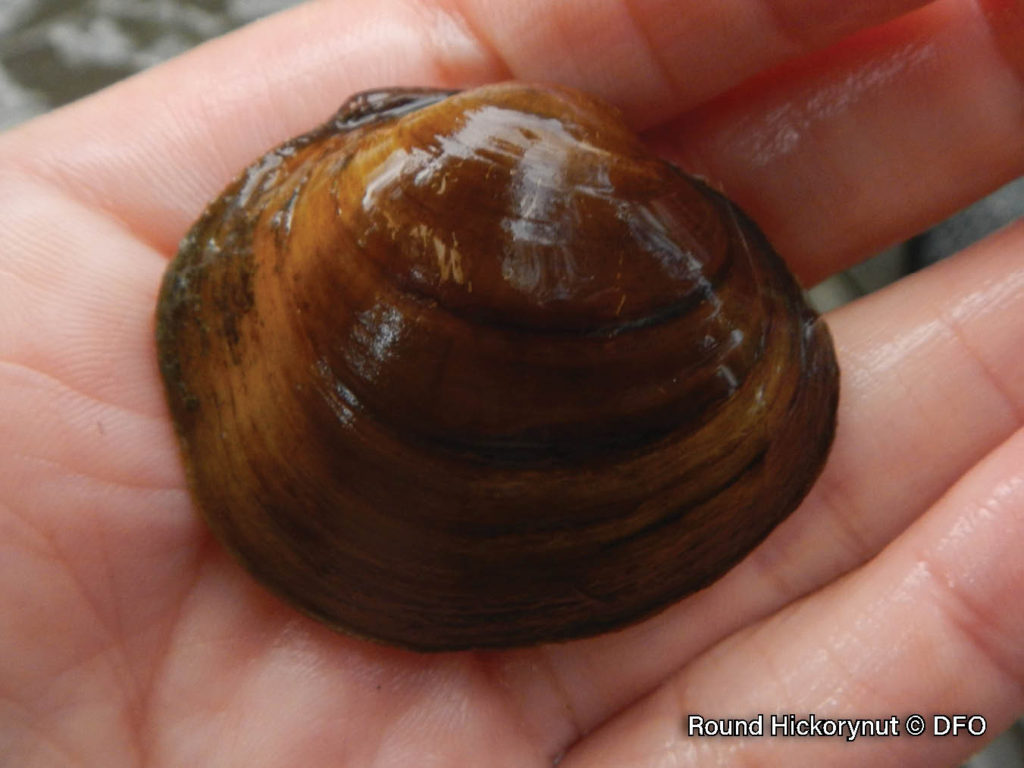
Picture of a Round Hickorynut mussel in a hand, a round, inflated yellowish-brown mussel.

Treasures of the Sydenham
The Round Hickorynut is an endangered mussel species that has been lost from 90% of its Canadian Range – it is now only found in the East Sydenham River and St. Clair River Delta. The largest threats to this species are pollution and siltation. The invasion of the Zebra Mussel that was introduced to Lake St. Clair in the mid-1980s has also contributed to the loss of this species from its former range. Threats to one of its host fish species, the Eastern Sand Darter (another Species at Risk), also threatens the Round Hickorynut.

Learn more!

Threats to Biodiversity in the Sydenham

In the Sydenham, the most significant threats to biodiversity that also have the greatest chance of improvement fall under the categories for habitat loss and pollution. The biggest threats to aquatic life in the watershed are sediment loads, excess nutrients, toxic chemicals, temperature changes, and invasive species.

Habitat Loss and Pollution

Together, forest and wetlands makeup less than 15% of the land use in the watershed. There is less than half of the forest cover and only a tenth of the wetland cover considered the minimum needed to sustain a healthy environment. The natural areas that exist in the Sydenham are a refuge for native plants and animals, including species at risk.

A particular issue in the watershed is the continued loss of natural areas and vegetation along watercourses – these areas provide important habitat, shade the water, and reduce the amount of pollution that enters the aquatic environment. In areas lacking riparian vegetation, pollution in the form of soil, excess nutrients like fertilizers and manure, and toxic compounds like herbicides and pesticides are washed off the land into watercourses during rain events or periods of snow melt.

Picture of a bucket overflowing with filamentous algae

Algal blooms are evidence that excess nutrients are entering the aquatic environment.

Riparian vegetation

Vegetated buffers along watercourses are important for bank stability as well as capturing nutrients and soil in runoff. The roots of living plants anchor the soil in place.

Maintaining and restoring vegetation along watercourses is essential to reduce the amount of pollution that reaches the aquatic environment, it also helps to reduce flooding downstream, and provides habitat for plants and animals.

An added benefit of maintaining a vegetated or grassed riparian buffer along municipal drains is it reduces the need for drain maintenance as the soils are kept on land.

Picture of a municipal drain along a farm field that does not have a vegetated buffer. The bank is unstable and a section slumped into the watercourse.
Picture of a wide grassed buffer between an agricultural field and a municipal drain.
Keeping soils covered year-round

Overland runoff is a major route for soils and excess nutrients to enter the aquatic environment. Bare soils can also be eroded by the wind.

Using best management practices like grassed waterways and cover crops help to reduce the exposure of bare soil to the elements, preventing them from ending up in the surrounding watercourses. Not only is this loss of valuable topsoil bad for crops, it is also bad for the aquatic environment.

Picture of overland runoff across an agricultural field with exposed soils.
Picture of a grassed waterway going through an agricultural field.
Picture of an agricultural field with wind erosion of exposed soils
Picture of an agricultural field with cover crops

Temperature Changes

The Sydenham River supports a warm water biological community but further increases in water temperatures adds stress to the survival of most species. One impact is that as water temperatures increase, the dissolved oxygen levels aquatic animals need to respire decreases.

Both the loss of riparian vegetation and presence of reservoirs increase the amount of water that is exposed to the sun’s rays, which leads to rising water temperatures. Climate change is another factor that is increasing average air and water temperatures.

Picture of a riverbed and mussel with low water levels during a period of drought

Effects of Climate Change
Climate change is resulting in warmer average annual temperatures, more extreme weather events, and periods of flood and drought. Not only does this result in stress and mortality for plants and animals, these are large scale impacts that are a concern for the health and safety of people.

During periods of drought, the water levels in the river can become very low, exposing areas of river bottom and stranding animals like mussels that are unable to move large distances.

Restoring natural features like forests, wetlands, and riparian vegetation are vital to mitigating the impacts of climate change.


Human Disturbance

An example of human disturbance in the Sydenham is people driving motorized vehicles like ATVs through the river. This crushes the animals that live in the water and destroys their habitat.

Picture of signs at the roadside near the Sydenham River the large lettering reads: "Warning endangered fish and mussel species present. Please keep recreational motorized vehicles out of the river." The caption reads: "driving motorized vehicles through the river crushes animals and destroys critical habitat."
Picture of tracks from ATVs illegally driven through critical habitat in the Sydenham River.

Invasive Species

Non-native species like Round Goby, Common Carp, and Phragmites are invading the Sydenham watershed. They can directly or indirectly impact native species and their habitat.

Round Goby

The Round Goby is an invasive fish species that is spreading through the Sydenham watershed, it directly and indirectly threatens the survival of native aquatic species.

Round Goby directly impact native fish by eating their eggs and outcompeting them for food and habitat. They also directly affect mussel populations by consuming juvenile mussels and are a sink for glochidia. Since freshwater mussels rely on native fish species to act as hosts for their larvae to complete their life cycle, native fish being displaced by gobies reduces the reproductive success of native mussels. So when Round Goby directly impact the fish community in the Sydenham, they are also indirectly impacting the native freshwater mussel community.

Picture of a Round Goby, a small fish, in a viewing box with its dorsal fins extended and its black spot visible
Common Carp

The Common Carp is an invasive species found throughout the Sydenham watershed, it is a bottom-dwelling fish that uproots aquatic plants which increases turbidity. They also feed on animals that live in the sediment, including juvenile mussels.

Picture of a biologist holding a very large Common Carp, a yellow, elongate, benthic fish with large scales.
Invasive Phragmites

Phragmites australis is a tall reed grass from Eurasia that once introduced in an area can quickly dominate the vegetation communities and form dense stands that are impenetrable to wildlife. This cuts wildlife off from habitat that they would previously use to breed, forage, or hibernate. “Phrag” (as it is often called) spreads by both seeds and rhizomes. It is also allelopathic, meaning its roots release chemicals into the soil that prevents the growth of other plant species.

Picture of a dense stand of invasive Phragmites, a tall reed grass with large feather-like seed heads

Invasive species management
There are many different organizations in the watershed and surrounding region working together to remove Phrag and control its spread.

You can learn more about Invasive Phragmites and Ontario’s invasive species at www.invadingspecies.com

Picture of a machine rolling a large stand of invasive phragmites

Monitoring Threats

In order to understand and track the health of the watershed, biologists monitor fish, mussel and benthic communities, collect water quality samples, and deploy temperature gauges. This information helps to understand the health of the watershed, determine what is threatening it, and where resources should be directed to improve it.

Improving Watershed Health

The health of the watershed relies on the good practices of community members and landowners. There are many partners working together to reduce these threats and restore the natural ecosystem functions. Learn more about what you can do to be a good steward of the environment by visiting our page on how to Get Involved!

What are Species at Risk?

SAR Recovery

  • Biodiversity
  • Threats to Biodiversity
  • What are Species at Risk?
  • Recovery Planning
  • Environmental Monitoring
  • SAR in the Sydenham
Check out our latest newsletter! Download

© 2026 · St. Clair Region Conservation Authority - The Sydenham River Watershed

  • Privacy

Press Enter to search · Esc to close