

Skip to content
  • Biodiversity
    • Why is Biodiversity Important?
    • Threats to Biodiversity
    • What are Species at Risk?
    • Recovery Planning
    • Environmental Monitoring
  • Species at Risk
    • Species at Risk
      • SAR in the Sydenham
      • Mussels
      • Fishes
      • Snakes
      • Turtles
    • Mussels
      • Eastern Pondmussel
      • Fawnsfoot
      • Kidneyshell
      • Lilliput
      • Mapleleaf
      • Northern Riffleshell
      • Purple Wartyback
      • Rainbow
      • Rayed Bean
      • Round Hickorynut
      • Round Pigtoe
      • Salamander Mussel
      • Snuffbox
      • Threehorn Wartyback
      • Wavy-rayed Lampmussel
    • Fishes
      • Blackstripe Topminnow
      • Eastern Sand Darter
      • Grass Pickerel
      • Northern Madtom
      • Northern Sunfish
      • Pugnose Minnow
      • Pugnose Shiner
      • River Darter
      • Silver Lamprey
      • Spotted Sucker
    • Snakes
      • Eastern Foxsnake
      • Eastern Hog-nosed Snake
      • Eastern Milksnake
    • Turtles
      • Blanding’s Turtle
      • Midland Painted Turtle
      • Northern Map Turtle
      • Snapping Turtle
      • Spiny Softshell
  • Stewardship
    • Healthy Watersheds Program
      • Sydenham Phosphorus Reduction Initiative
    • Managing Phosphorus
    • Phosphorus StoryMap
    • Reducing Pollution in Runoff
    • Best Management Practices Resources
  • Stories
  • Get Involved
    • What Can I Do?
    • Take the Stewardship Survey
    • Test Your ID Skills!
    • Report a Turtle Sighting
  • Resources
  • Contact Us
Sydenham River WatershedSydenham River Watershed
  • Biodiversity
    • Why is Biodiversity Important?
    • Threats to Biodiversity
    • What are Species at Risk?
    • Recovery Planning
    • Environmental Monitoring
  • Species at Risk
    • Species at Risk
      • SAR in the Sydenham
      • Mussels
      • Fishes
      • Snakes
      • Turtles
    • Mussels
      • Eastern Pondmussel
      • Fawnsfoot
      • Kidneyshell
      • Lilliput
      • Mapleleaf
      • Northern Riffleshell
      • Purple Wartyback
      • Rainbow
      • Rayed Bean
      • Round Hickorynut
      • Round Pigtoe
      • Salamander Mussel
      • Snuffbox
      • Threehorn Wartyback
      • Wavy-rayed Lampmussel
    • Fishes
      • Blackstripe Topminnow
      • Eastern Sand Darter
      • Grass Pickerel
      • Northern Madtom
      • Northern Sunfish
      • Pugnose Minnow
      • Pugnose Shiner
      • River Darter
      • Silver Lamprey
      • Spotted Sucker
    • Snakes
      • Eastern Foxsnake
      • Eastern Hog-nosed Snake
      • Eastern Milksnake
    • Turtles
      • Blanding’s Turtle
      • Midland Painted Turtle
      • Northern Map Turtle
      • Snapping Turtle
      • Spiny Softshell
  • Stewardship
    • Healthy Watersheds Program
      • Sydenham Phosphorus Reduction Initiative
    • Managing Phosphorus
    • Phosphorus StoryMap
    • Reducing Pollution in Runoff
    • Best Management Practices Resources
  • Stories
  • Get Involved
    • What Can I Do?
    • Take the Stewardship Survey
    • Test Your ID Skills!
    • Report a Turtle Sighting
  • Resources
  • Contact Us

Sydenham Phosphorus Reduction Initiative

Home StewardshipHealthy Watersheds ProgramSydenham Phosphorus Reduction Initiative

New funding is available to support practices that will help reduce phosphorus losses within the Sydenham River Watershed.

St. Clair Conservation recently secured four years of funding through the Canada Water Agency to support the Sydenham Phosphorus Reduction Initiative (SPRI). The goals of SPRI are:

1. To decrease the overall non-point source phosphorus loads in the Sydenham River Watershed, as the River is the 3rd largest Canadian contributor of phosphorus to Lake Erie and,

2. To increase the adoption and sustainability of agricultural and rural Best Management Practices (BMPs) in high phosphorus-yielding areas.

With over 80% of the St. Clair Region watershed comprised of agricultural land, BMPs such as windbreaks, cover crops, and wetland restoration are critical in minimizing phosphorus losses to waterways. These practices can also help to reduce soil erosion, protect water quality, increase crop yields, and potentially decrease the need for fertilizer. Additionally, implementing BMPs improves habitat for aquatic wildlife, specifically our local Species at Risk.

Review the guidelines below and contact us to discuss solutions that will work in your farm operation.

Funding priority goes to farmers and rural landowners in the SPRI subwatersheds: Sydenham Headwaters, Bear Creek, and Brown Creek.

If you live outside these priority subwatersheds, you can still apply.

Now Accepting Applications!

Please see our FAQs and contact information here:

SPRI Frequently Asked Questions

Potential Project
(Click title to review Guidelines)
Grant Rate Application Form
(Click title to open Application)
Cover Crop Single Species: $20/acre
Multispecies (min. 3): $25/acre
Max. Grant: $10,500
Cover Crop Incentive
Restoring Natural Cover, Windbreaks, & Riparian Buffers/Filter Strips Up to a maximum of 100%
of the project sub-total
Restoring Natural Cover, Windbreaks, & Riparian Buffers/Filter Strips
Wetland Restoration Up to a maximum of 100%
of the project sub-total
Wetland Restoration
Erosion Control Structures Funding will cover up to
75% of a project
Max. Grant: $15,000
Erosion Control Structures
Livestock Restriction from Watercourses $18/meter of installed
permanent fencing
Livestock Restriction AND Alternate Watering Systems
Alternative Watering Systems Max. Grant: $5,000 See above.
Phosphorus Application Equipment Modifications and Purchases 50% Cost-Share
Max. Grant: $20,000
No longer accepting applications for 2026
Reduced Tillage Equipment Purchases and Modifications
*Please note: the reduced tillage guidelines have been updated as of April 7, as they were missing key ineligible project costs
50% Cost-Share
Max. Grant: $20,000
No longer accepting applications for 2026
4R Nutrient Management Services $10/acre
Max. Grant: $2,500
4R Nutrient Management submissions after May 1st will be wait-listed due to high demand
Alternative Phosphorus Application Practices $10/acre
Max. Grant: $4,000
Alternative Phosphorus Application submissions after May 1st will be wait-listed due to high demand

The Sydenham Phosphorus Reduction Initiative (SPRI) is aimed at reducing phosphorus loading in the Sydenham River and, ultimately, Lake Erie. The Sydenham River Watershed is the third-largest Canadian contributor to phosphorus loads in Lake Erie, with pollution from widespread sources like agricultural and rural runoff accounting for approximately 89% of the total phosphorus released annually (Dagnew et al., 2019).

If you are interested in learning more about phosphorus loads in Lake Erie and the Sydenham River, please visit the below references used to build this program:

Dagnew et al. 2019. Link: Dagnew at al. (2019)
Scavia, D., Bocaniov, S. A., Dagnew, A., Long, C., & Wang, Y.-C. (2019). St. Clair-Detroit River system: Phosphorus mass balance and implications for Lake Erie load reduction, monitoring, and climate change. Journal of Great Lakes Research, 45(1), 40–49. Link: Scavia et al (2019).

What Are Best Management Practices (BMPs)?

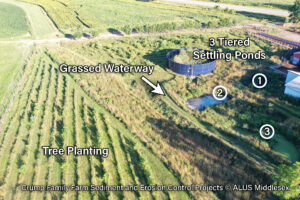
BMPs are practical, cost-effective methods that help care for the environment while boosting your farm’s productivity. These practices reduce soil erosion, improve water quality, conserve wildlife habitats, and promote sustainable land use.

The image to the right shows four different BMPs – tiered wetlands, grassed waterways, tree planting, and cover crops in the distance.

BMP Resources
Check out our latest newsletter! Download

© 2026 · St. Clair Region Conservation Authority - The Sydenham River Watershed

  • Privacy

Press Enter to search · Esc to close