Eastern Foxsnake
Pantherophis vulpinus
Pantherophis vulpinus
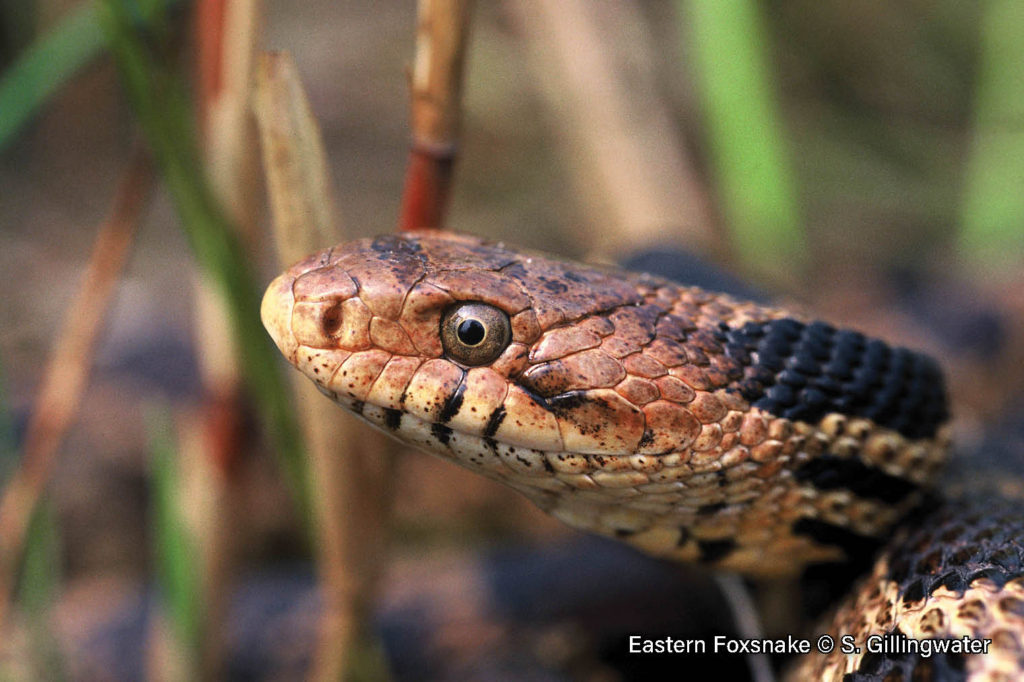
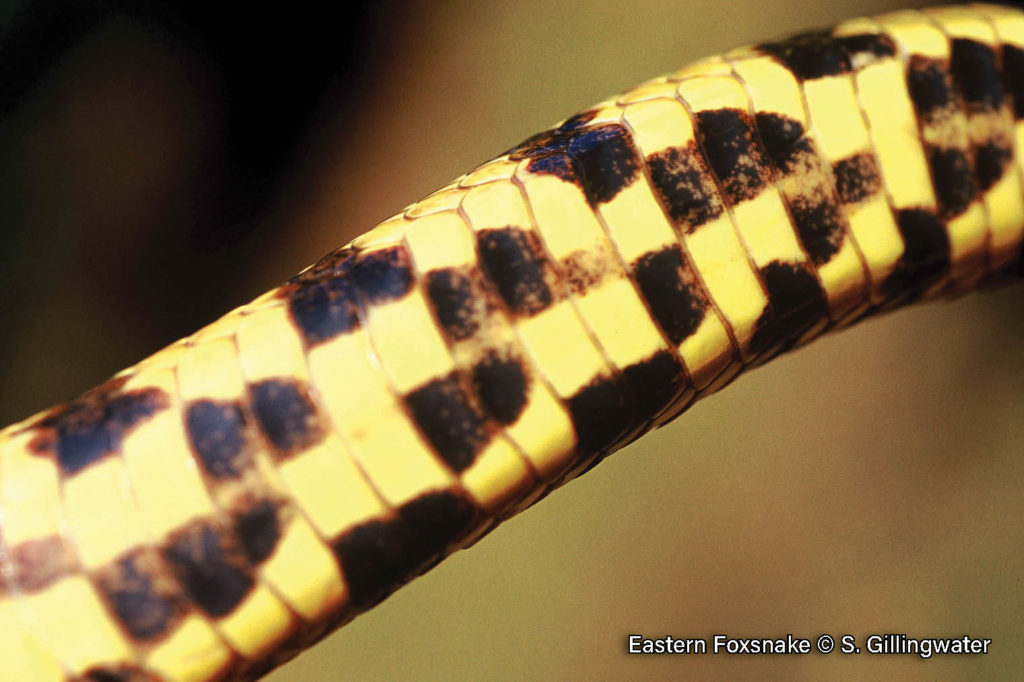
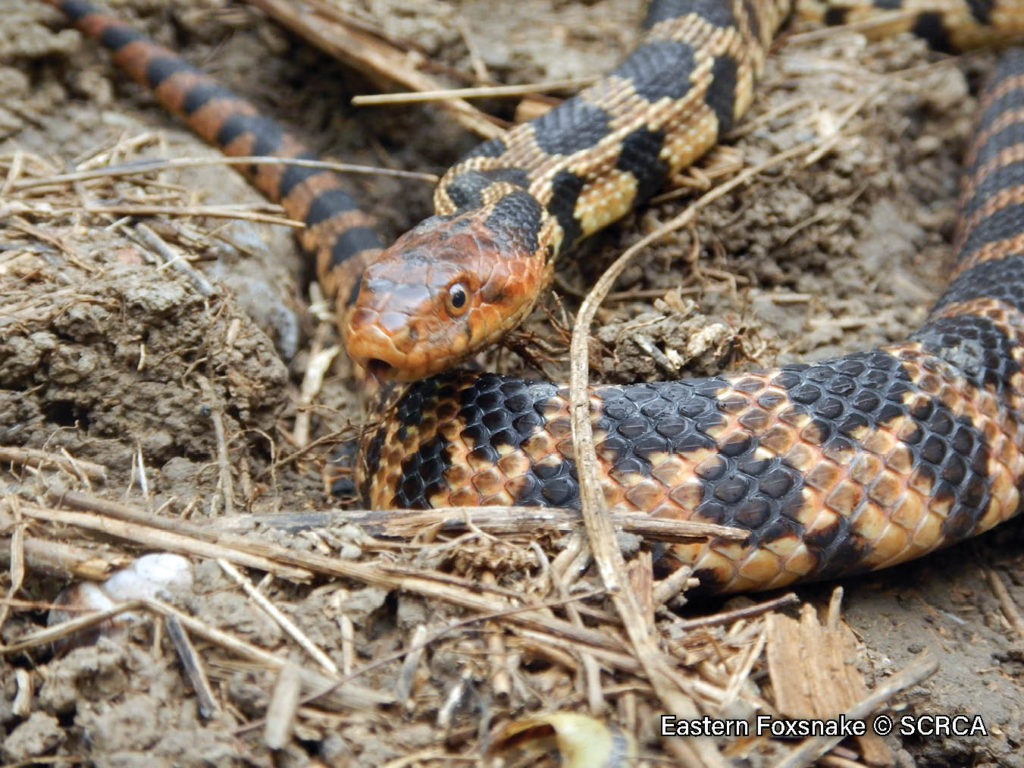
The beautiful and docile Eastern Foxsnake is a globally rare species that is the second largest snake species in Ontario, reaching lengths up to 1.8 meters. Adults have a distinctive reddish-copper head and a yellowish to light brown body decorated with dark brown to black blotches that alternate from head to tail. Dorsal blotch patterns are unique to each individual much like a human fingerprint – these defining patterns can help distinguish one Foxsnake from another. Their bellies have a characteristic yellow and black checkerboard pattern. Young Foxsnakes are more grey or tan in colour with brown blotches that have a dark border, they have also not yet developed the reddish-copper head.
An adept climber and swimmer, a Foxsnake may be encountered moving through the forest canopy or navigating rivers and bays, covering long distances between islands in search of prey. They require a mosaic of habitat to meet the various needs of their lifecycle, including habitat for hibernation, foraging, and thermoregulation. They are typically found in unforested areas, fields, prairies, savannas, marshes, and rock barrens, with a strong preference for shoreline habitats. Foxsnakes require connecting natural corridors to move freely amongst the varying habitats.

Being non-venomous, the Foxsnake uses its powerful body to constrict and subdue prey. They hunt mainly for small mammals like rats, mice, and voles but will seek out birds including their young and eggs when venturing high above the ground.
The Eastern Foxsnake is a globally rare species with 70% of their global range occurring right here in Ontario. The remaining 30% are found in the United States, confined to southern Michigan and northern Ohio. Populations at all three locations are facing declines and have been designated as either special concern, threatened or endangered under the relevant environmental legislation.
In Ontario, there are two main populations of Eastern Foxsnake – one is the Georgian Bay population that is listed as Threatened and the Carolinian population, which is partially found in the Sydenham watershed, that is listed as Endangered.
Supporting Local Snake Populations
The Eastern Foxsnake is an endangered species of snake that lays eggs. To combat the lack of suitable nesting habitat in the region, the St. Clair Region Conservation Authority constructs artificial nesting boxes made of straw, mulch and compost material surrounded by corn crib wire fencing to provide safe places for egg-laying snakes to incubate their eggs out of reach from predators.

Foxsnakes have many natural predators – hawks, owls, raccoons, skunks, and weasels like fisher and mink all prey on snakes. Unable to produce venom as a defence mechanism, the Foxsnake relies on a deceitful display to appear more dangerous than they are: they rapidly vibrate their tail to imitate a venomous rattlesnake. This display can often deter a cautious predator but has proven fatal for Foxsnakes when encountering humans. Even though rattlesnakes pose a minimal risk to humans in Ontario, the Massasauga Rattlesnake and species that resemble or imitate rattlesnakes face unwarranted persecution by people and are often killed immediately. Many have mistaken the Eastern Foxsnake for a North American Copperhead, a venomous species that does not occur in Canada. Other activities that cause Foxsnake population declines include habitat loss, degradation and fragmentation, road mortality, collection for the pet trade and human-subsidized predators.
Video by Pinegrove Productions on the Eastern Foxsnake in Ontario and landowner stewardship projects in nearby Essex County.
© 2026 · St. Clair Region Conservation Authority - The Sydenham River Watershed
Press Enter to searchEsc to close