
Skip to content
  • Biodiversity
    • Why is Biodiversity Important?
    • Threats to Biodiversity
    • What are Species at Risk?
    • Recovery Planning
    • Environmental Monitoring
  • Species at Risk
    • Species at Risk
      • SAR in the Sydenham
      • Mussels
      • Fishes
      • Snakes
      • Turtles
    • Mussels
      • Eastern Pondmussel
      • Fawnsfoot
      • Kidneyshell
      • Lilliput
      • Mapleleaf
      • Northern Riffleshell
      • Purple Wartyback
      • Rainbow
      • Rayed Bean
      • Round Hickorynut
      • Round Pigtoe
      • Salamander Mussel
      • Snuffbox
      • Threehorn Wartyback
      • Wavy-rayed Lampmussel
    • Fishes
      • Blackstripe Topminnow
      • Eastern Sand Darter
      • Grass Pickerel
      • Northern Madtom
      • Northern Sunfish
      • Pugnose Minnow
      • Pugnose Shiner
      • River Darter
      • Silver Lamprey
      • Spotted Sucker
    • Snakes
      • Eastern Foxsnake
      • Eastern Hog-nosed Snake
      • Eastern Milksnake
    • Turtles
      • Blanding’s Turtle
      • Midland Painted Turtle
      • Northern Map Turtle
      • Snapping Turtle
      • Spiny Softshell
  • Stewardship
    • Healthy Watersheds Program
      • Sydenham Phosphorus Reduction Initiative
    • Managing Phosphorus
    • Phosphorus StoryMap
    • Reducing Pollution in Runoff
    • Best Management Practices Resources
  • Stories
  • Get Involved
    • What Can I Do?
    • Take the Stewardship Survey
    • Test Your ID Skills!
    • Report a Turtle Sighting
  • Resources
  • Contact Us
Sydenham River WatershedSydenham River Watershed
  • Biodiversity
    • Why is Biodiversity Important?
    • Threats to Biodiversity
    • What are Species at Risk?
    • Recovery Planning
    • Environmental Monitoring
  • Species at Risk
    • Species at Risk
      • SAR in the Sydenham
      • Mussels
      • Fishes
      • Snakes
      • Turtles
    • Mussels
      • Eastern Pondmussel
      • Fawnsfoot
      • Kidneyshell
      • Lilliput
      • Mapleleaf
      • Northern Riffleshell
      • Purple Wartyback
      • Rainbow
      • Rayed Bean
      • Round Hickorynut
      • Round Pigtoe
      • Salamander Mussel
      • Snuffbox
      • Threehorn Wartyback
      • Wavy-rayed Lampmussel
    • Fishes
      • Blackstripe Topminnow
      • Eastern Sand Darter
      • Grass Pickerel
      • Northern Madtom
      • Northern Sunfish
      • Pugnose Minnow
      • Pugnose Shiner
      • River Darter
      • Silver Lamprey
      • Spotted Sucker
    • Snakes
      • Eastern Foxsnake
      • Eastern Hog-nosed Snake
      • Eastern Milksnake
    • Turtles
      • Blanding’s Turtle
      • Midland Painted Turtle
      • Northern Map Turtle
      • Snapping Turtle
      • Spiny Softshell
  • Stewardship
    • Healthy Watersheds Program
      • Sydenham Phosphorus Reduction Initiative
    • Managing Phosphorus
    • Phosphorus StoryMap
    • Reducing Pollution in Runoff
    • Best Management Practices Resources
  • Stories
  • Get Involved
    • What Can I Do?
    • Take the Stewardship Survey
    • Test Your ID Skills!
    • Report a Turtle Sighting
  • Resources
  • Contact Us

What are Species at Risk?

Home BiodiversityWhat are Species at Risk?

What are Species at Risk?

Species at Risk (SAR) are plants and wildlife that are at risk of extinction. The federal and provincial governments develop lists of species at risk, which receive legal protection under the federal Species at Risk Act (SARA) and/or Ontario’s provincial Endangered Species Act, 2007 (ESA).
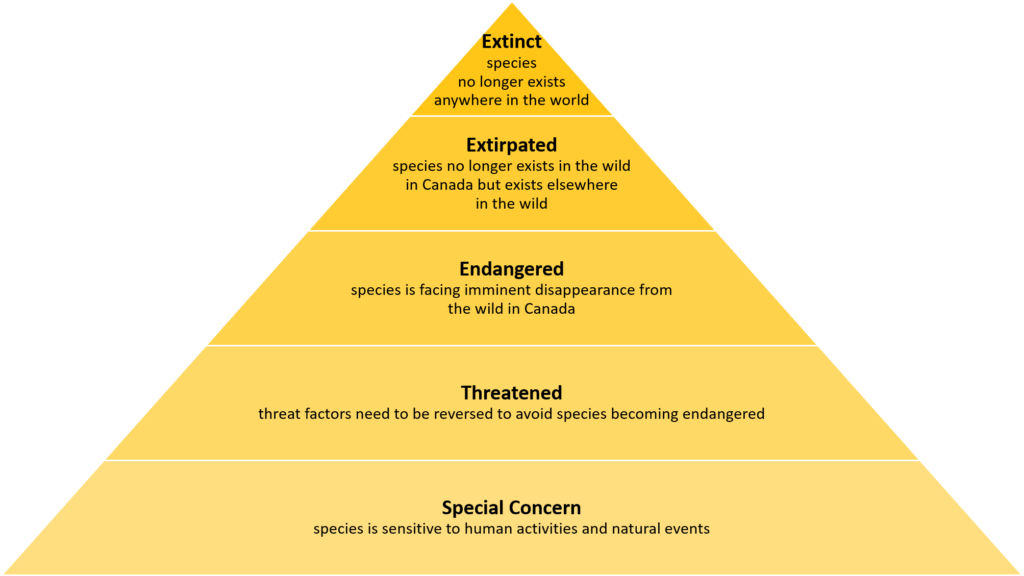
Species at Risk statuses:

Graphic defining the five species at risk statuses in a pyramid. Special concern is at the base, species is sensitive to human activities and natural events. Threatened is the next level in the pyramid, threat factors need to be reversed to avoid species becoming endangered. The third level is Endangered, species is facing imminent disappearance from the wild in Canada. Fourth level is Extirpated, species no longer exists in the wild in Canada but exists elsewhere in the wild. The peak of the pyramid is Extinct, species no longer exists anywhere in the world.

How is it determined that a species is “at risk”?

The status of a species is assessed by an independent body of experts using the best-available science and Indigenous Traditional Ecological Knowledge. The independent federal body of advisors is the Committee on the Status of Endangered Wildlife in Canada (COSEWIC) and the provincial body is the Committee on the Status of Species at Risk in Ontario (COSSARO). The designations assigned by these committees are considered by the federal and provincial governments when updating legal statuses of species.

SAR Status Updates
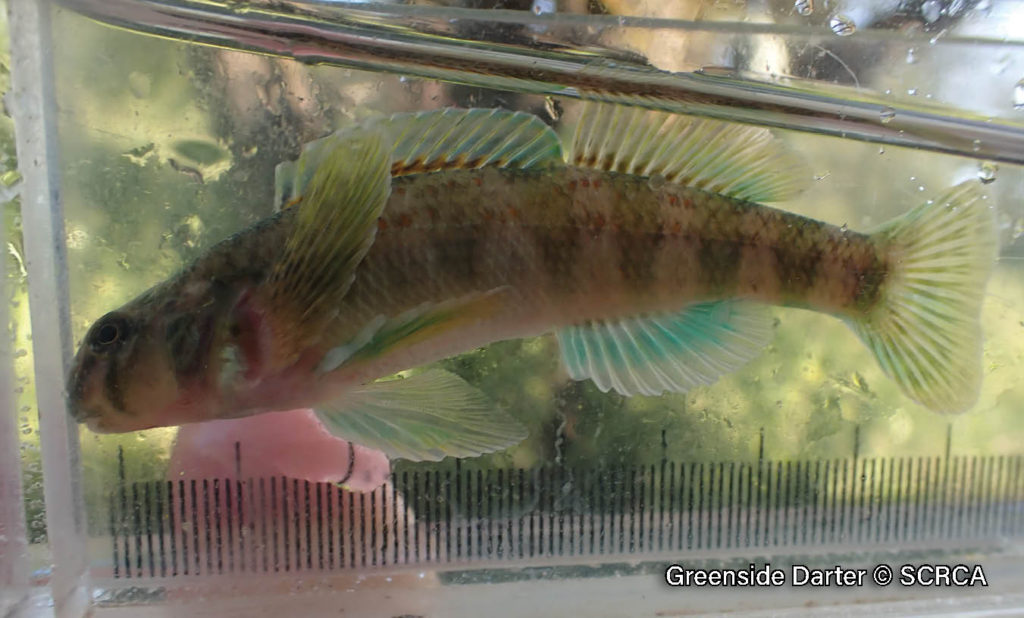
SAR statuses are updated regularly to reflect changes in the species populations over time and available information. For example, the Greenside Darter is a species found in the Sydenham River, it was listed as Special Concern in 1990 but was reassessed as Not at Risk in 2006.

Picture of a Greenside Darter, a small fish, in a viewing box showing its bright green fins and bright green bars on the side of its body

How are SAR protected?

The federal Species at Risk Act (SARA) and the Ontario Endangered Species Act, 2007 (ESA) automatically protect species classified as extirpated, endangered or threatened as well as their habitat. Through the 1996 Accord for the Protection of Species at Risk, the federal, provincial, and territorial governments agreed to develop complementary legislation and programs to effectively protect SAR throughout Canada.

For species listed as threatened, endangered or extirpated, it is illegal to:

  • kill, harm, harass, capture, or take an individual
  • possess, collect, buy, sell or trade an individual
  • damage or destroy the habitat

In order to rehabilitate and protect populations of SAR, they undergo the Recovery Planning process.

Information on species listed federally and provincially can be found on online through the federal SARA Public Registry at www.sararegistry.gc.ca and for provincial SARO at www.ontario.ca/page/species-risk-ontario.

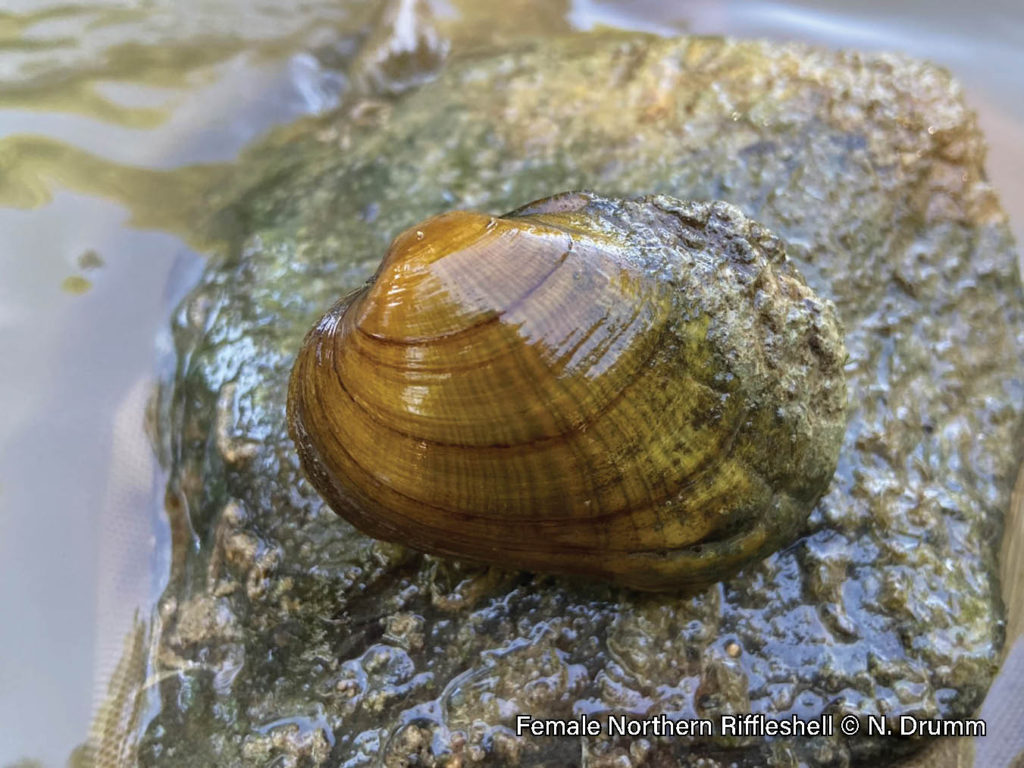
Picture of a female Northern Riffleshell mussel on a rock, a small, yellowish-orange mussel with narrow green rays, the shells of females extend creating a more oval shape.

Treasures of the Sydenham
The critically endangered Northern Riffleshell mussel is only known to occur in two Canadian rivers, the East Sydenham River and Ausable River, which together support 25% of their global population.

Learn more!
What is Recovery Planning?
Species at Risk in the Sydenham

SAR Recovery

  • Biodiversity
  • Threats to Biodiversity
  • What are Species at Risk?
  • Recovery Planning
  • Environmental Monitoring
  • SAR in the Sydenham
Check out our latest newsletter! Download

© 2026 · St. Clair Region Conservation Authority - The Sydenham River Watershed

  • Privacy

Press Enter to search · Esc to close