Skip to content
  • Biodiversity
    • Why is Biodiversity Important?
    • Threats to Biodiversity
    • What are Species at Risk?
    • Recovery Planning
    • Environmental Monitoring
  • Species at Risk
    • Species at Risk
      • SAR in the Sydenham
      • Mussels
      • Fishes
      • Snakes
      • Turtles
    • Mussels
      • Eastern Pondmussel
      • Fawnsfoot
      • Kidneyshell
      • Lilliput
      • Mapleleaf
      • Northern Riffleshell
      • Purple Wartyback
      • Rainbow
      • Rayed Bean
      • Round Hickorynut
      • Round Pigtoe
      • Salamander Mussel
      • Snuffbox
      • Threehorn Wartyback
      • Wavy-rayed Lampmussel
    • Fishes
      • Blackstripe Topminnow
      • Eastern Sand Darter
      • Grass Pickerel
      • Northern Madtom
      • Northern Sunfish
      • Pugnose Minnow
      • Pugnose Shiner
      • River Darter
      • Silver Lamprey
      • Spotted Sucker
    • Snakes
      • Eastern Foxsnake
      • Eastern Hog-nosed Snake
      • Eastern Milksnake
    • Turtles
      • Blanding’s Turtle
      • Midland Painted Turtle
      • Northern Map Turtle
      • Snapping Turtle
      • Spiny Softshell
  • Stewardship
    • Healthy Watersheds Program
      • Sydenham Phosphorus Reduction Initiative
    • Managing Phosphorus
    • Phosphorus StoryMap
    • Reducing Pollution in Runoff
    • Best Management Practices Resources
  • Stories
  • Get Involved
    • What Can I Do?
    • Take the Stewardship Survey
    • Test Your ID Skills!
    • Report a Turtle Sighting
  • Resources
  • Contact Us
Sydenham River WatershedSydenham River Watershed
  • Biodiversity
    • Why is Biodiversity Important?
    • Threats to Biodiversity
    • What are Species at Risk?
    • Recovery Planning
    • Environmental Monitoring
  • Species at Risk
    • Species at Risk
      • SAR in the Sydenham
      • Mussels
      • Fishes
      • Snakes
      • Turtles
    • Mussels
      • Eastern Pondmussel
      • Fawnsfoot
      • Kidneyshell
      • Lilliput
      • Mapleleaf
      • Northern Riffleshell
      • Purple Wartyback
      • Rainbow
      • Rayed Bean
      • Round Hickorynut
      • Round Pigtoe
      • Salamander Mussel
      • Snuffbox
      • Threehorn Wartyback
      • Wavy-rayed Lampmussel
    • Fishes
      • Blackstripe Topminnow
      • Eastern Sand Darter
      • Grass Pickerel
      • Northern Madtom
      • Northern Sunfish
      • Pugnose Minnow
      • Pugnose Shiner
      • River Darter
      • Silver Lamprey
      • Spotted Sucker
    • Snakes
      • Eastern Foxsnake
      • Eastern Hog-nosed Snake
      • Eastern Milksnake
    • Turtles
      • Blanding’s Turtle
      • Midland Painted Turtle
      • Northern Map Turtle
      • Snapping Turtle
      • Spiny Softshell
  • Stewardship
    • Healthy Watersheds Program
      • Sydenham Phosphorus Reduction Initiative
    • Managing Phosphorus
    • Phosphorus StoryMap
    • Reducing Pollution in Runoff
    • Best Management Practices Resources
  • Stories
  • Get Involved
    • What Can I Do?
    • Take the Stewardship Survey
    • Test Your ID Skills!
    • Report a Turtle Sighting
  • Resources
  • Contact Us

Fawnsfoot

Home Species at Risk in the SydenhamMusselsFawnsfoot

Fawnsfoot

Truncilla donaciformis

COSEWIC: Endangered
SARA: Endangered
SARO: Endangered

Species Description

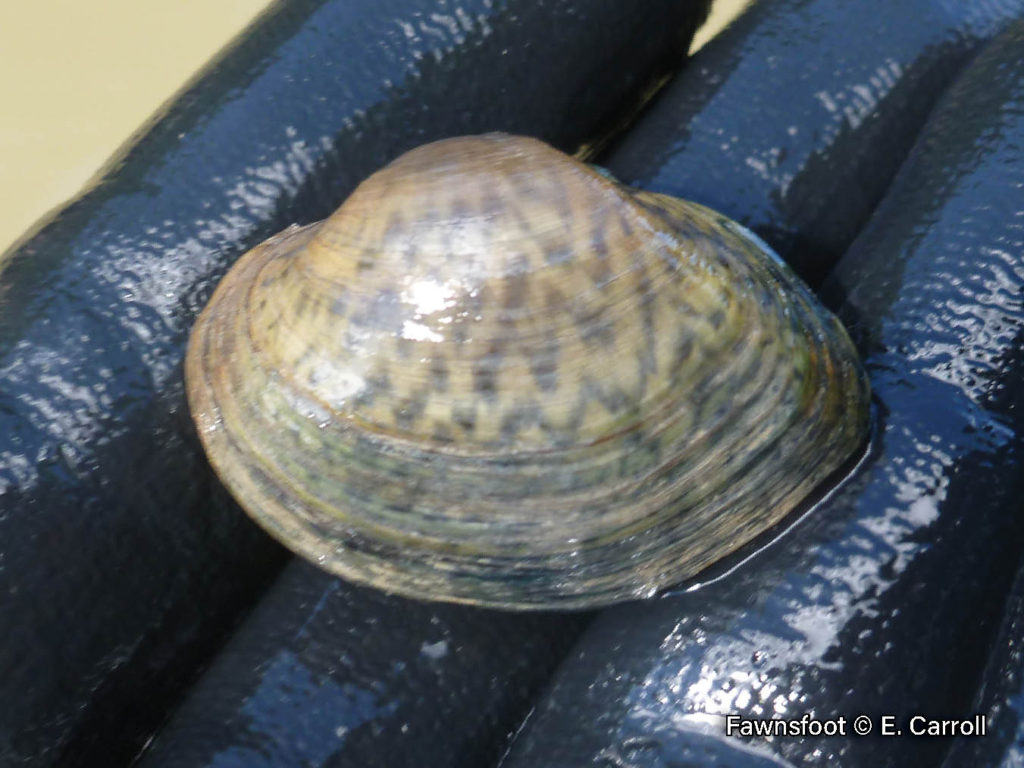
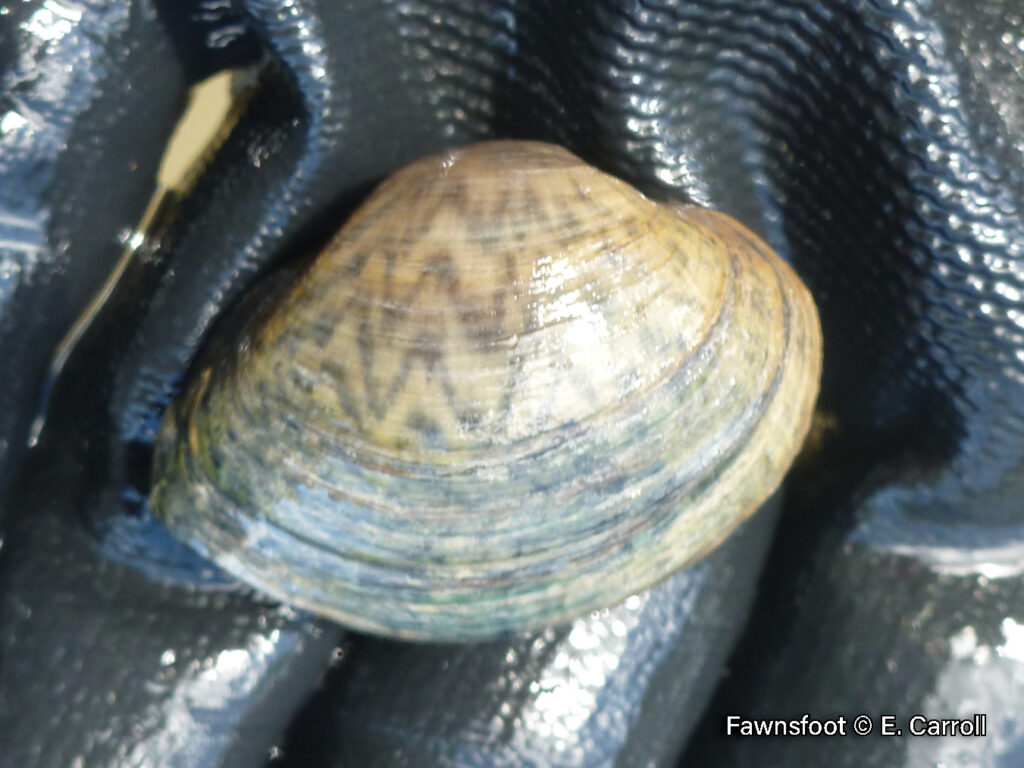
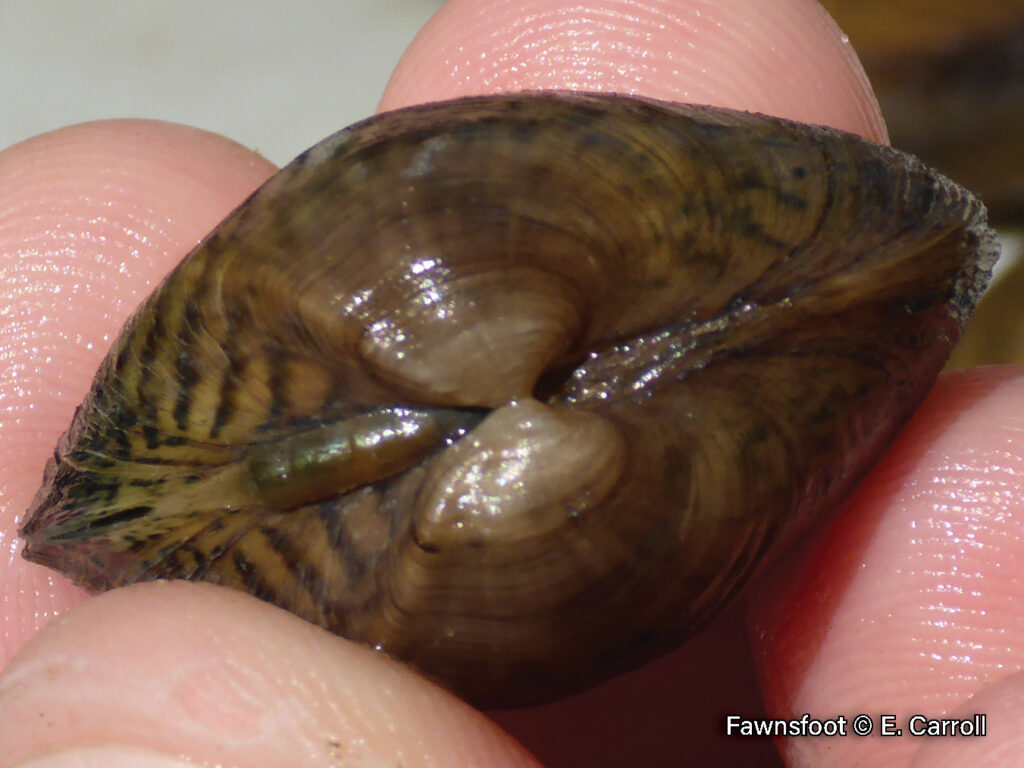
The Fawnsfoot is a small freshwater mussel with an average length of approximately 3.5cm and a maximum length of 4.5cm. The shell is smooth and brownish-yellow to green and moderately thick. Its most distinctive feature is the dark green rays that are broken up into chevron shaped markings (upside down Vs or zigzags). The Fawnsfoot is oval to triangular shaped, with a rounded anterior end and bluntly pointed posterior.

Picture of a Fawnsfoot mussel in a gloved hand, a small, light brown mussel with chevron markings
Picture of a Fawnsfoot mussel beak, with faint double-looped bars
Picture of a Fawnsfoot mussel beak and posterior ridge
Picture of a Fawnsfoot mussel beak, with faint double-looped bars

Lifecycle

Like other unionid mussels, Fawnsfoot rely on a host for their parasitic larval stage. Females release their larvae, known as glochidia, so they can attach to the gills and fins of their host fish, in the case of Fawnsfoot, their glochidial hosts include Freshwater Drum and Sauger. The glochidia remain attached until they have absorbed nutrients and metamorphose into juveniles, at which point they release from their fish host and fall to the riverbed.
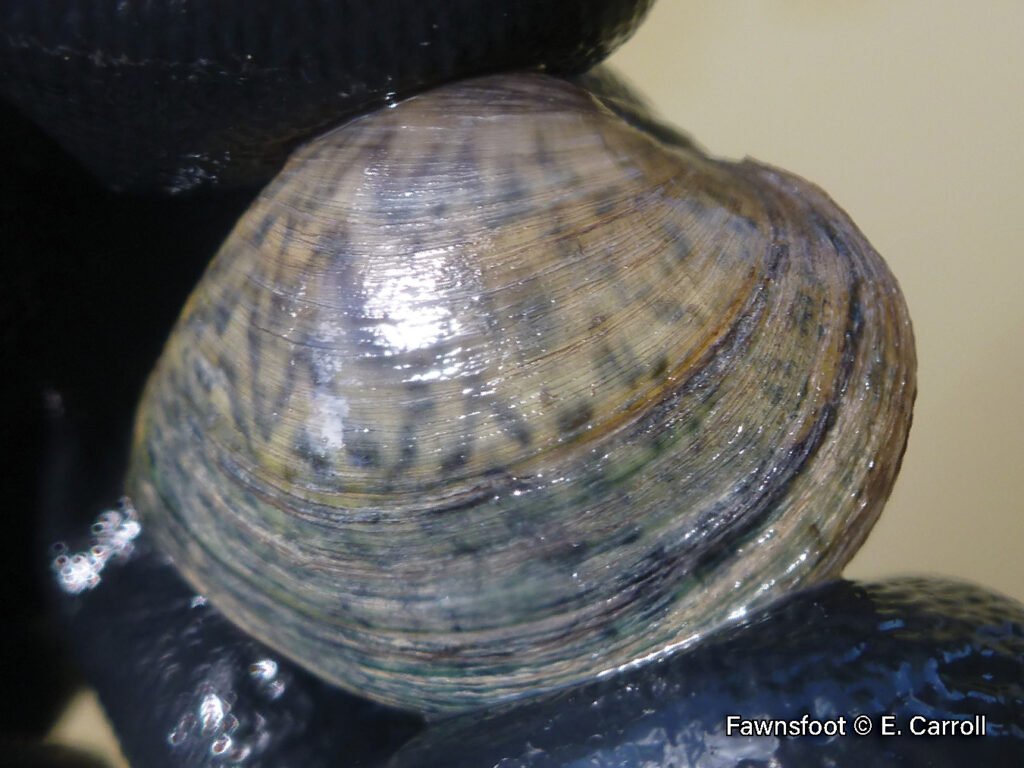
Picture of a Fawnsfoot mussel in a gloved hand, a small, light brown mussel with chevron markings

Habitat

The Fawnsfoot mussel is found in medium to large rivers that have a slow to moderate current and soft sand, mud, or sometimes gravel substrates.

The Sydenham watershed contains critical habitat for the Fawnsfoot, which means that habitat in the Sydenham is considered “necessary for the survival or recovery” of this Species at Risk.

Distribution

The Fawnsfoot mussel is found in central North America primarily in the Great Lakes and Mississippi drainages with populations also in the Gulf Coastal region. It has a wide distribution in the United States, occurring in 23 states, but is only considered apparently secure or secure in five states.

In Canada, the Fawnsfoot is only found in five locations in Ontario, the Thames River, Sydenham River, St. Clair River Delta, lower Grand River, and Saugeen River drainage. Its abundance is low in these systems. In fact, in both the Saugeen River and St. Clair River Delta, researchers have only documented a single specimen. Fawnsfoot have been lost from 51% of their historical range in Canada, in the past, Fawnsfoot were also found in the Detroit and Niagara rivers, Lake Erie, and offshore waters of Lake St. Clair but are no longer found in these areas.

Federal recovery planning identified critical habitat for Fawnsfoot in both Bear Creek (tributary of the North Branch) and the East Branch of the Sydenham River, as well as the Grand and Thames rivers.
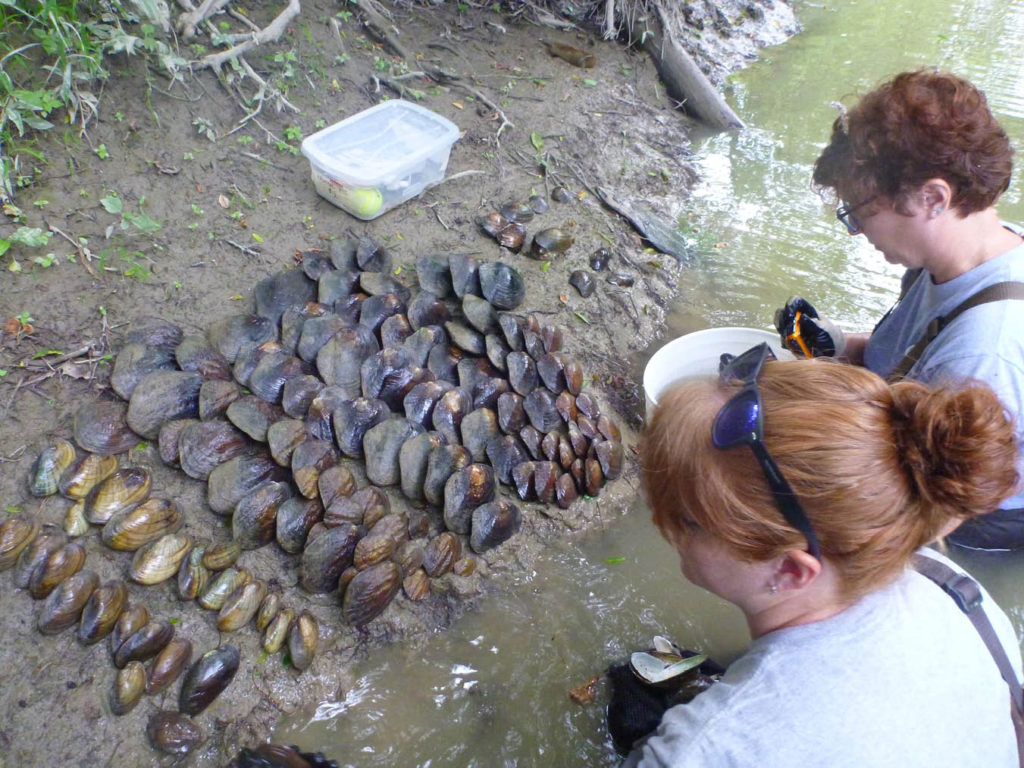
Picture of two biologists kneeling on the shore identifying and documenting a number of freshwater mussels that were collected from the river.

The North Sydenham Shows off its Mussels
In 2016, while completing a mussel relocation for a barrier removal project in Bear Creek on the North Sydenham, biologists at the St. Clair Region Conservation Authority (SCRCA) encountered an endangered Fawnsfoot mussel, which was first record of this species on the North Branch.

The discovery of this endangered species combined with the lack of current mussel data was the driver to complete additional surveys on the North Branch of the Sydenham – and the river did not disappoint!

Learn more!

Why is the Fawnsfoot a Species at Risk?

According to the 2008 COSEWIC assessment:

This freshwater mussel is widely distributed in central North America, with the northern portion of its range extending into the Lake Erie, Lake St. Clair and lower Lake Huron drainages of southwestern Ontario. It appears to have always been a rare species in Canada, representing < 5% of the freshwater mussel community in terms of abundance wherever it occurs. Approximately 86% of historical records are in waters that are now infested with zebra mussels and therefore uninhabitable. Zebra mussels, which were accidentally introduced into the Great Lakes, attach to the shells of native freshwater mussels, causing them to suffocate or die from lack of food. The species has declined dramatically and has been lost from four historical locations resulting in a 51% reduction in its range. It is now found in only five widely separated locations, two of which represent single specimens. In two locations, the species’ distribution may be limited by the presence of dams that restrict the movements of the freshwater drum, the presumed fish host of the juvenile mussels. Poor water quality resulting from rural and urban influences poses an additional continuing threat.”

Mussels at Risk

  • SAR in the Sydenham
  • Mussels
    • Eastern Pondmussel
    • Fawnsfoot
    • Kidneyshell
    • Lilliput
    • Mapleleaf
    • Northern Riffleshell
    • Purple Wartyback
    • Rainbow
    • Rayed Bean
    • Round Hickorynut
    • Round Pigtoe
    • Salamander Mussel
    • Snuffbox
    • Threehorn Wartyback
    • Wavy-rayed Lampmussel
  • Fishes
  • Snakes
  • Turtles
Test Your ID Skills!
Check out our latest newsletter! Download

© 2026 · St. Clair Region Conservation Authority - The Sydenham River Watershed

  • Privacy

Press Enter to search · Esc to close