Skip to content
  • Biodiversity
    • Why is Biodiversity Important?
    • Threats to Biodiversity
    • What are Species at Risk?
    • Recovery Planning
    • Environmental Monitoring
  • Species at Risk
    • Species at Risk
      • SAR in the Sydenham
      • Mussels
      • Fishes
      • Snakes
      • Turtles
    • Mussels
      • Eastern Pondmussel
      • Fawnsfoot
      • Kidneyshell
      • Lilliput
      • Mapleleaf
      • Northern Riffleshell
      • Purple Wartyback
      • Rainbow
      • Rayed Bean
      • Round Hickorynut
      • Round Pigtoe
      • Salamander Mussel
      • Snuffbox
      • Threehorn Wartyback
      • Wavy-rayed Lampmussel
    • Fishes
      • Blackstripe Topminnow
      • Eastern Sand Darter
      • Grass Pickerel
      • Northern Madtom
      • Northern Sunfish
      • Pugnose Minnow
      • Pugnose Shiner
      • River Darter
      • Silver Lamprey
      • Spotted Sucker
    • Snakes
      • Eastern Foxsnake
      • Eastern Hog-nosed Snake
      • Eastern Milksnake
    • Turtles
      • Blanding’s Turtle
      • Midland Painted Turtle
      • Northern Map Turtle
      • Snapping Turtle
      • Spiny Softshell
  • Stewardship
    • Healthy Watersheds Program
      • Sydenham Phosphorus Reduction Initiative
    • Managing Phosphorus
    • Phosphorus StoryMap
    • Reducing Pollution in Runoff
    • Best Management Practices Resources
  • Stories
  • Get Involved
    • What Can I Do?
    • Take the Stewardship Survey
    • Test Your ID Skills!
    • Report a Turtle Sighting
  • Resources
  • Contact Us
Sydenham River WatershedSydenham River Watershed
  • Biodiversity
    • Why is Biodiversity Important?
    • Threats to Biodiversity
    • What are Species at Risk?
    • Recovery Planning
    • Environmental Monitoring
  • Species at Risk
    • Species at Risk
      • SAR in the Sydenham
      • Mussels
      • Fishes
      • Snakes
      • Turtles
    • Mussels
      • Eastern Pondmussel
      • Fawnsfoot
      • Kidneyshell
      • Lilliput
      • Mapleleaf
      • Northern Riffleshell
      • Purple Wartyback
      • Rainbow
      • Rayed Bean
      • Round Hickorynut
      • Round Pigtoe
      • Salamander Mussel
      • Snuffbox
      • Threehorn Wartyback
      • Wavy-rayed Lampmussel
    • Fishes
      • Blackstripe Topminnow
      • Eastern Sand Darter
      • Grass Pickerel
      • Northern Madtom
      • Northern Sunfish
      • Pugnose Minnow
      • Pugnose Shiner
      • River Darter
      • Silver Lamprey
      • Spotted Sucker
    • Snakes
      • Eastern Foxsnake
      • Eastern Hog-nosed Snake
      • Eastern Milksnake
    • Turtles
      • Blanding’s Turtle
      • Midland Painted Turtle
      • Northern Map Turtle
      • Snapping Turtle
      • Spiny Softshell
  • Stewardship
    • Healthy Watersheds Program
      • Sydenham Phosphorus Reduction Initiative
    • Managing Phosphorus
    • Phosphorus StoryMap
    • Reducing Pollution in Runoff
    • Best Management Practices Resources
  • Stories
  • Get Involved
    • What Can I Do?
    • Take the Stewardship Survey
    • Test Your ID Skills!
    • Report a Turtle Sighting
  • Resources
  • Contact Us

Kidneyshell

Home Species at Risk in the SydenhamMusselsKidneyshell

Kidneyshell

Ptychobranchus fasciolaris

COSEWIC: Endangered
SARA: Endangered
COSSARO: Endangered
SARO: Endangered

Species Description

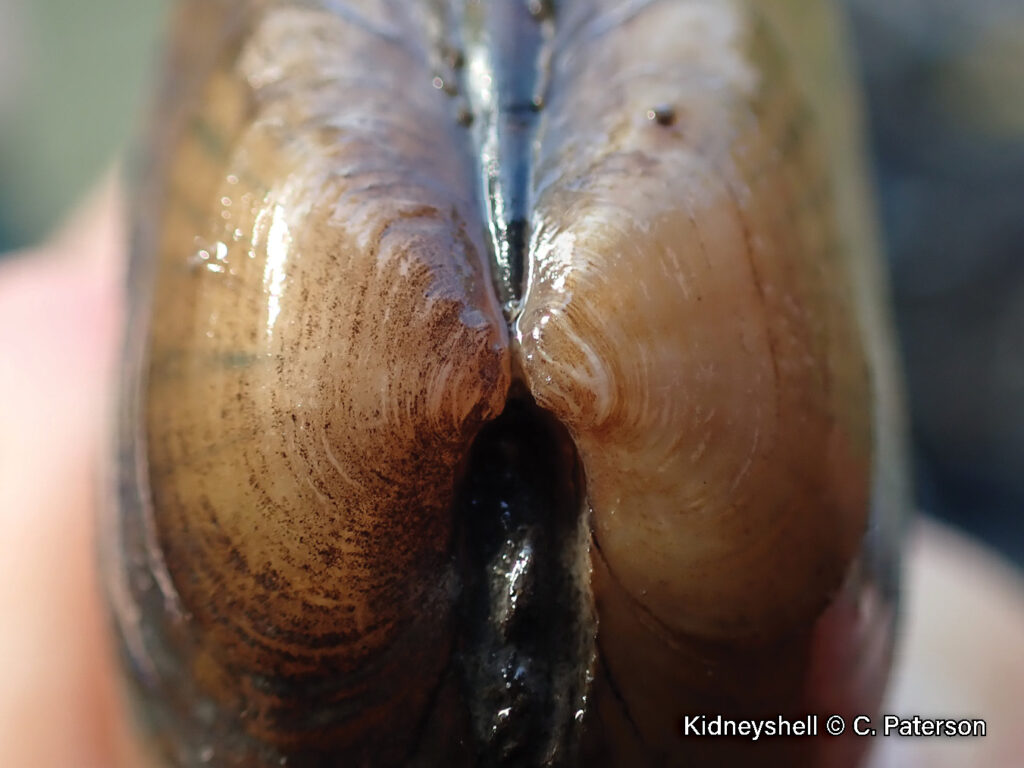
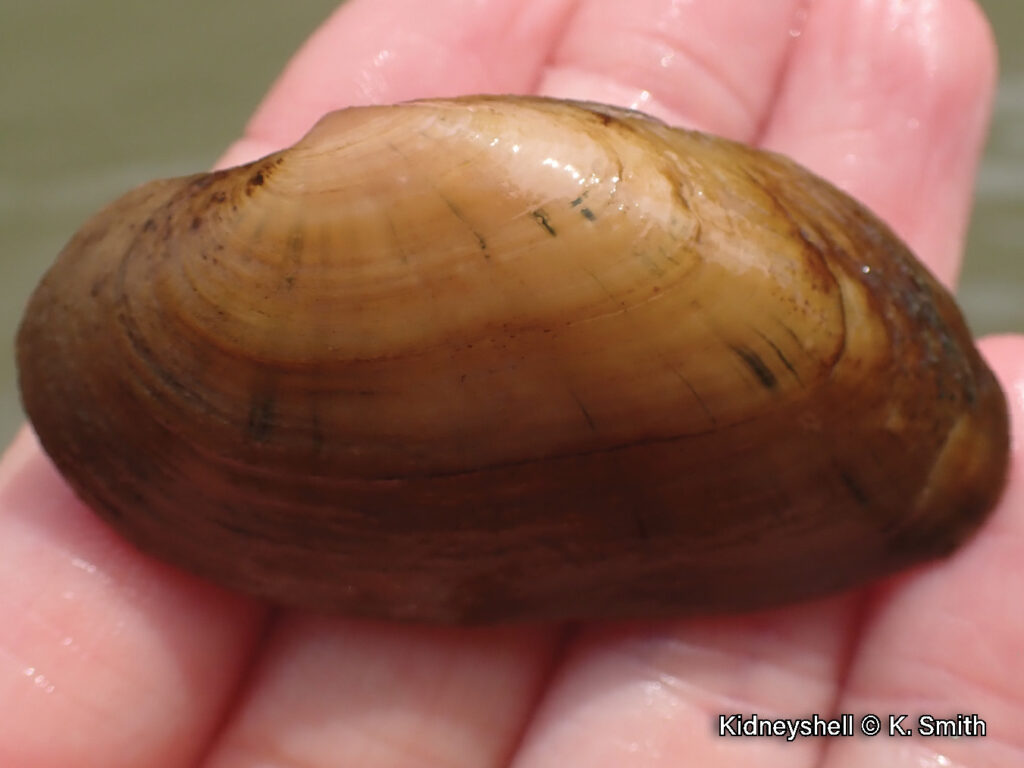
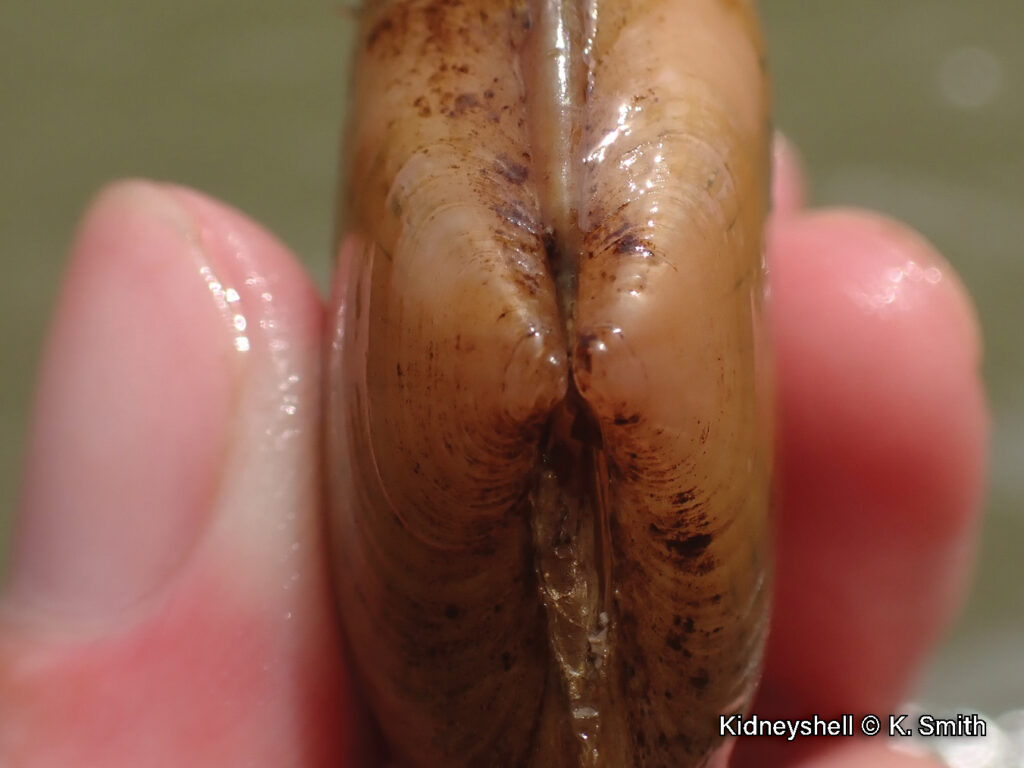
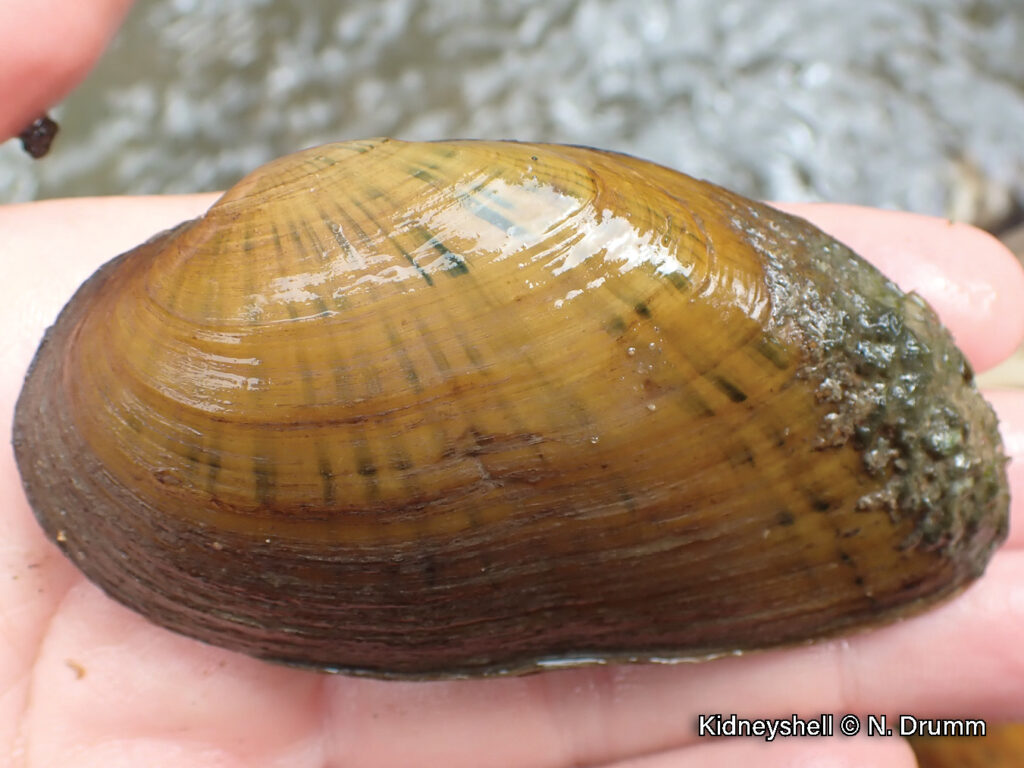
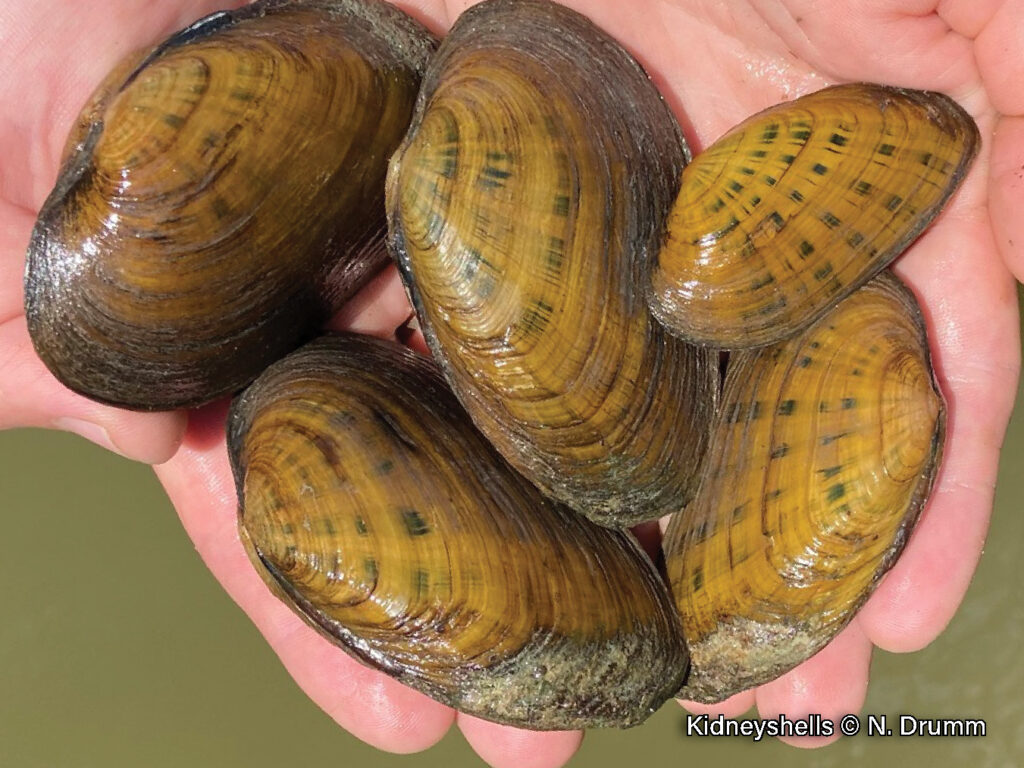
Kidneyshell mussels are an eye-catching species found in the Sydenham, with elliptical yellowish shells decorated with interrupted green rays creating rows of squared spots. As Kidneyshells age, the rays can fade and the yellowish shell darkens to a rich chestnut colour. They are a medium to large mussel that can reach up to 12cm in length.

Picture of a beautifully marked kidneyshell mussel, a medium-sized, yellowish mussel with interrupted green rays
Picture of a kidneyshell mussel, a medium-sized, yellowish-brown mussel with interrupted green rays
Picture of a kidneyshell mussel beak, that has indistinct wavy ridges
Picture of a young kidneyshell mussel, a medium-sized, yellowish-brown mussel with interrupted green rays
Picture of a kidneyshell mussel beak, that has indistinct wavy ridges
Picture of a kidneyshell mussel, a medium-sized, yellowish-brown mussel with interrupted green rays
Picture of a kidneyshell mussel beak, that has indistinct wavy ridges
Picture of a beautifully marked kidneyshell mussel, a medium-sized, yellowish mussel with interrupted green rays
Picture of a kidneyshell mussel beak, that has indistinct wavy ridges

Lifecycle

Like Ontario’s other freshwater mussel species, a successful reproductive cycle requires a suitable fish host for glochidia to attach and develop into juvenile mussels. Kidneyshell mussels have evolved to use the power of mimicry to ensure the next generation reaches a host.

Female Kidneyshells release their glochidia encased in a package of mucous known as a conglutinate. Their conglutinates resemble blackfly larvae and are very convincing – they even have eye-spots! This imitation of a prey item encourages fish to ingest the conglutinates, at which point they rupture and the glochidia attach to the gills of the fish. This allows the glochidia to hitch a ride to new areas of habitat and absorb nutrients, once they’ve developed into juveniles they let go of the fish to start life as a free-living mussel on the water bottom. Known fish host species for Kidneyshell include Blackside Darter, Fantail Darter, Johnny Darter, and Brook Stickleback.

Picture of Kidneyshell conglutinates that mimic the larval stage of blackflies (Simuliidae) to attract darter hosts (photo credit: Jess Jones)
Picture of a Ouachita Kidneyshell (P. occidentalis) conglutinate rupturing, releasing glochidia (photo credit: M.C. Barnhart)

Habitat

They have specific habitat requirements, as they need the swift flowing waters of riffle areas with firmly packed course gravel and sand substrate with good water quality.

Distribution

Within Canada, Kidneyshell are only found in southwestern Ontario; they have been lost from 70% of their historical range. Much of the species decline throughout its range can be attributed to the invasion of Zebra Mussels and the increase in siltation and pollutants from agricultural practices and urban developments. Once found in Lake St. Clair and Erie, and the Detroit, Grand, Thames and Niagara rivers, reproducing populations of Kidneyshell are now restricted to just the East Sydenham and Ausable rivers. There are also small populations in the St. Clair River delta and Medway Creek (a tributary of the Thames River). In the East Sydenham River, the reproducing population is limited to a 100 km stretch of the river.

Picture of three kidneyshell mussels, a medium-sized, mostly yellowy-brown mussel with dark green interrupted rays
Picture of two kidneyshell mussels, a medium-sized, yellowish-brown mussel with dark green interrupted rays. The top kidneyshell is older with less pronounced rays.
The Sydenham watershed contains critical habitat for the Kidneyshell, which means that habitat in the Sydenham is considered “necessary for the survival or recovery” of this Species at Risk.

Threats to Kidneyshell

Water quality is crucial to the survival of remaining populations. Pollution and siltation of rivers and streams from agricultural runoff and urban and industrial effluent, as well as the introduction of the Zebra Mussel, have contributed to declines in freshwater mussel populations. Any threats to the survival of native host fish species also negatively impact the Kidneyshell population in the Sydenham River.

Picture of two kidneyshell mussels in a hand, a medium-sized, yellowish-brown mussel with dark green interrupted rays.
Picture of five kidneyshell mussels in a hand, a medium-sized, yellowish-brown mussel with dark green interrupted rays.

Mussels at Risk

  • SAR in the Sydenham
  • Mussels
    • Eastern Pondmussel
    • Fawnsfoot
    • Kidneyshell
    • Lilliput
    • Mapleleaf
    • Northern Riffleshell
    • Purple Wartyback
    • Rainbow
    • Rayed Bean
    • Round Hickorynut
    • Round Pigtoe
    • Salamander Mussel
    • Snuffbox
    • Threehorn Wartyback
    • Wavy-rayed Lampmussel
  • Fishes
  • Snakes
  • Turtles
Test Your ID Skills!
Check out our latest newsletter! Download

© 2026 · St. Clair Region Conservation Authority - The Sydenham River Watershed

  • Privacy

Press Enter to search · Esc to close