Spiny Softshell
Apalone spinifera


Apalone spinifera
The Eastern Spiny Softshell Turtle is one of Ontario’s most elusive turtle species – many nature enthusiasts may go their entire life without seeing one. This is in part due to their shy nature and aquatic lifestyle but largely because there are so few remaining, population estimates suggest only 1,000 adults remain in Canadian waterways.
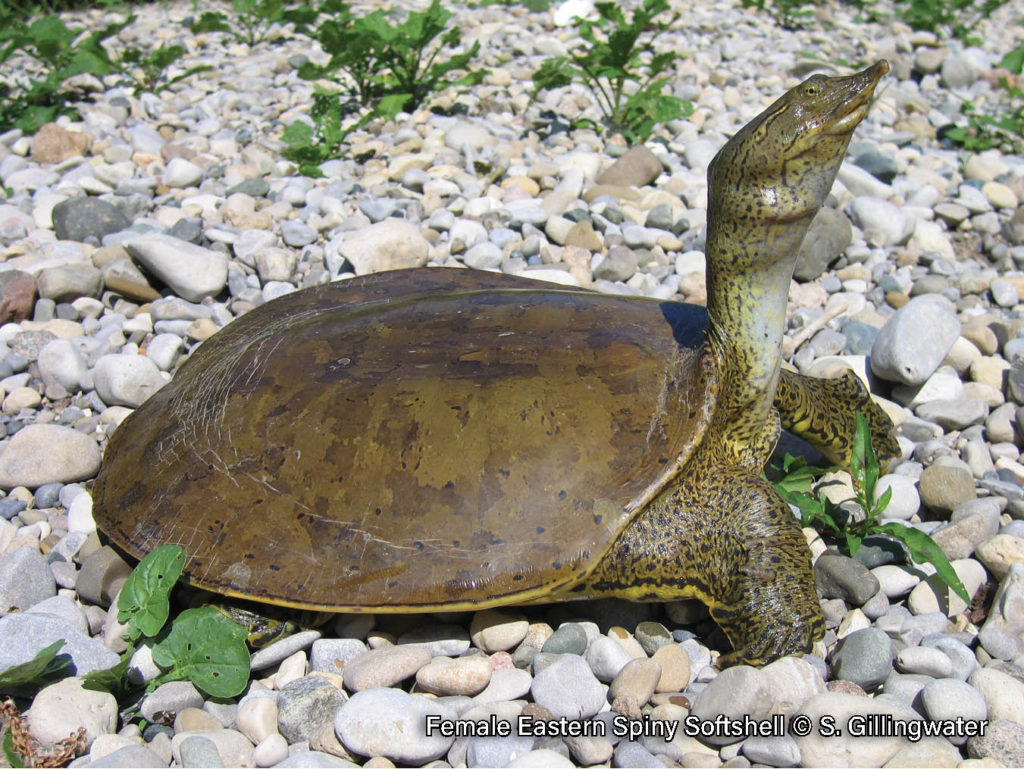
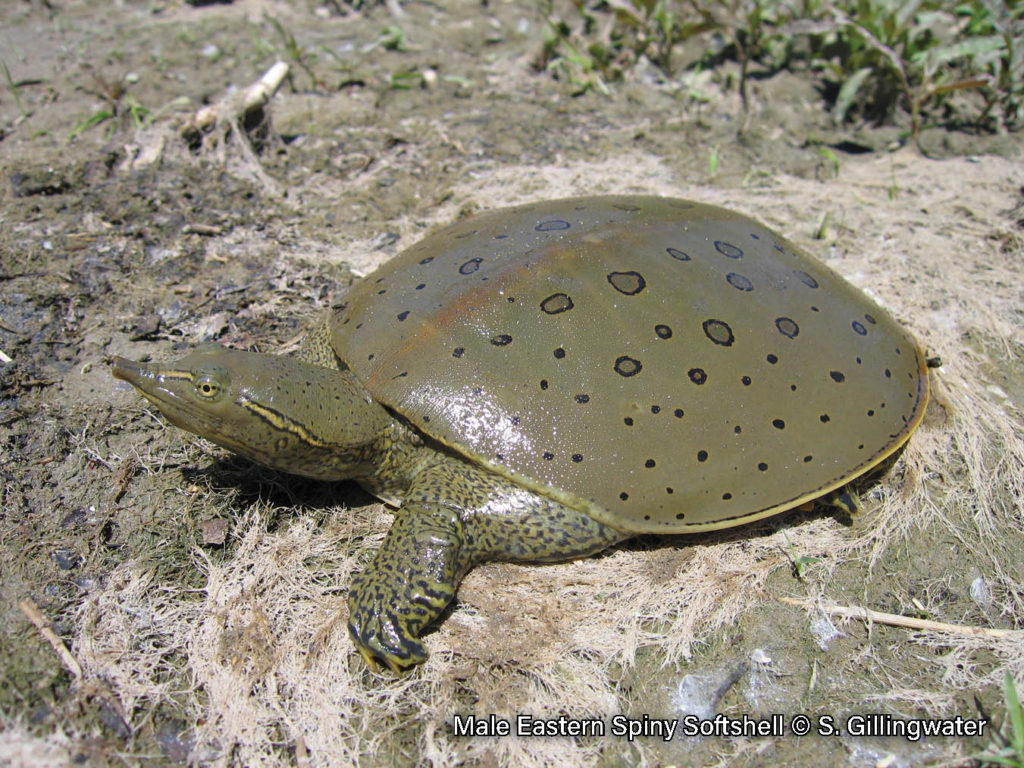
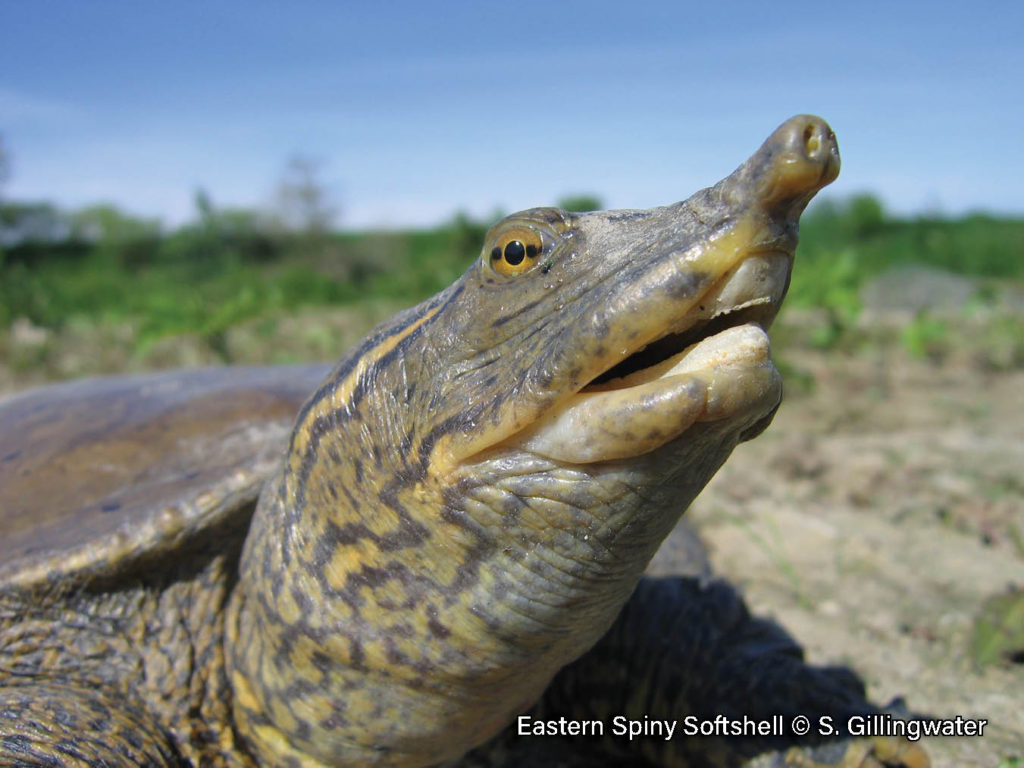
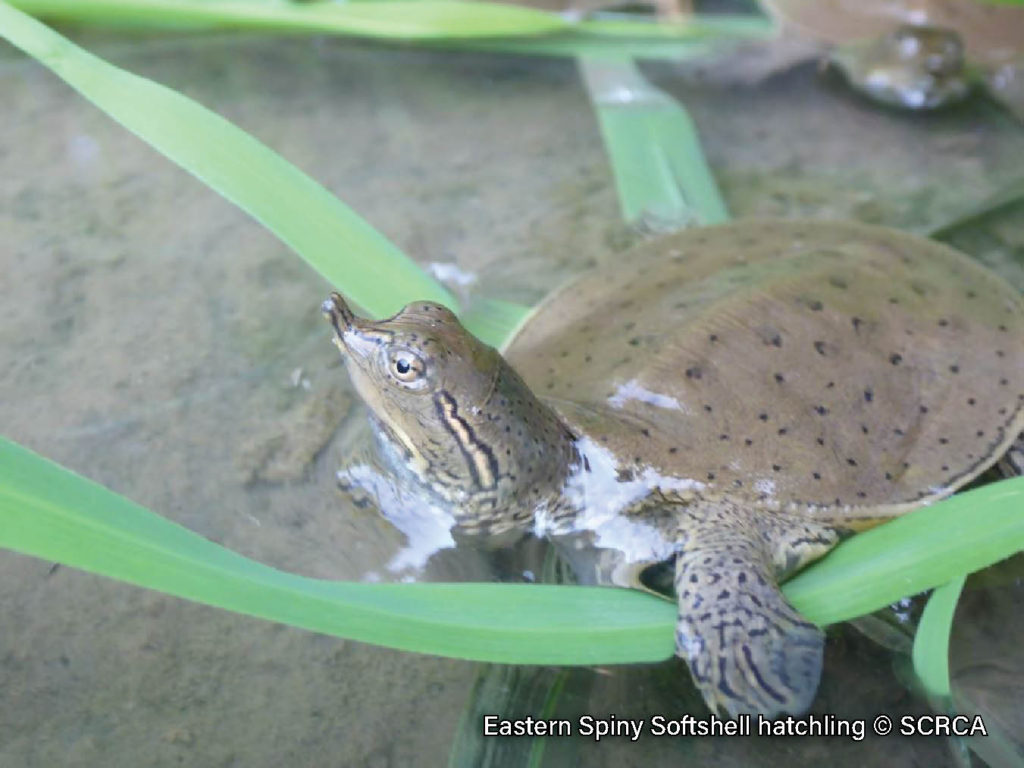
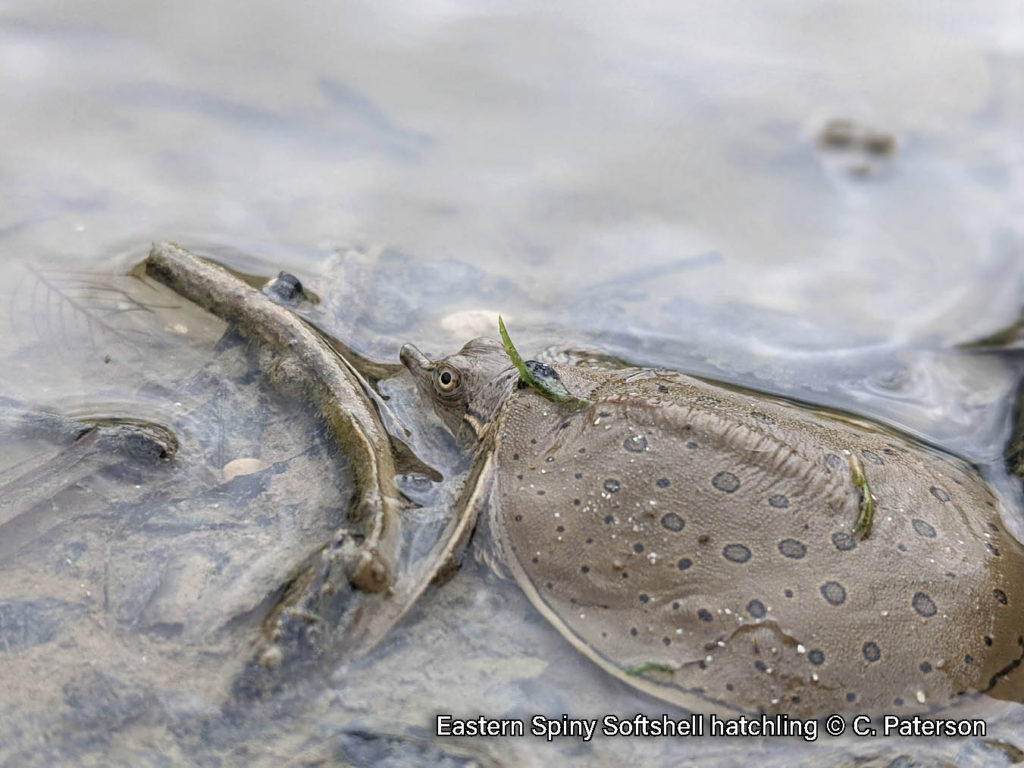
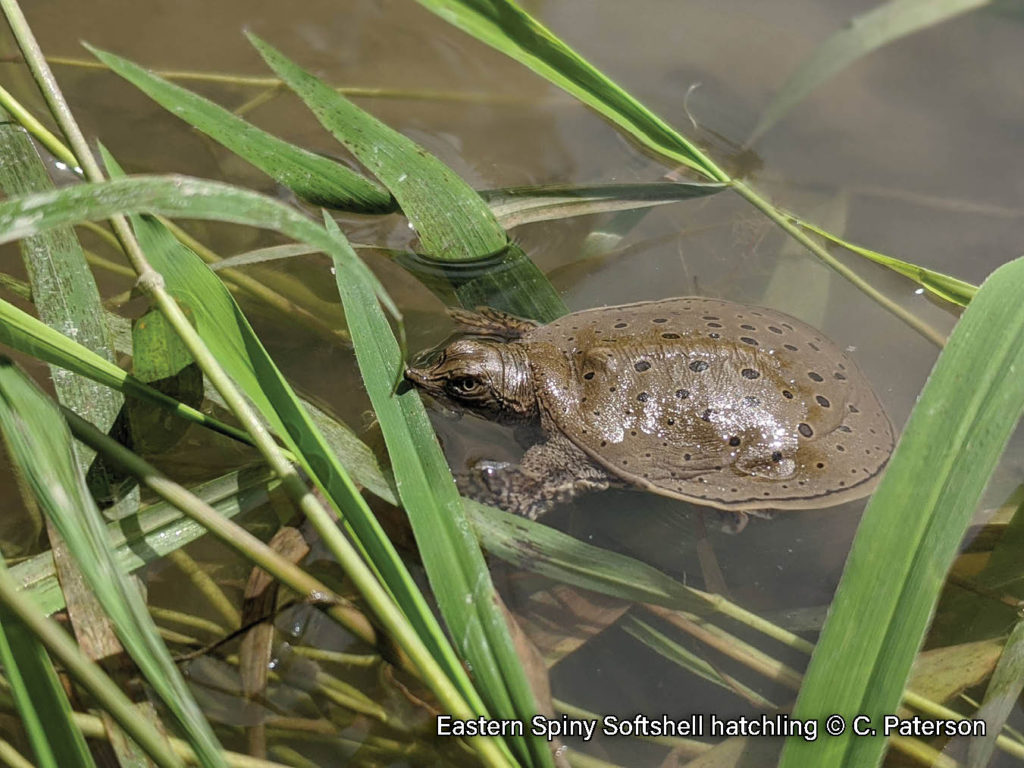
The Spiny Softshell is a large, highly aquatic turtle with a unique flat, leathery carapace that can measure up to 25cm in males and 50cm in females. It is a sexually dimorphic species, meaning males and females look different – the adult females are often more than twice the size of adult males. Adult males and juveniles have a greenish-brown carapace with darkly-outlined spots, whereas females have a blotchy camouflage-like upper shell. Other distinctive features of the Spiny Softshell are its long neck, elongated tubular snout, and large webbed feet.
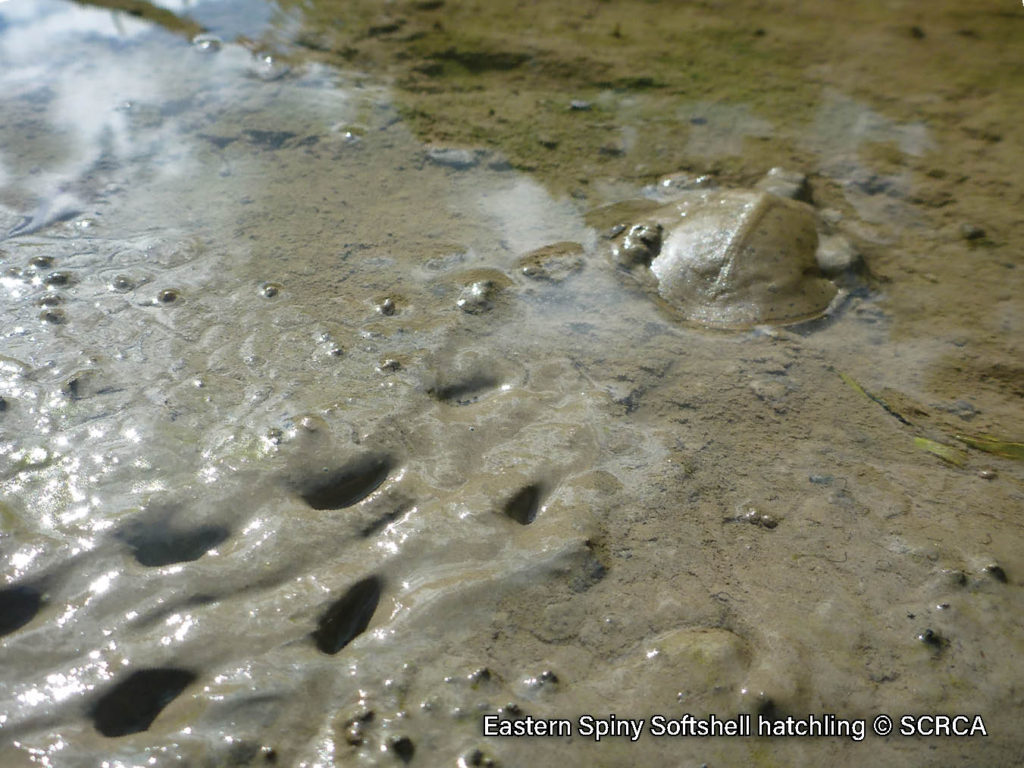
The Spiny Softshell is very quick both on land and in water. It will disguise itself from predators and prey by burying its body in the sand or mud at the bottom of the river. Using its characteristic long neck and tubular snout like a snorkel, its body can remain submerged while only revealing its nostrils above the surface. The Spiny Softshell also possesses the remarkable ability to absorb oxygen through its skin and linings of its throat and cloaca, allowing it to stay fully submerged for hours at a time.
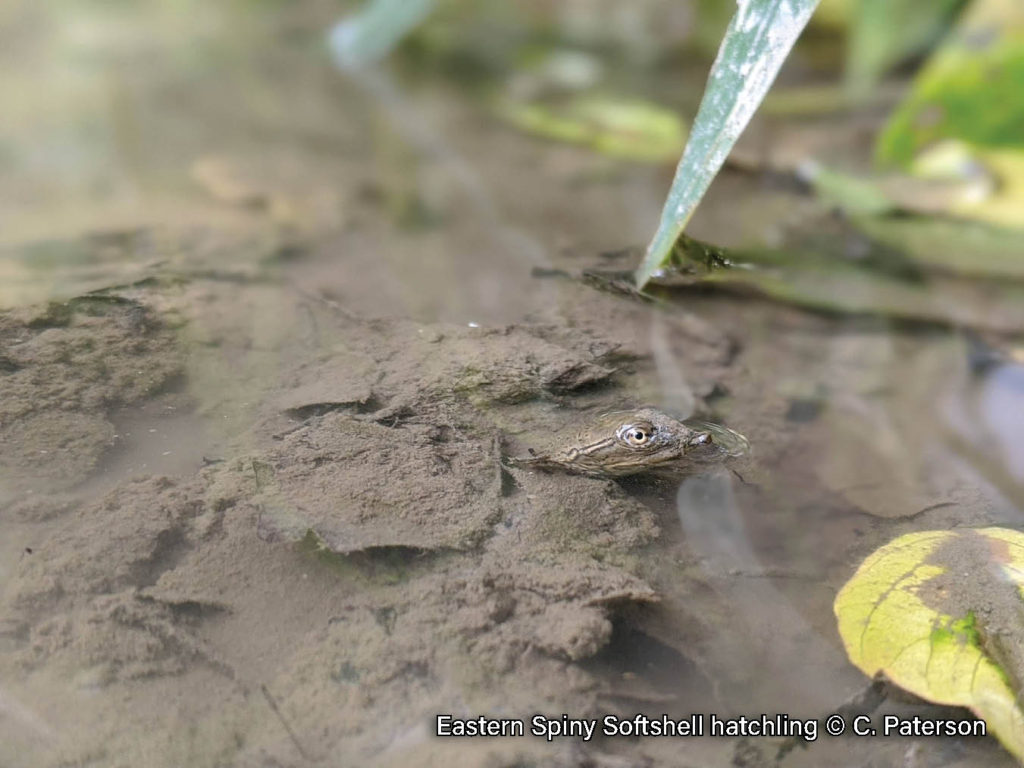
Spiny Softshell Turtles are predominantly carnivorous, feeding on an array of prey items, such as crayfish, aquatic insects, small fish, molluscs, and tadpoles.
Spiny Softshell spend the majority of their life in the water and are the most anoxia-intolerant species of turtle in Canada, which means they require healthy, oxygen-rich waters. They live in creeks, rivers, oxbows, lakes, bays, and coastal wetlands in areas with a soft sandy or muddy bottom, little aquatic vegetation, and deep pools.
In Canada, this species hibernates for up to six months at the bottom of large lakes and rivers in deep, oxygen-rich pools that do not completely freeze during the cold winters. They remain in these watery depths over the winter without breathing air, instead, absorbing oxygen through their skin and the lining of their throat and cloaca. Hibernation typically takes place from October to late April.

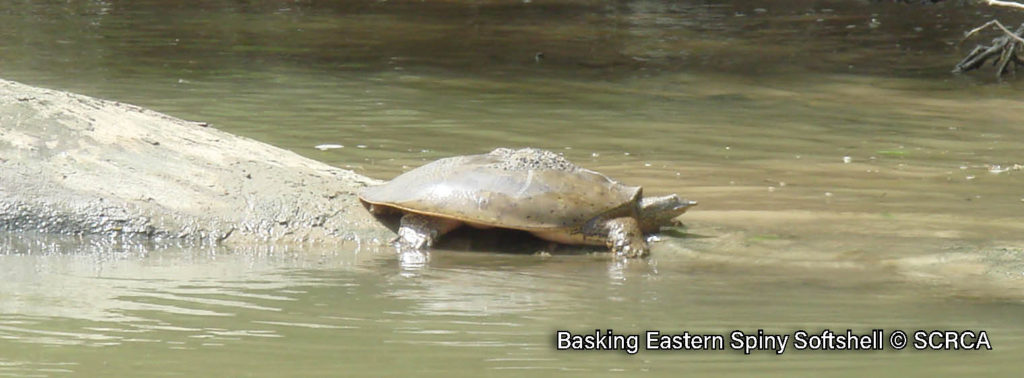
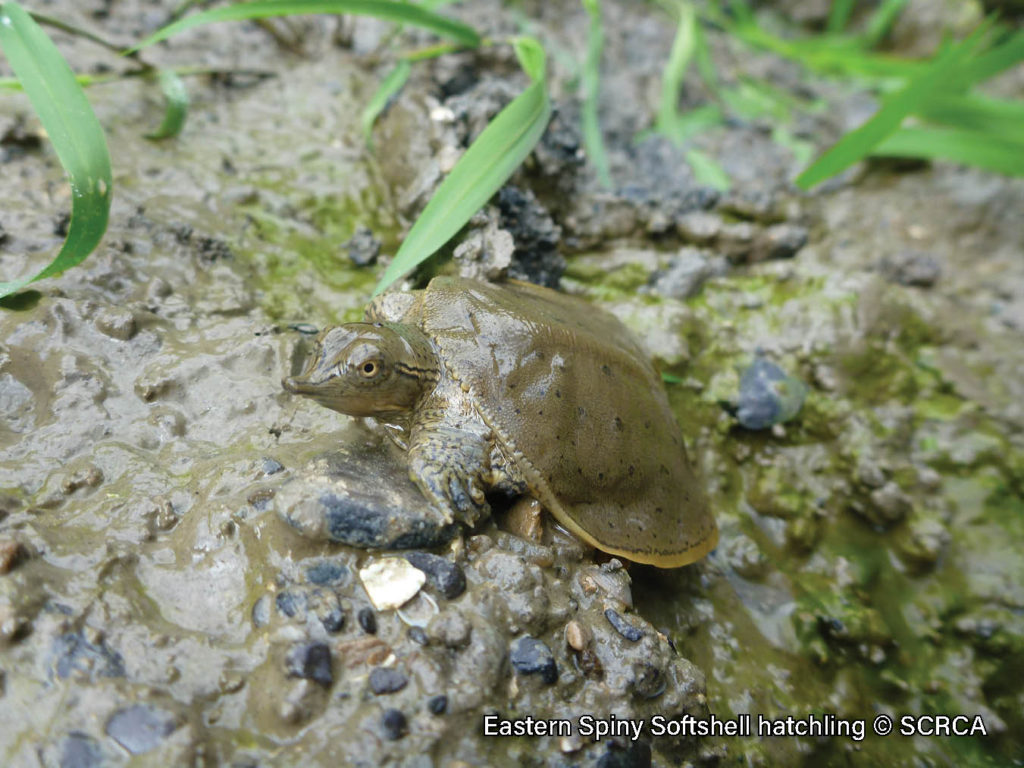
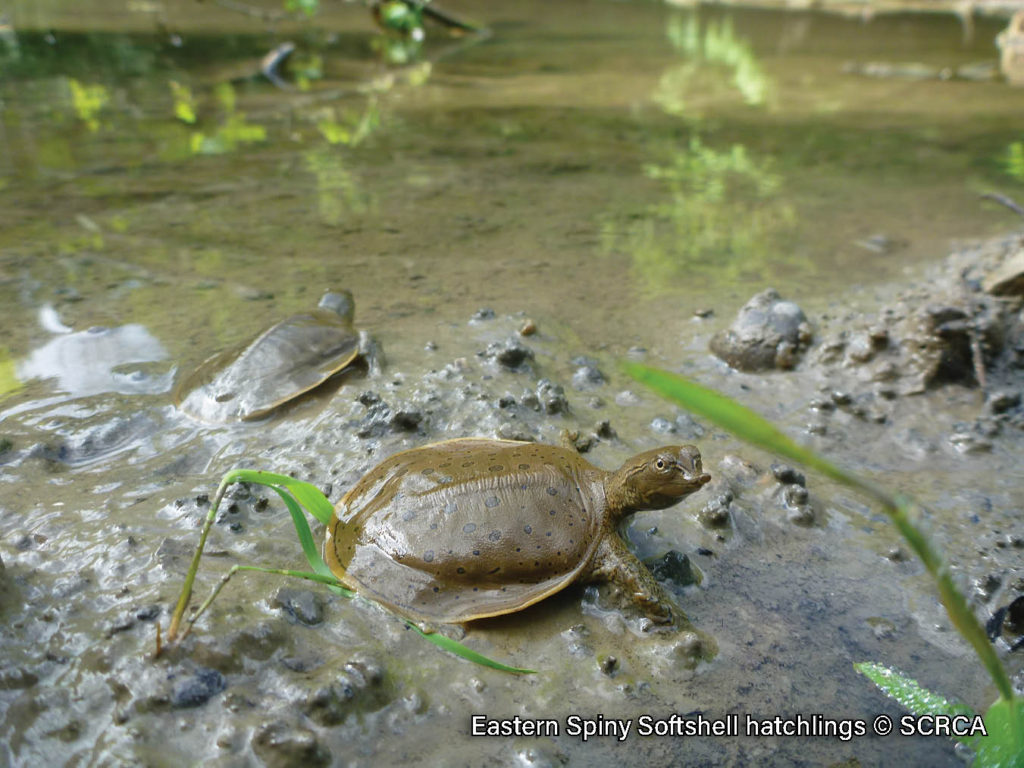
Although they are never far from the water’s edge, Spinys also rely on terrestrial habitat for basking and nesting. From late May to early July, females emerge from their aquatic refuge to seek out sunny, sandy or gravelly shorelines where they excavate a small, shallow nest to lay their eggs. Spinys are long-lived and slow-growing, they do not reach maturity until they are about 15-20 years old, which means every adult is important to the persistence of the population. Larger females can produce two egg clutches in one season, often returning to the same nesting site. Eggs incubate for approximately 60 to 75 days before hatching. Unlike the other turtle species native to Ontario, except the Wood Turtle, the sex of a Spiny Softshell is not dependent on the incubation temperature of the egg – it is genetically determined.
Supporting populations of turtles at risk
In order to help support the population of Spiny Softshell Turtles in the Sydenham, biologists at the St. Clair Region Conservation Authority work with the Salthaven Wildlife Rehabilitation and Education Centre, Upper Thames River Conservation Authority, and private landowners to rescue nests that are under imminent threat.
Spiny Softshell Turtles are native to freshwaters in eastern North America. In Canada, there are two distinct populations, one in southern Quebec, known as the Great Lakes-St. Lawrence population, and the other in southern Ontario, known as the Carolinian population. The larger Carolinian population is estimated to consist of approximately 900 adults that are restricted to only a few locations in southern Ontario.
From the 2018 federal Recovery Strategy for the Spiny Softshell in Canada:
The Canadian adult population of Spiny Softshell is estimated to be approximately 1,000 mature individuals in 35 local populations (14 extant, 7 historical, and 14 extirpated). Surveys of local populations in Ontario indicate that over the past 20 years there may have been population declines of up to 45% (COSEWIC 2016).”
The main threats identified for Spiny Softshell in Ontario are the development of shoreline and riverine habitat, growing populations of predators like raccoons that flourish in human-impacted landscapes, fishing by-catch, collisions with boats, and illegal poaching or collection for the pet trade. Disturbance and loss of habitat from increased agricultural and recreational use of nesting and basking sites as well as the encroachment of non-native plant species like the invasive Phragmites in these areas. Dams and other activities that alter water regimes play a critical role as they cause flooding of nests and erosion of riverbanks, eradicating suitable nesting habitats. Combined with a low recruitment rate (few turtles added to the population each year), few turtles surviving to adulthood, and delayed sexual maturity, without mitigation these threats will continue to cause populations of this truly unique species to decline.
© 2026 · St. Clair Region Conservation Authority - The Sydenham River Watershed