• Biodiversity
    • Why is Biodiversity Important?
    • Threats to Biodiversity
    • What are Species at Risk?
    • Recovery Planning
    • Environmental Monitoring
  • Species at Risk
    • Species at Risk
      • SAR in the Sydenham
      • Mussels
      • Fishes
      • Snakes
      • Turtles
    • Mussels
      • Eastern Pondmussel
      • Fawnsfoot
      • Kidneyshell
      • Lilliput
      • Mapleleaf
      • Northern Riffleshell
      • Purple Wartyback
      • Rainbow
      • Rayed Bean
      • Round Hickorynut
      • Round Pigtoe
      • Salamander Mussel
      • Snuffbox
      • Threehorn Wartyback
      • Wavy-rayed Lampmussel
    • Fishes
      • Blackstripe Topminnow
      • Eastern Sand Darter
      • Grass Pickerel
      • Northern Madtom
      • Northern Sunfish
      • Pugnose Minnow
      • Pugnose Shiner
      • River Darter
      • Silver Lamprey
      • Spotted Sucker
    • Snakes
      • Eastern Foxsnake
      • Eastern Hog-nosed Snake
      • Eastern Milksnake
    • Turtles
      • Blanding’s Turtle
      • Midland Painted Turtle
      • Northern Map Turtle
      • Snapping Turtle
      • Spiny Softshell
  • Stewardship
    • Healthy Watersheds Program
      • Sydenham Phosphorus Reduction Initiative
    • Managing Phosphorus
    • Phosphorus StoryMap
    • Reducing Pollution in Runoff
    • Best Management Practices Resources
  • Stories
  • Get Involved
    • What Can I Do?
    • Take the Stewardship Survey
    • Test Your ID Skills!
    • Report a Turtle Sighting
  • Resources
  • Contact Us
Sydenham River WatershedSydenham River Watershed
  • Biodiversity
    • Why is Biodiversity Important?
    • Threats to Biodiversity
    • What are Species at Risk?
    • Recovery Planning
    • Environmental Monitoring
  • Species at Risk
    • Species at Risk
      • SAR in the Sydenham
      • Mussels
      • Fishes
      • Snakes
      • Turtles
    • Mussels
      • Eastern Pondmussel
      • Fawnsfoot
      • Kidneyshell
      • Lilliput
      • Mapleleaf
      • Northern Riffleshell
      • Purple Wartyback
      • Rainbow
      • Rayed Bean
      • Round Hickorynut
      • Round Pigtoe
      • Salamander Mussel
      • Snuffbox
      • Threehorn Wartyback
      • Wavy-rayed Lampmussel
    • Fishes
      • Blackstripe Topminnow
      • Eastern Sand Darter
      • Grass Pickerel
      • Northern Madtom
      • Northern Sunfish
      • Pugnose Minnow
      • Pugnose Shiner
      • River Darter
      • Silver Lamprey
      • Spotted Sucker
    • Snakes
      • Eastern Foxsnake
      • Eastern Hog-nosed Snake
      • Eastern Milksnake
    • Turtles
      • Blanding’s Turtle
      • Midland Painted Turtle
      • Northern Map Turtle
      • Snapping Turtle
      • Spiny Softshell
  • Stewardship
    • Healthy Watersheds Program
      • Sydenham Phosphorus Reduction Initiative
    • Managing Phosphorus
    • Phosphorus StoryMap
    • Reducing Pollution in Runoff
    • Best Management Practices Resources
  • Stories
  • Get Involved
    • What Can I Do?
    • Take the Stewardship Survey
    • Test Your ID Skills!
    • Report a Turtle Sighting
  • Resources
  • Contact Us

Purple Wartyback

Home Species at Risk in the SydenhamMusselsPurple Wartyback

Purple Wartyback

Cyclonaias tuberculata

COSEWIC: Threatened
SARA: Under Consideration
COSSARO: Threatened
SARO: Threatened

Species Description

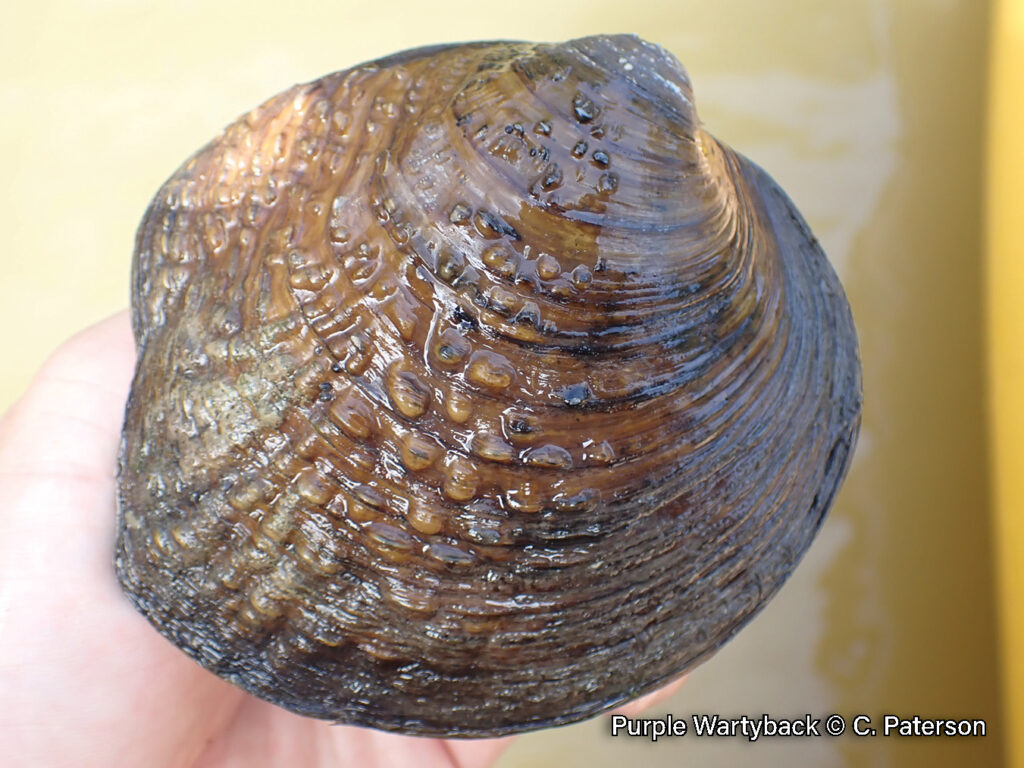
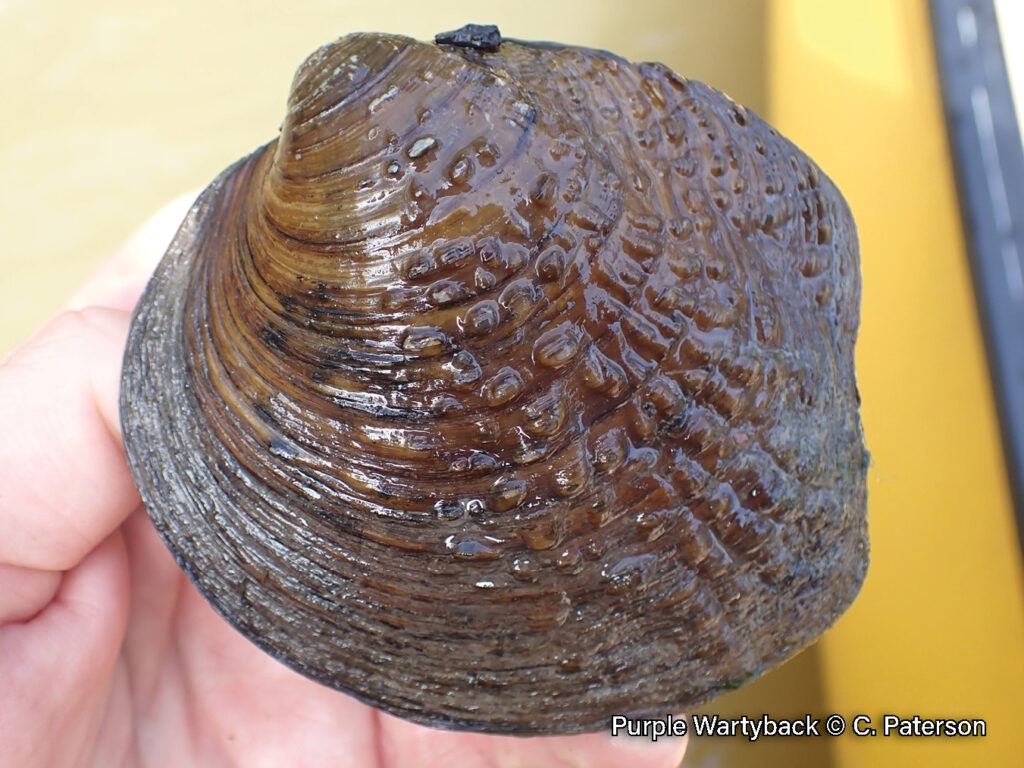
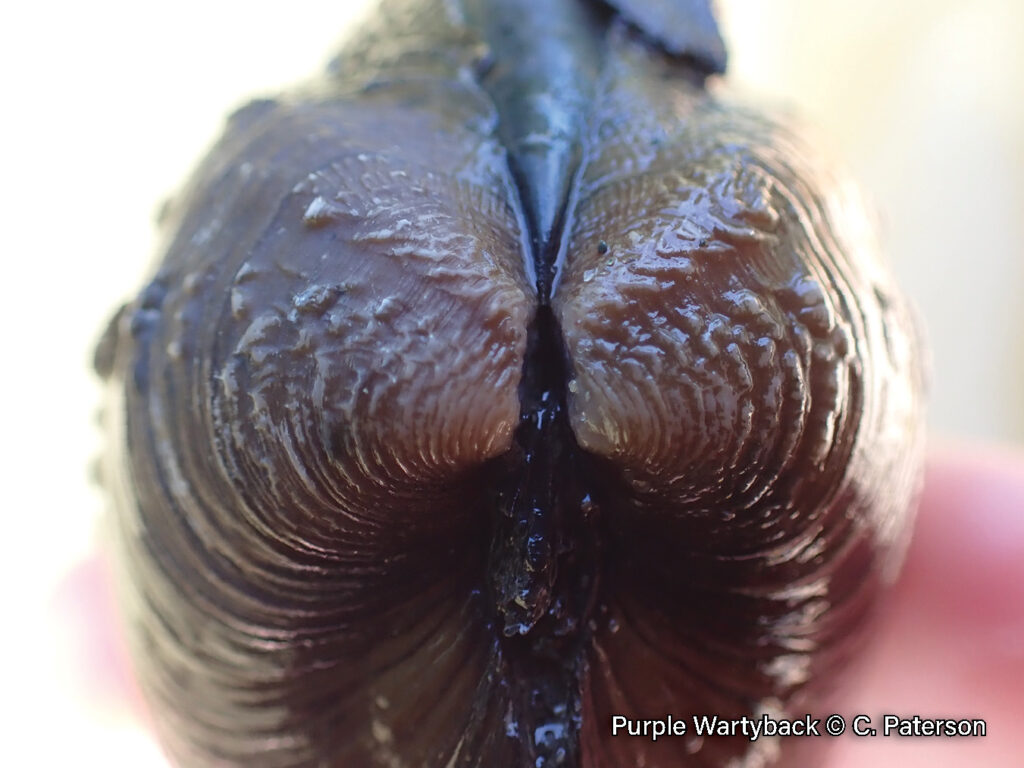
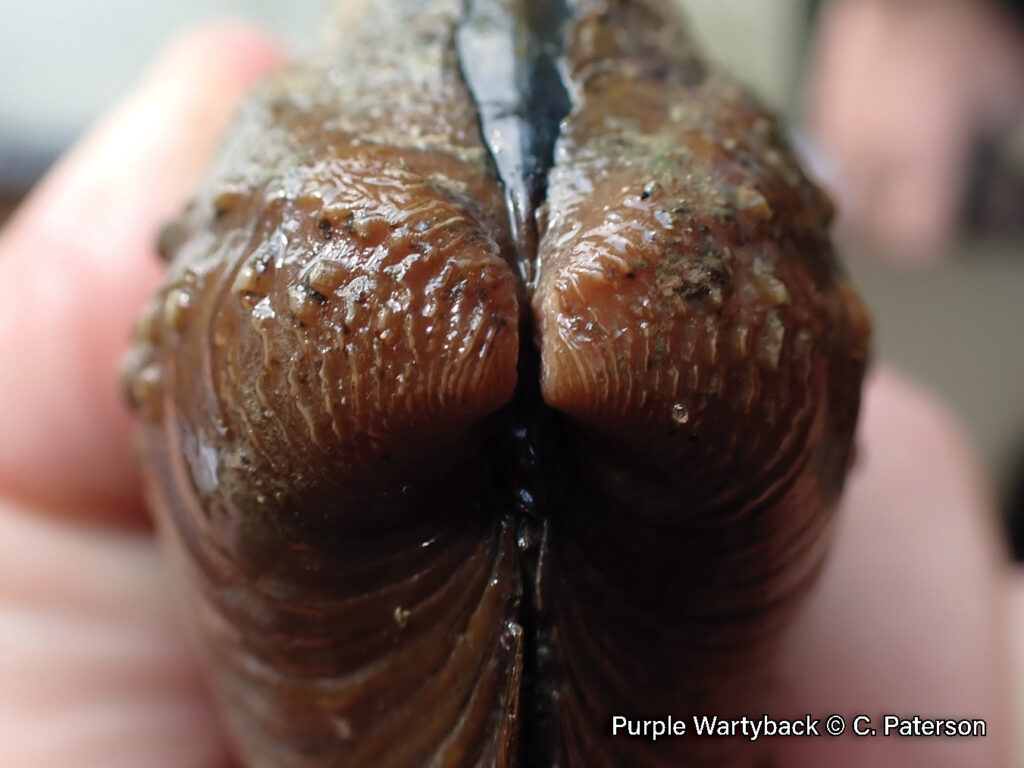
The Purple Wartyback is a medium-sized freshwater mussel that can reach up to 20 cm but on average is 8.5 cm. It has a distinct thick, heavy shell that is generally circular and compressed. The outside of its shell ranges from light to dark brown and is covered in nodules or bumps that are concentrated on the posterior two-thirds of the shell, which was the inspiration for the “wartyback” part of its common name. The “purple” part of its name comes from the inside of its shell (known as the nacre), which can be a beautiful shade of lilac to deep purple. Its beak is only slightly raised and covered in rows of fine zigzag ridges. It also has a low posterior wing. Purple Wartyback are filter feeders with algae making up the largest part of their diet.

Picture of a Purple Wartyback mussel in a hand, a rich brown, medium-sized mussel that is covered in bumps
Picture of the inside shell of a purple wartyback mussel, a medium-sized mussel with a thick shell that has a purple nacre
Picture of the inside shell of a purple wartyback mussel in a hand, a medium-sized mussel with a thick shell that has a purple nacre
Picture of the beak structure of a purple wartyback mussel in a hand, a rich brown, medium-sized mussel that is covered in bumps. Its beak is covered in a series of fine zigzag ridges.
Picture of a Purple Wartyback mussel in a hand, a rich brown, medium-sized mussel that is covered in bumps
Picture of the beak structure of a purple wartyback mussel in a hand, a rich brown, medium-sized mussel that is covered in bumps. Its beak is covered in a series of fine zigzag ridges.
Picture of a young Purple Wartyback mussel in a hand, a rich reddish-brown, medium-sized mussel that is covered in bumps
Picture of the beak structure of a purple wartyback mussel in a hand, a rich reddish-brown, medium-sized mussel that is covered in bumps. Its beak is covered in a series of fine zigzag ridges.
Picture of a young Purple Wartyback mussel in a hand, a yellowish-brown, medium-sized mussel that is covered in bumps
Picture of a Purple Wartyback mussel in a hand, a yellowish-brown, medium-sized mussel that is covered in bumps

What’s in a name?
Common as well as scientific names often describe the organism. The Purple Wartyback’s scientific name is Cyclonaias tuberculata, let’s translate it:

  • Cyclonaias = Round unionid (“kyklos” Greek for ring, circle, wheel + “naias” Greek for water nymph of rivers and springs)
  • Tuberculata = with bumps (“tuberculum” Latin for small swelling or bump + “-ata” Latin for provided with)

Lifecycle

Purple Wartyback are long-lived animals that can reach 40 years of age and don’t mature until they are about 6 years old. As a unionid mussel, they have a complex life cycle. Their larvae (known as glochidia) are obligate parasites meaning they require a suitable host in order to complete their development into juvenile mussels. Adult females release their larvae so they can attach to the gills and fins of their host fish, where they absorb nutrients and metamorphose at which point, they drop off their host to the riverbed to begin life as a free-living mussel. Using a host also helps these sedentary animals disperse and reach new areas of habitat. In Canada, their host fish are believed to be Channel Catfish, Black Bullhead, and Yellow Bullhead.

Picture of a young channel catfish in a viewing box, a silvery catfish with some black spots.
Picture of a young yellow bullhead in a viewing box, a yellowish-brown catfish with barbels

Habitat

Purple Wartyback can be found in rivers that range in size from small to large and that have variable flow conditions from moderate to swift currents. They prefer riverbeds made up of cobble, gravel, and sand.

Distribution in the Sydenham

The Purple Wartyback is native to eastern North America, historically it was found in 20 states and one province across the Great Lakes basin and Mississippi River drainages. In the U.S., they have been lost from Pennsylvania and South Dakota and are considered vulnerable or imperilled in half of the states where they are still found.

In Canada, they are found in only three watersheds in southwestern Ontario including the Sydenham River, Ausable River, and Thames River. It is believed they have been lost from the Detroit River and Lake Erie, where they were also found historically. The Sydenham River is home to the largest population of Purple Wartyback in Canada, followed by the Thames and Ausable rivers.

The first record of Purple Wartyback in the Sydenham River watershed is from 1963 northeast of Shetland. Since then, there have been observations of this species on the East Sydenham River stretching just upstream of Dresden to Napier. In 2013, a single Purple Wartyback was also detected in Black Creek, a tributary of the North Branch of the Sydenham River.

Picture of two Purple Wartyback mussels, a large, brown mussel that has bumps across much of its shell. The top mussel is a large adult and the bottom is a younger individual.

Threats to the Purple Wartyback

The continued survival of Purple Wartyback in Canada is threatened by the declining quality of their habitat due to pollution from agricultural and urban runoff, droughts caused by climate change, the spread of invasive species like Zebra and Quagga mussels and Round Goby, as well as dredging.

From the 2021 COSEWIC Assessment and Status Report:

Pollution and Climate Change and Severe Weather represent the two most significant threats to Purple Wartyback in Canada. The three southern Ontario watersheds where the species is still found are predominantly agricultural with high inputs of agricultural runoff, largely through tile drainage systems. Freshwater mussels are sensitive to elevated levels of phosphorus and nitrogen and agricultural waste products. Elevated total suspended solids associated with agricultural watersheds can impair reproduction and lead to decreased feeding in mussels. Freshwater mussels have been identified as a group likely to be highly impacted by climate change in Ontario in part because of their sessile nature and dependence on another animal to complete their life cycle. Data suggest that the Ausable, Sydenham and Thames rivers are highly to extremely vulnerable to the effects of climate change.”

Telling Apart Similar Looking Species

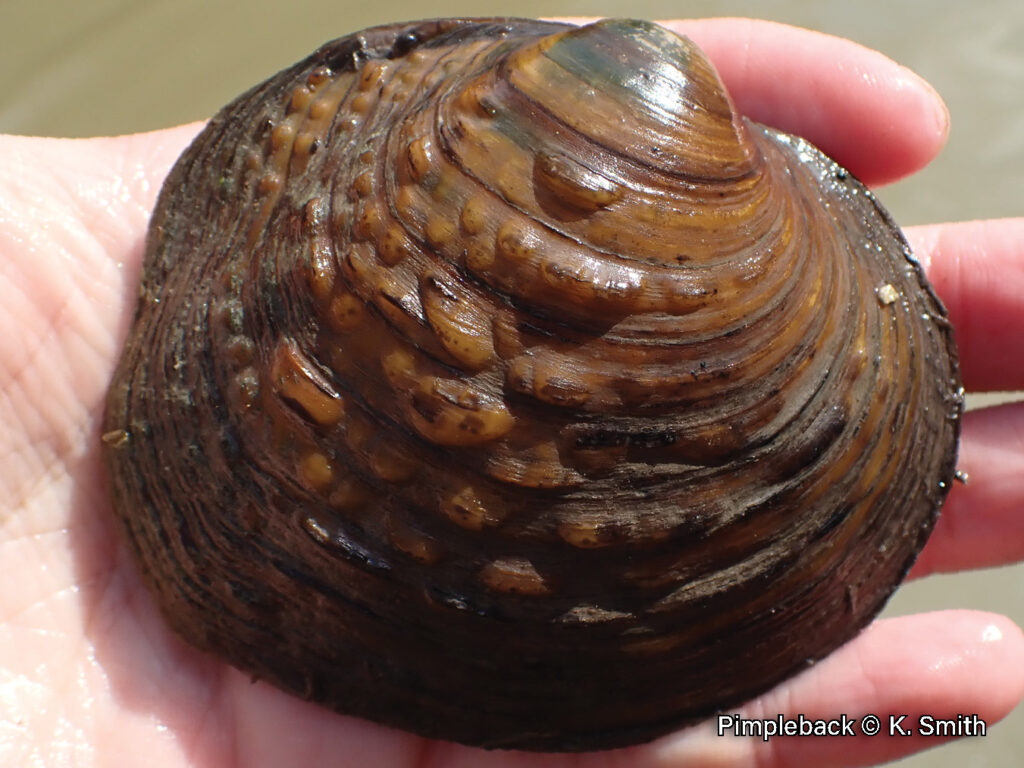
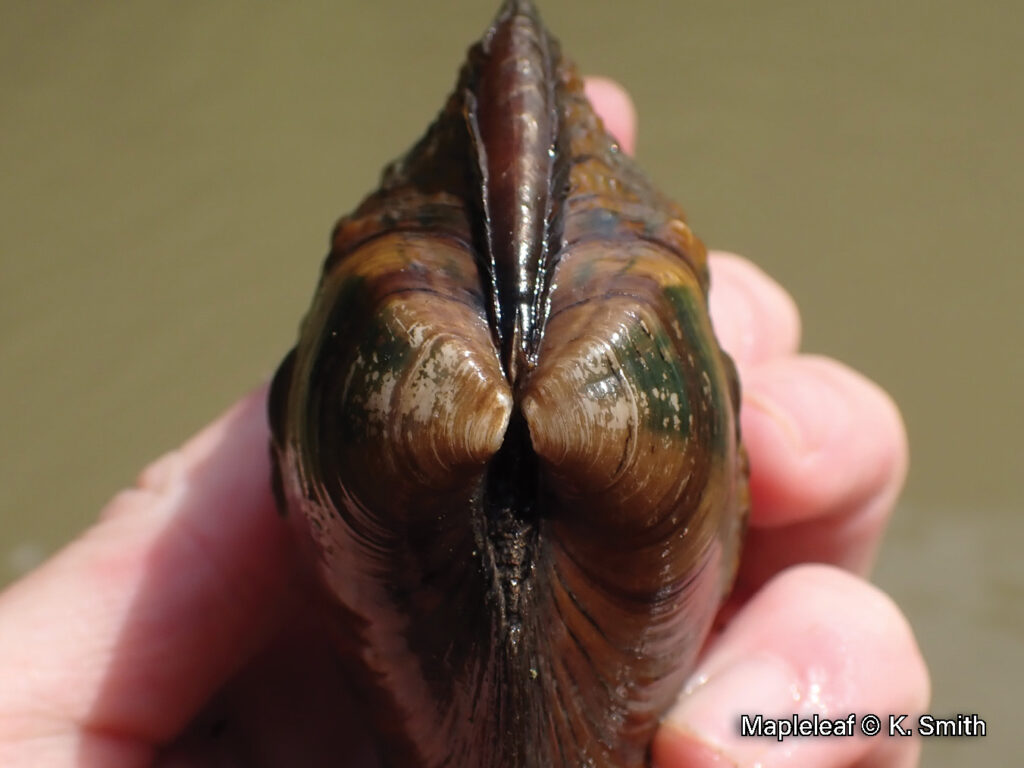
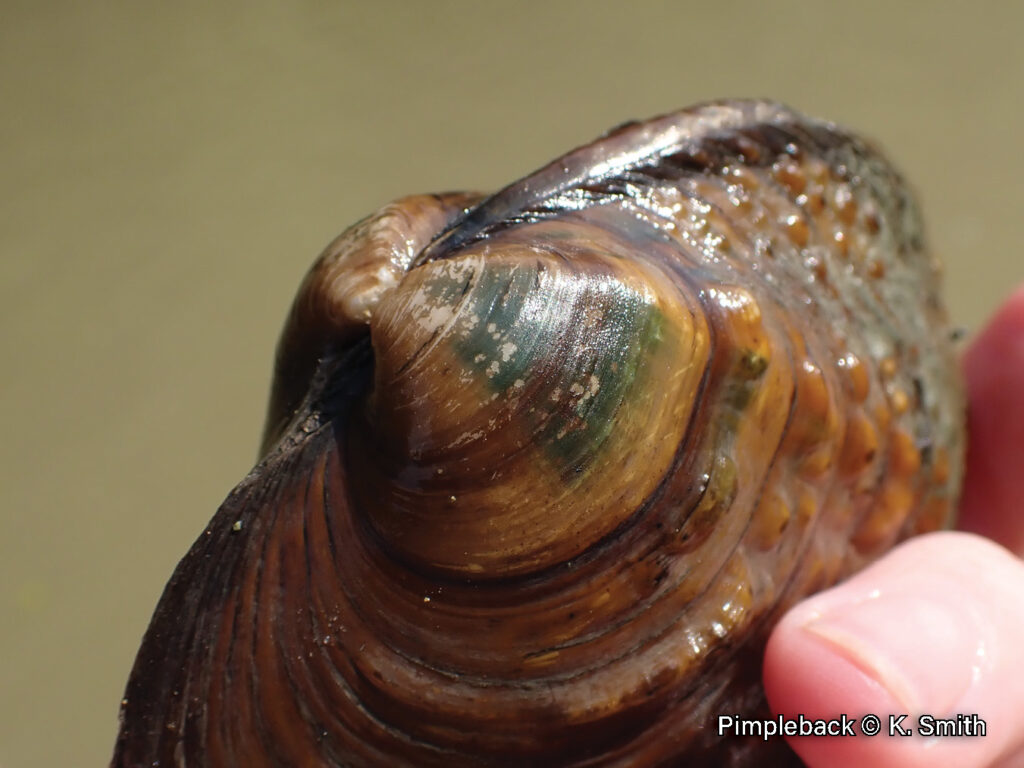
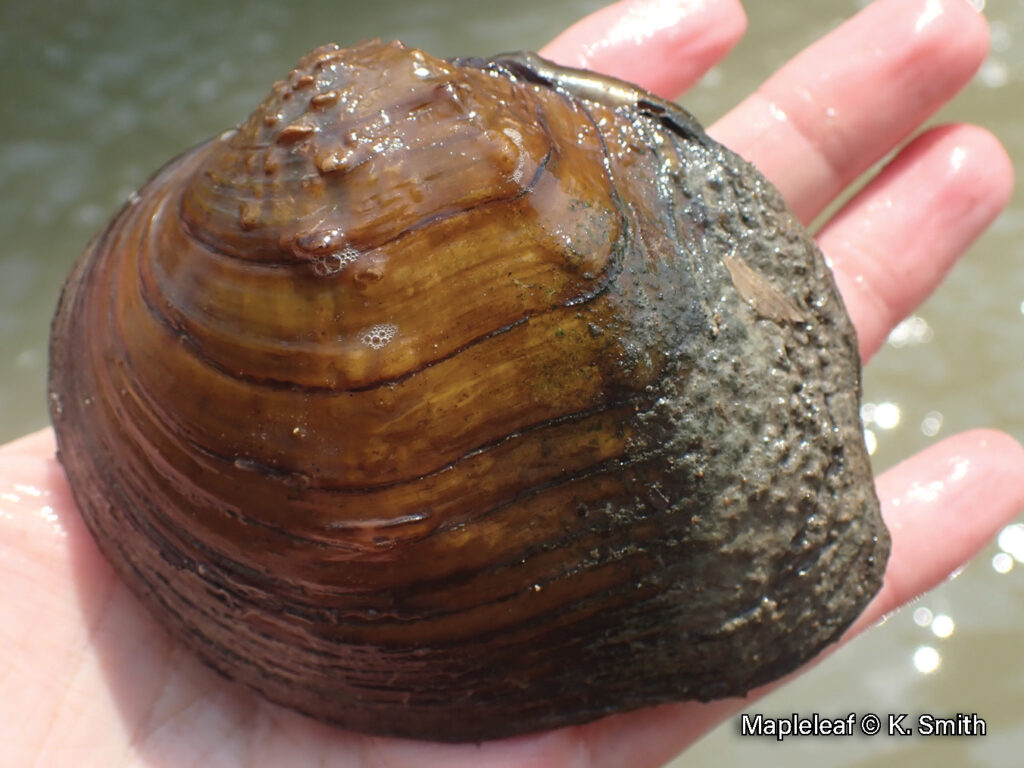
At first glance, Purple Wartyback can look similar to Pimpleback and Mapleleaf mussels. Here are some helpful features that can be used to tell them apart:

Picture of a Purple Wartyback mussel in a hand, a rich reddish-brown, medium-sized mussel that is covered in bumps
Picture of the beak structure of a purple wartyback mussel in a hand, a rich brown, medium-sized mussel that is covered in bumps. Its beak is covered in a series of fine zigzag ridges.
  • Purple Wartyback (Cyclonaias tuberculata)
    • Quadrate to circular in shape
    • Bumps concentrated on posterior 2/3 of shell
    • Fine zigzag ridges on beak
Picture of a Pimpleback mussel in a hand, a brown, medium-sized mussel that is irregularly covered in bumps with a broad green ray on its beak
Picture of the beak of a Pimpleback mussel in a hand, a brown, medium-sized mussel that has indistinct ridges and a broad green ray on its beak
  • Pimpleback (Quadrula pustulosa)
    • Circular in shape
    • Irregular bumps on posterior 2/3 of shell
    • May have a green ray on beak
    • No significant sculpturing on beak (indistinct ridges)
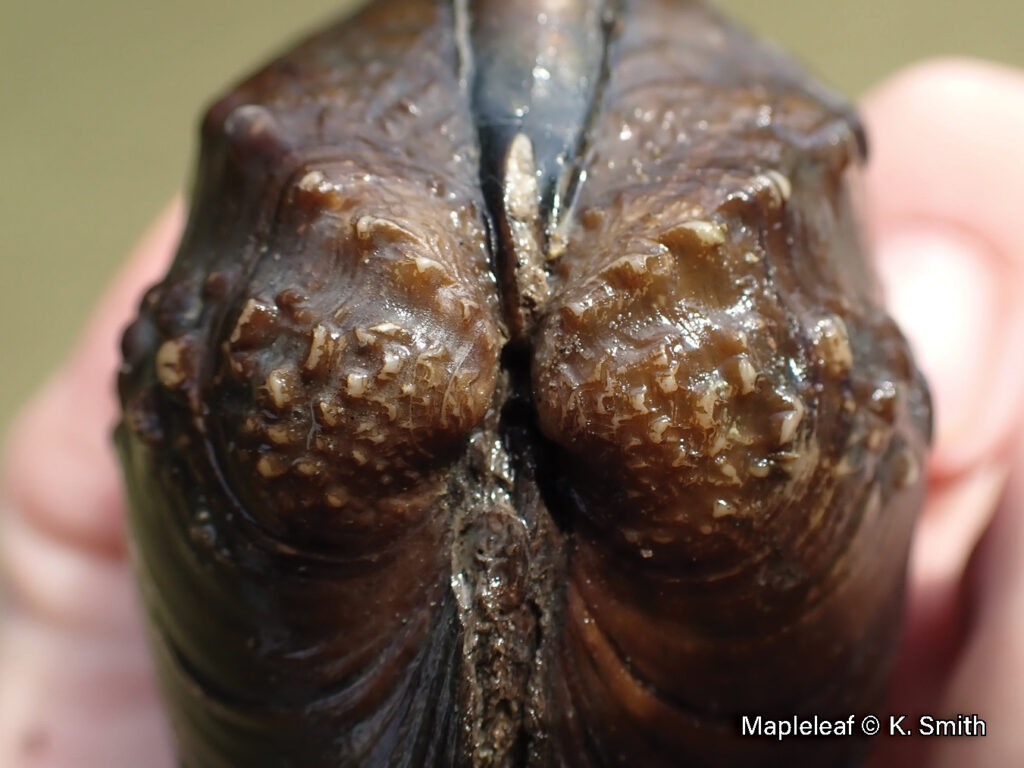
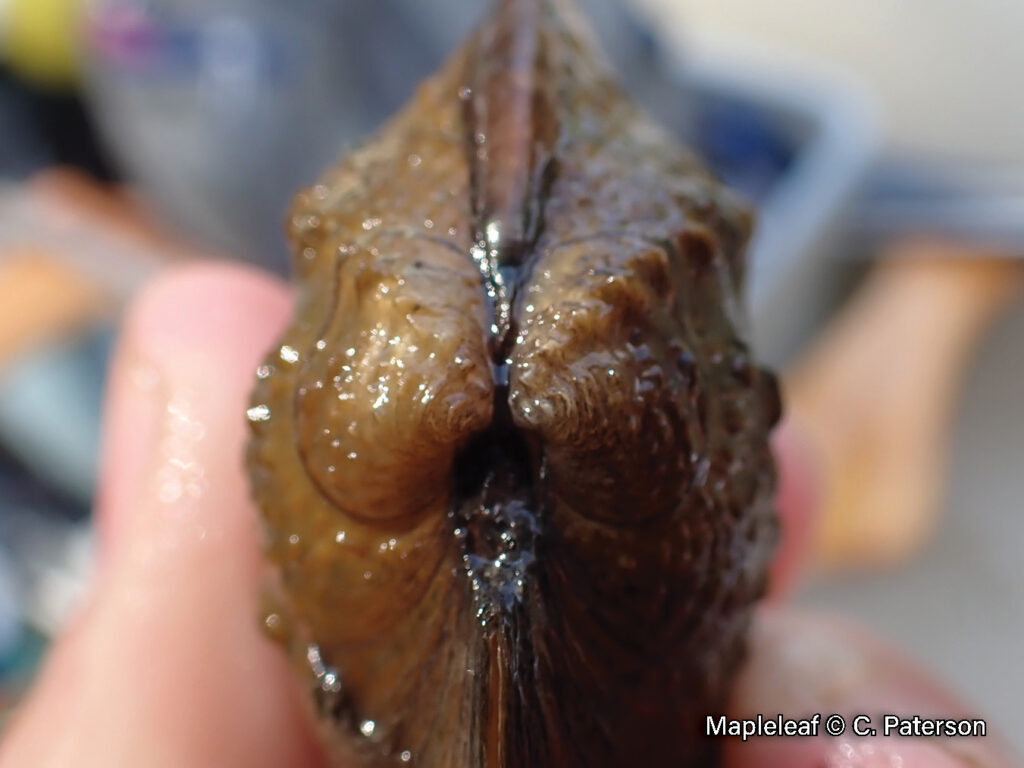
Picture of a mapleleaf mussel in a hand, an orangish-brown medium-sized mussel that has a wide, shallow indent between two rows of nodules
Picture of the beak of a mapleleaf mussel in a hand, an orangish-brown medium-sized mussel that has two rows of crowded nodules on its beak
  • Mapleleaf (Quadrula quadrula)
    • Quadrate in shape
    • Two rows of bumps separated by a wide indent (sulcus)
    • Nodules crowded on beak

Mussels at Risk

  • SAR in the Sydenham
  • Mussels
    • Eastern Pondmussel
    • Fawnsfoot
    • Kidneyshell
    • Lilliput
    • Mapleleaf
    • Northern Riffleshell
    • Purple Wartyback
    • Rainbow
    • Rayed Bean
    • Round Hickorynut
    • Round Pigtoe
    • Salamander Mussel
    • Snuffbox
    • Threehorn Wartyback
    • Wavy-rayed Lampmussel
  • Fishes
  • Snakes
  • Turtles
Test Your ID Skills!
Check out our latest newsletter! Download

© 2026 · St. Clair Region Conservation Authority - The Sydenham River Watershed

  • Privacy

Press Enter to search · Esc to close