Mapleleaf
Quadrula quadrula


Quadrula quadrula
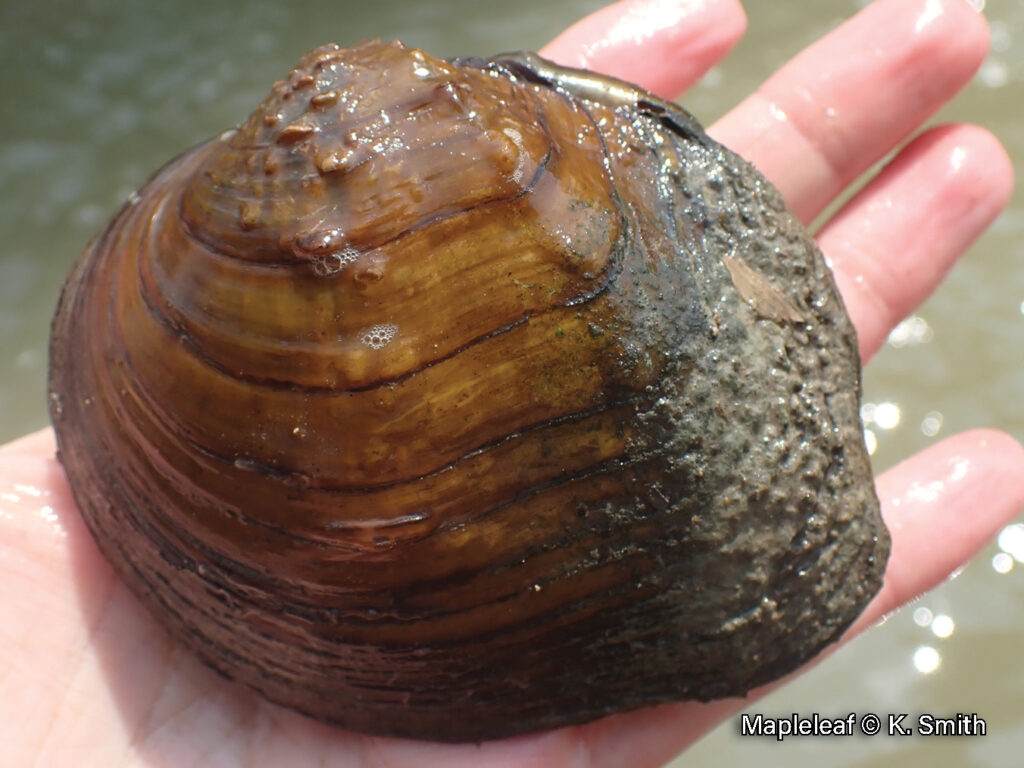
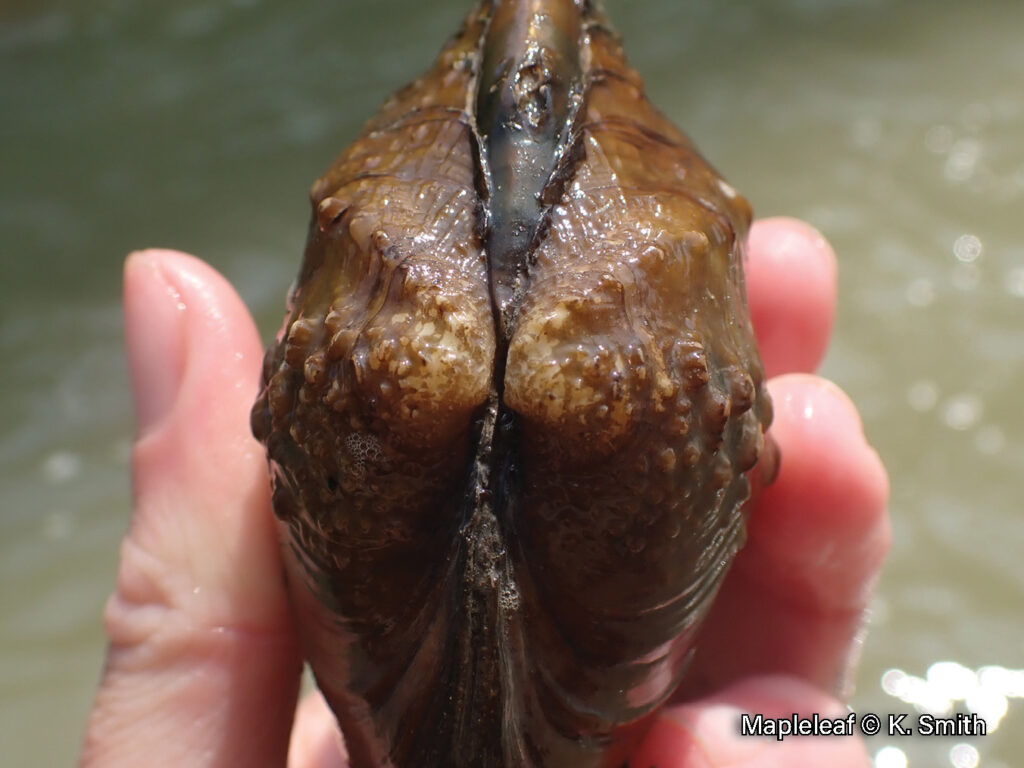
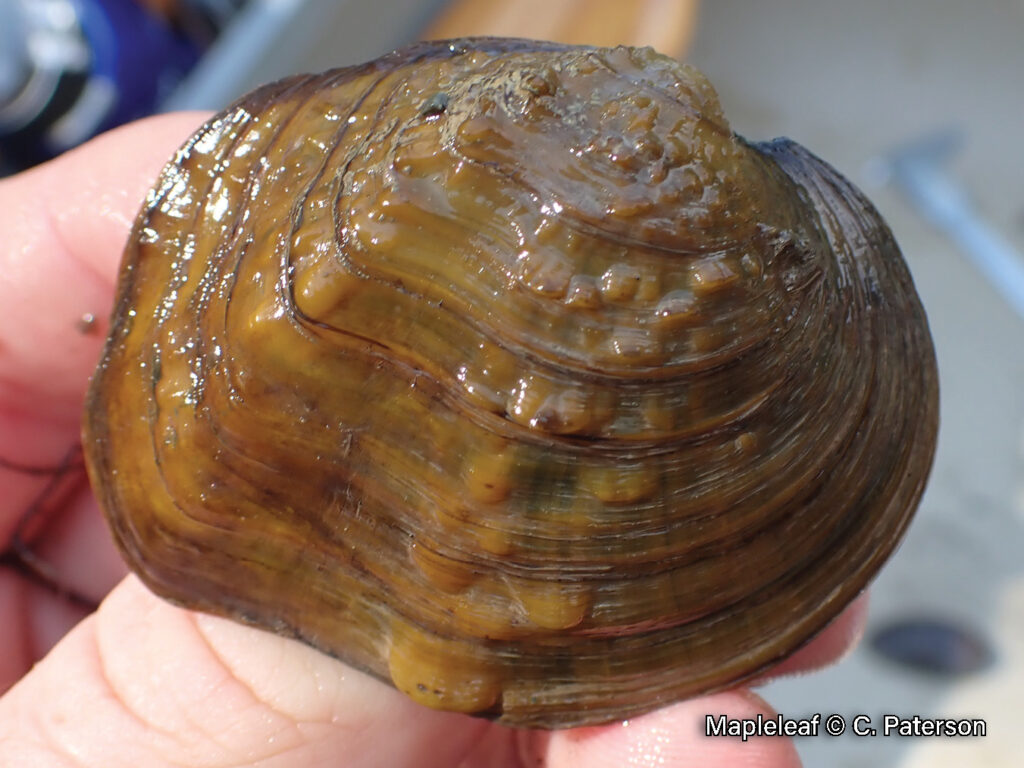
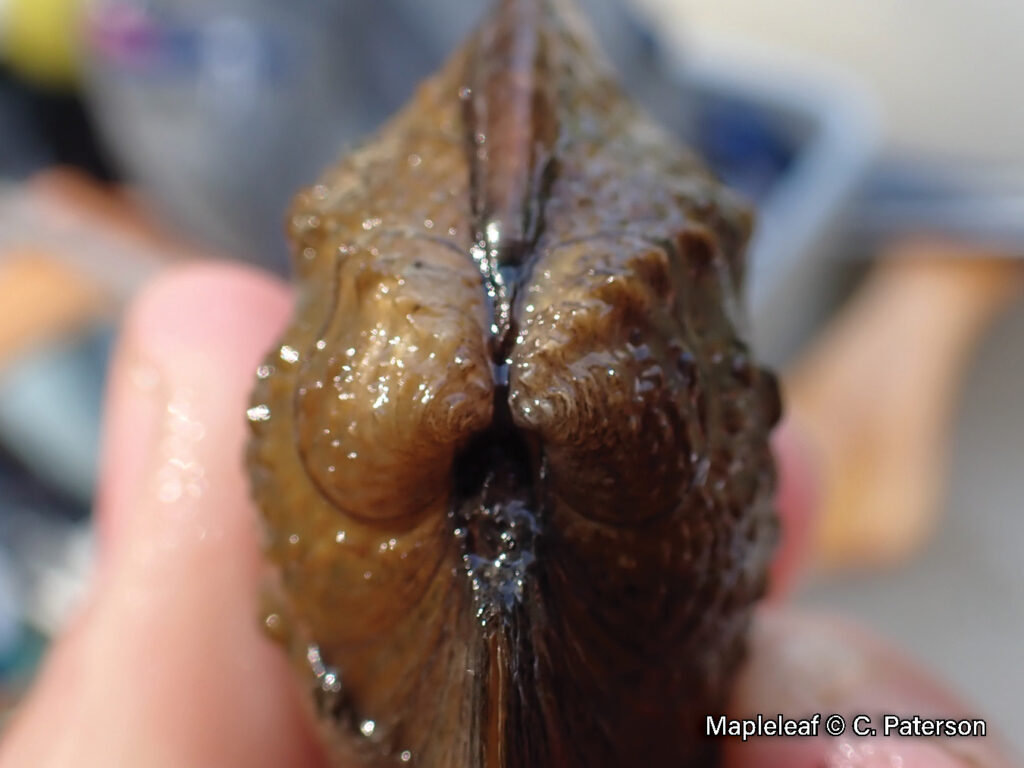
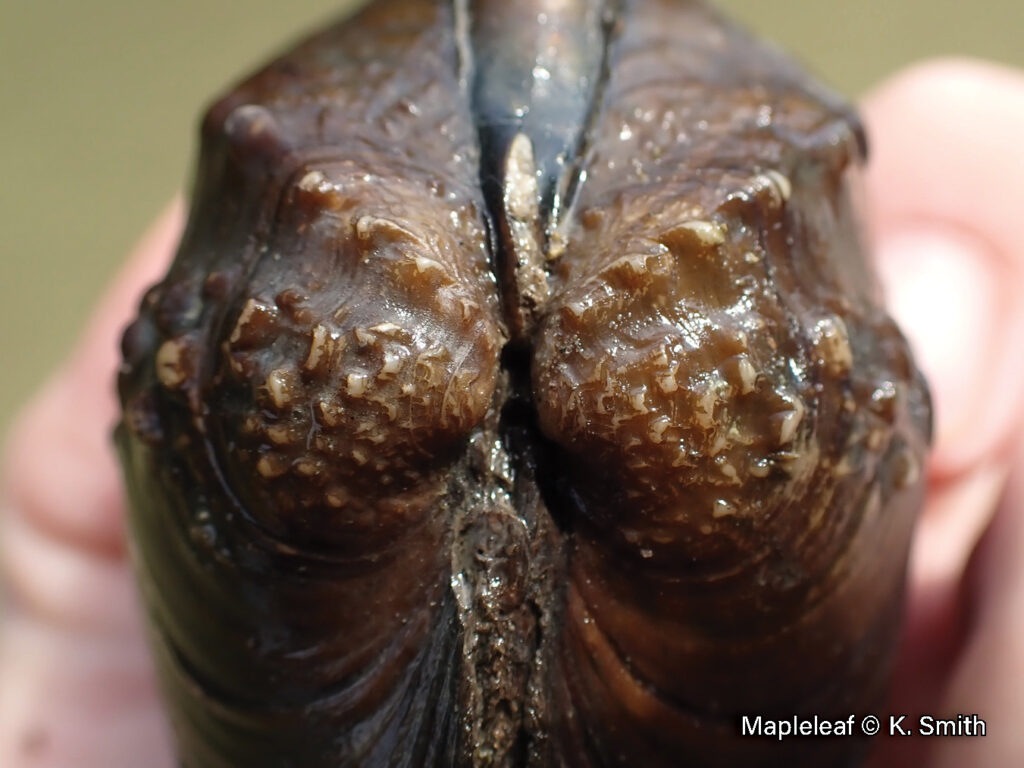
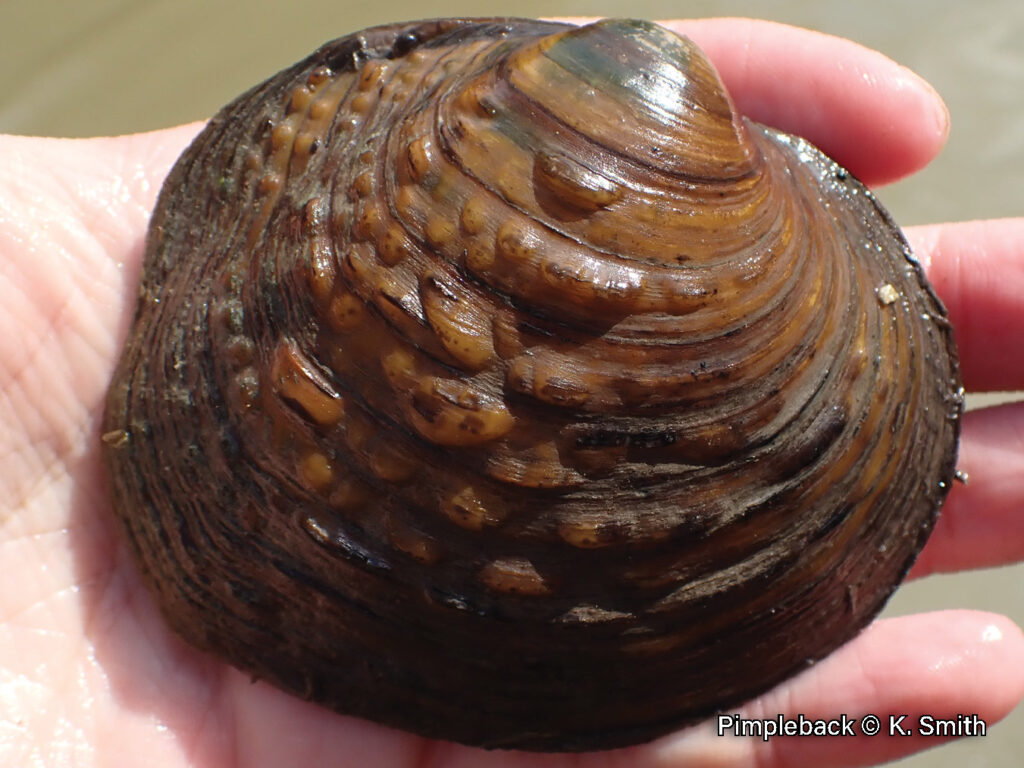
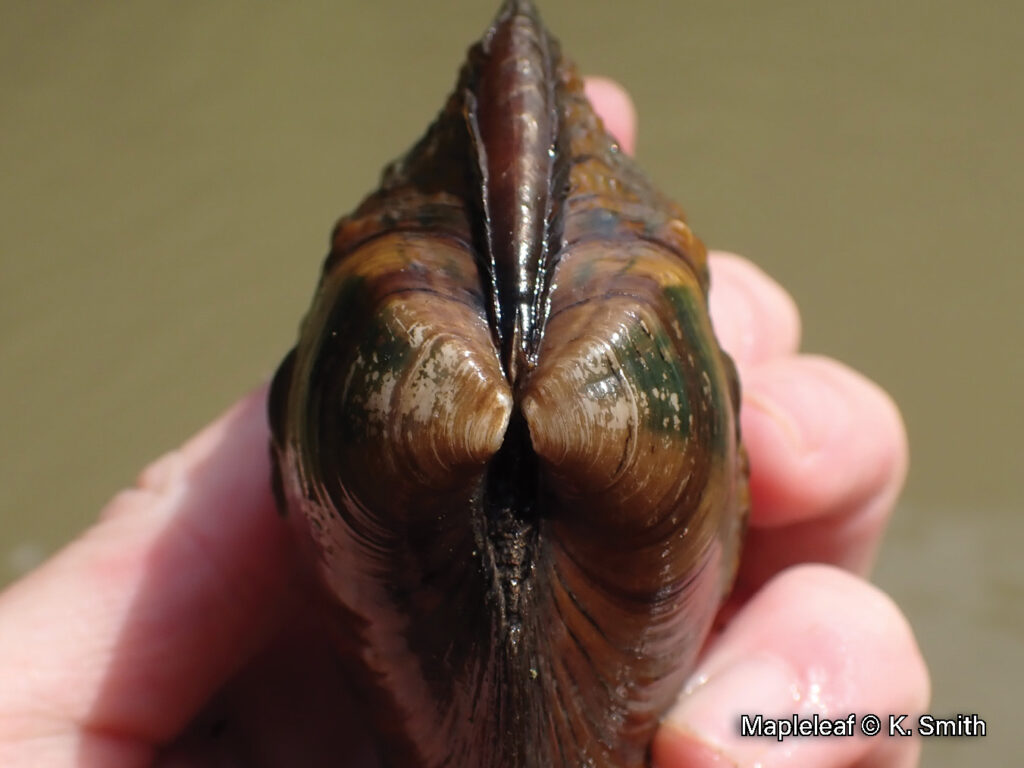
Is there a more fitting name to describe a mussel that calls Canada’s most mussel diverse river home? The outline of this mussel resembles the iconic maple leaf. It has a relatively thick shell and grows up to 12cm. As with most unionids, the colour of Mapleleaf shells can vary extensively, from yellow to green to dark brown. Most individuals have two rows of raised nodules that extend from the beak to the edge of the shell.

The Mapleleaf has evolved to use the Channel Catfish as a host to complete their lifecycle. The small parasitic glochidia attach to the gills of the Channel Catfish, where they stay for several weeks before they metamorphose into juvenile mussels and fall to the substrate below. When observing distribution maps of both species, there is often a pattern of overlap.
Prime habitat for the Mapleleaf include shallow lakes and large and medium sized rivers with moderate flow and tightly packed substrate consisting of gravel, sand, and clay.
In Ontario, the Mapleleaf Mussel is found in a few coastal areas of the Great Lakes and rivers that drain into them. The Sydenham has the second largest population of Mapleleaf Mussel in Ontario after the Thames River.
Mapleleaf were first documented in the Sydenham in 1963, their range extends through much of the watershed from Wallaceburg to just upstream of Alvinston in the East Sydenham River and in the upper limits of the North Sydenham River in Bear Creek.

There are many threats that Mapleleaf populations face, the including habitat destruction from excessive pollution and siltation, which enter rivers and streams through runoff from agricultural practices and urban developments. Additional threats include Zebra and Quagga mussels, decreased water clarity, nutrient loading, altered flow regimes, and any disruptions of fish hosts.
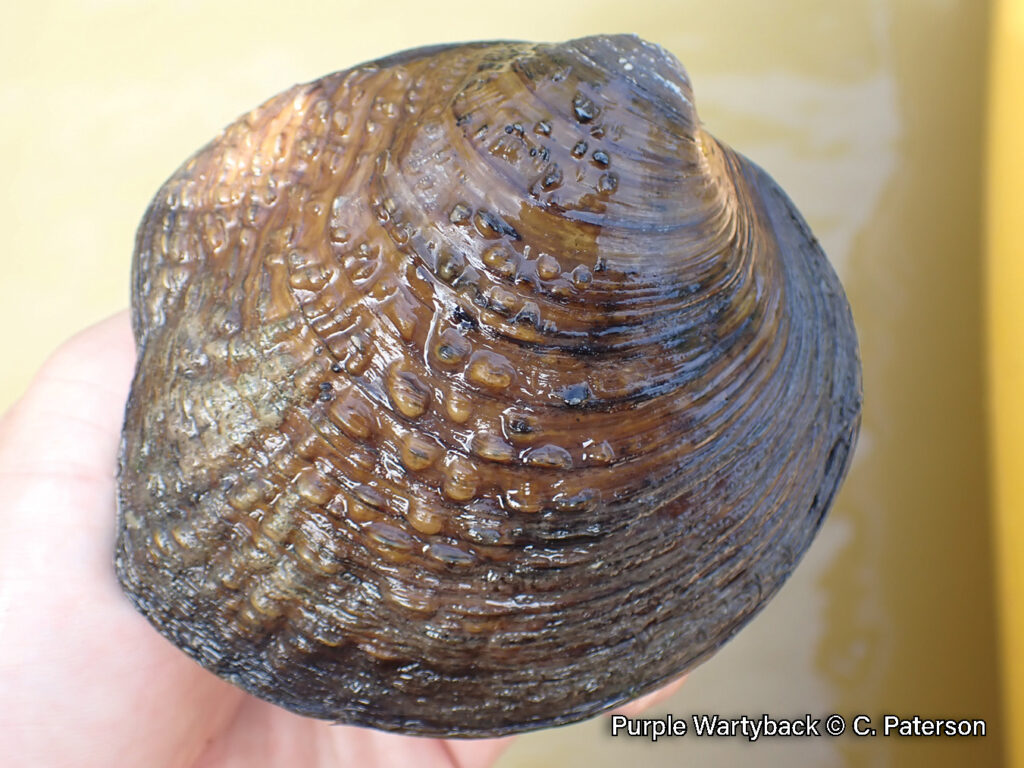
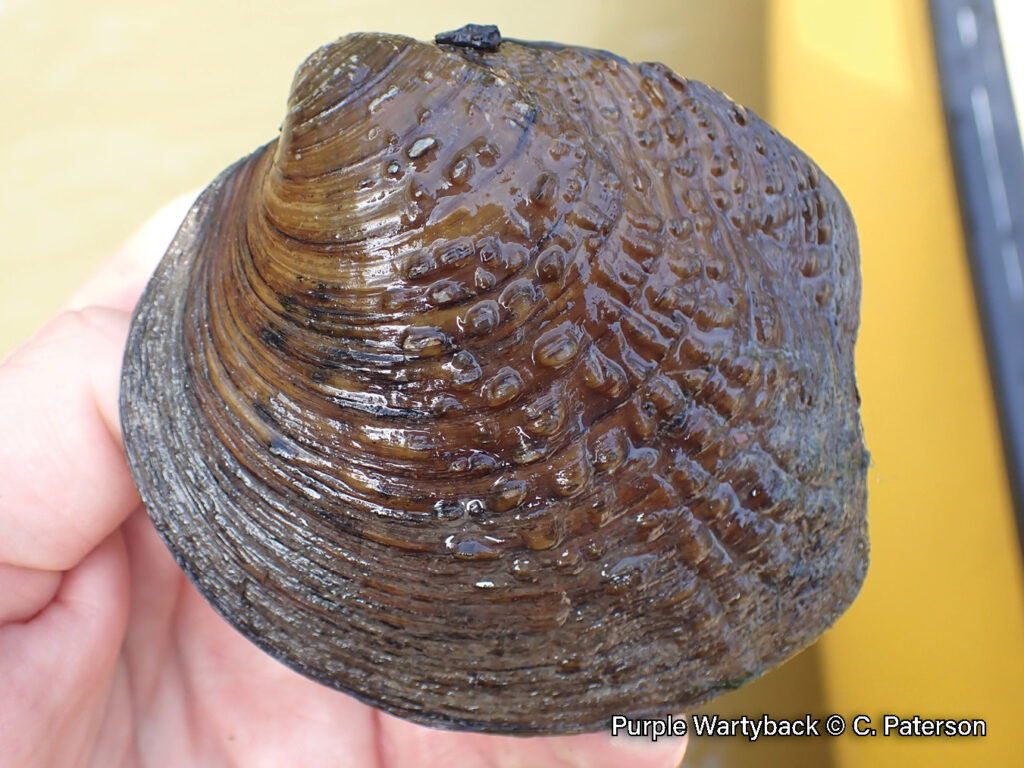
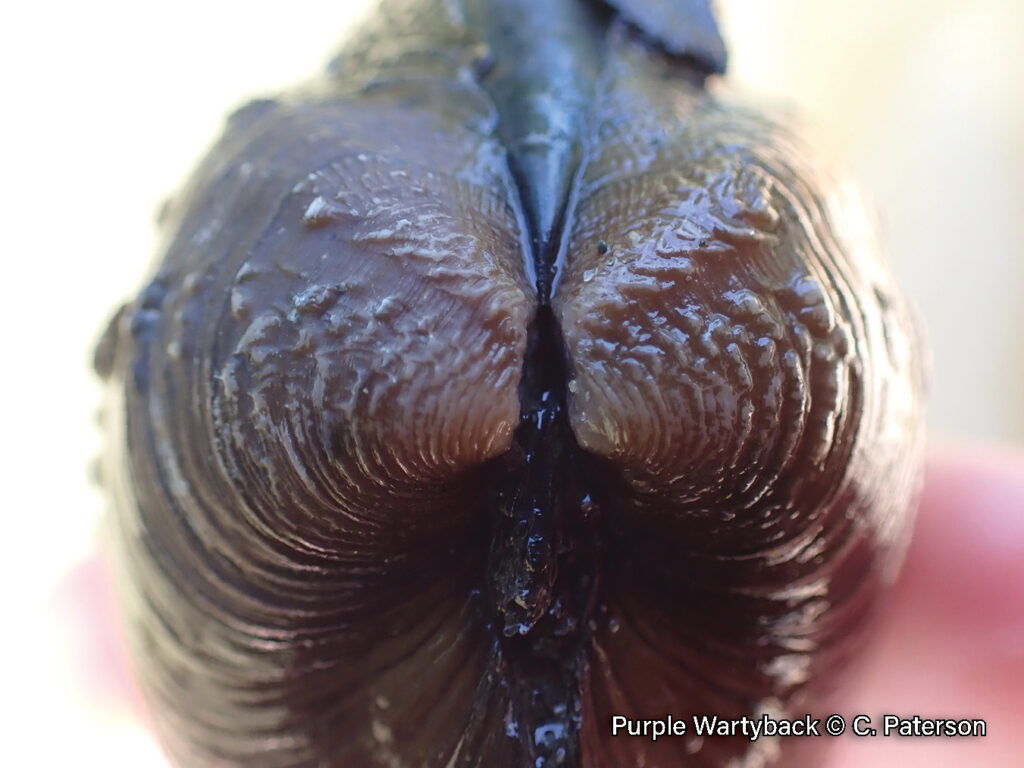
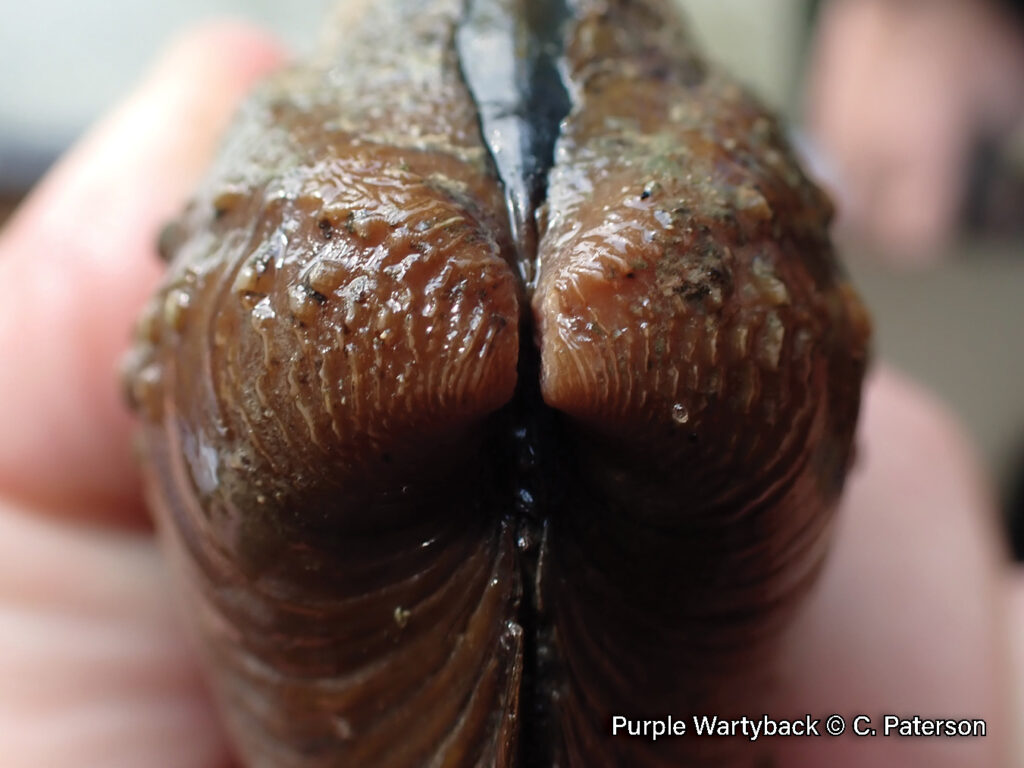
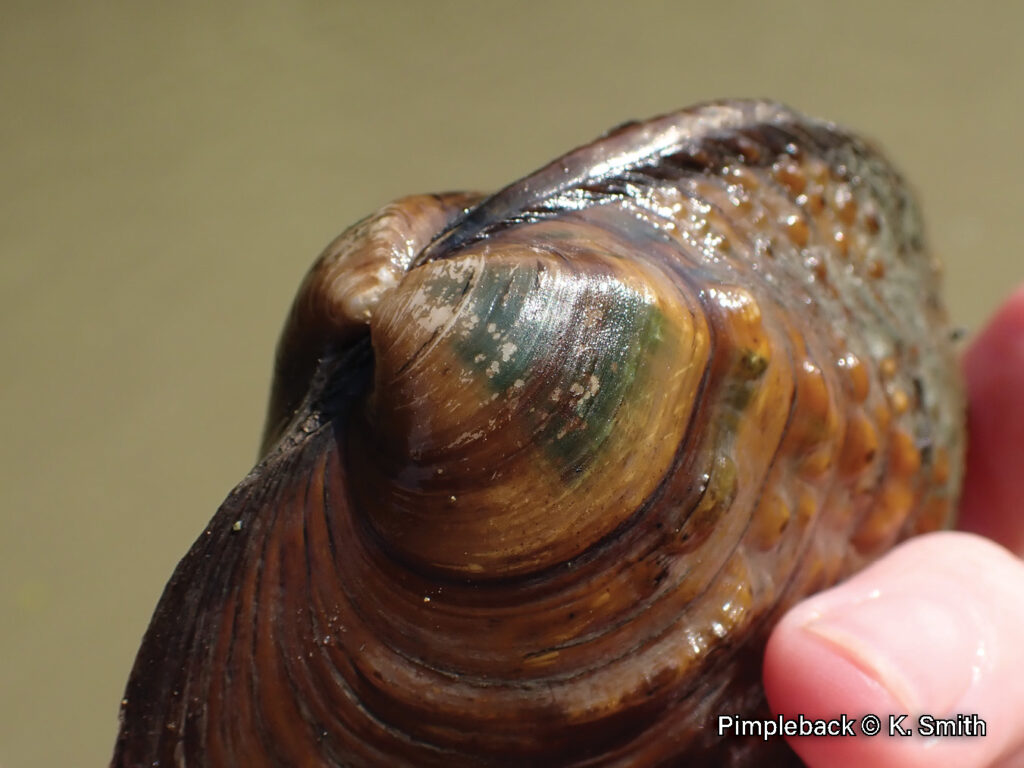
At first glance, Mapleleaf can look similar to Purple Wartyback and Pimpleback mussels. Here are some helpful features that can be used to tell them apart:
© 2026 · St. Clair Region Conservation Authority - The Sydenham River Watershed
Press Enter to searchEsc to close