Snake Nesting Box Program
The Eastern Foxsnake: A Species at Risk
The Eastern Foxsnake is an endangered species that is globally rare – approximately 70% of their range is in Ontario, part of which is within the Sydenham watershed. The greatest threats to the Eastern Foxsnake are habitat loss, road mortality, and human persecution. Their small populations are made more vulnerable by the species’ delayed age at maturity and slow rate of reproduction.
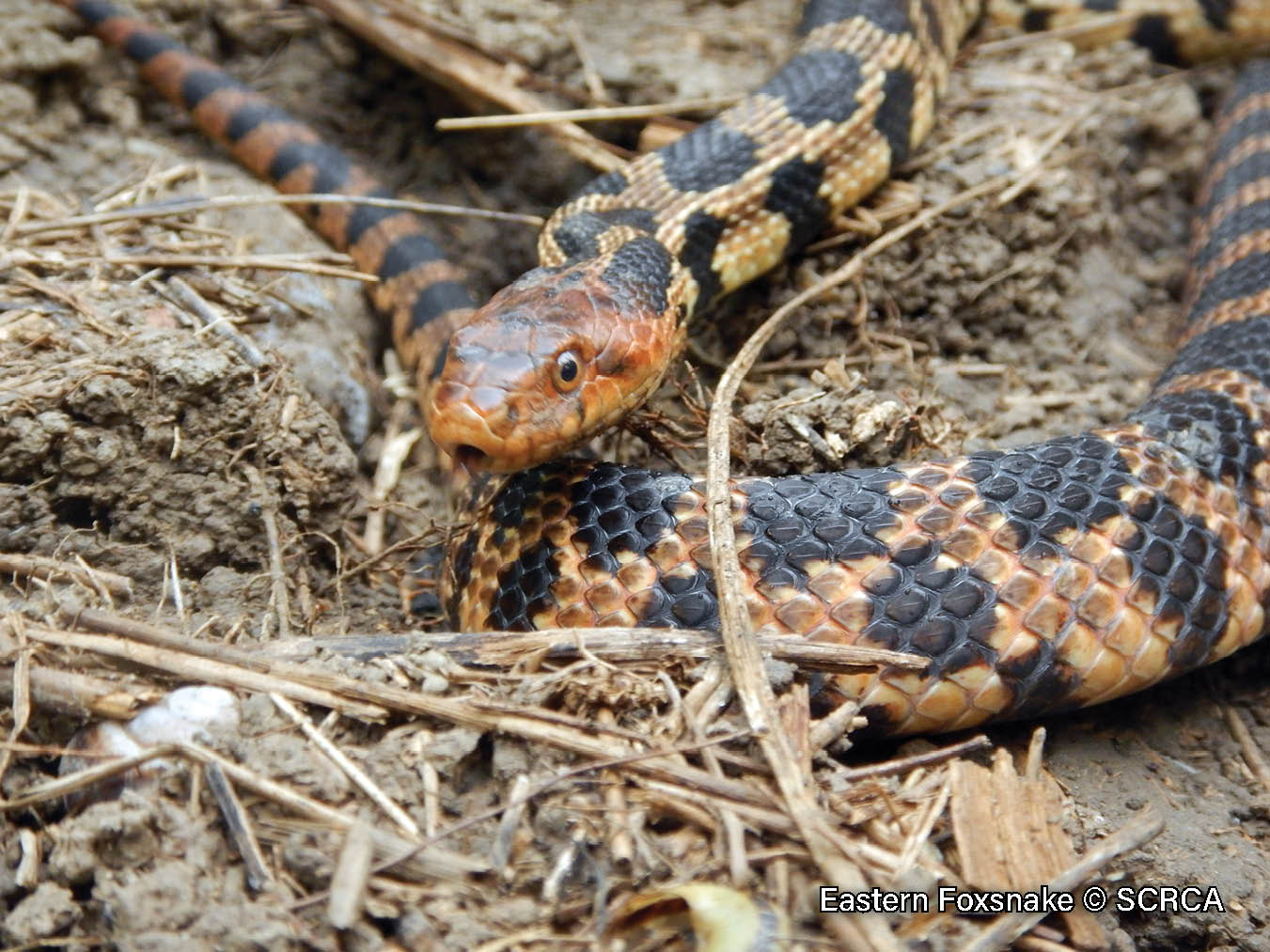
A case of mistaken identity: Hardwood rattler, Womper, Copperhead… these are all names that are incorrectly used to refer to the endangered Eastern Foxsnake. When the Eastern Foxsnake is threatened, it will vibrate its tail against dry vegetation which can create a buzzing sound. Combined with its blotchy patterning, the Foxsnake is sometimes mistaken for a rattlesnake. Due to the reddish-orange head of an adult Foxsnake it is sometimes also referred to as a Copperhead which adds to the confusion as this is a different species found in the U.S. The Eastern Foxsnake is non-venomous, docile, and an important part of the local ecosystem.
Eastern Foxsnakes mainly use unforested habitat like old fields, prairies, marshes, and dune shoreline. Hedgerows and riparian areas are important strips of habitat in southwestern Ontario. In late June to mid-July, female Foxsnakes lay their eggs in rotting logs, compost, manure or wood piles. Clutch sizes can range in from 6 to 29 eggs. After incubating for 50 to 65 days, the hatchlings emerge from late August to mid-October. Unfortunately, the reproductive success of this species is hindered by a lack of suitable nesting habitat, nest disturbance by humans, and high levels of predation by skunks or raccoons.

An example of a snake nesting box in the watershed.
Creating Nesting Habitat
To support the local population of endangered Eastern Foxsnake and other egg-laying snakes, the St. Clair Region Conservation Authority implements an Artificial Snake Nesting Box Program. Artificial nesting boxes are constructed using corn crib wire fencing and t-bar posts that are filled with nesting material like straw, compost, vegetation and wood chips. They provide much needed nesting habitat for the females to lay their eggs and a safe place for the eggs to incubate out of reach of egg predators like racoons and skunks.
The success of the nesting boxes highlights the need for suitable snake nesting habitat in the region. For example, in 2017, a total of 175 eggs were observed in just two nesting boxes. This high density of eggs was the result of communal nesting, where several females lay their eggs in the same location.
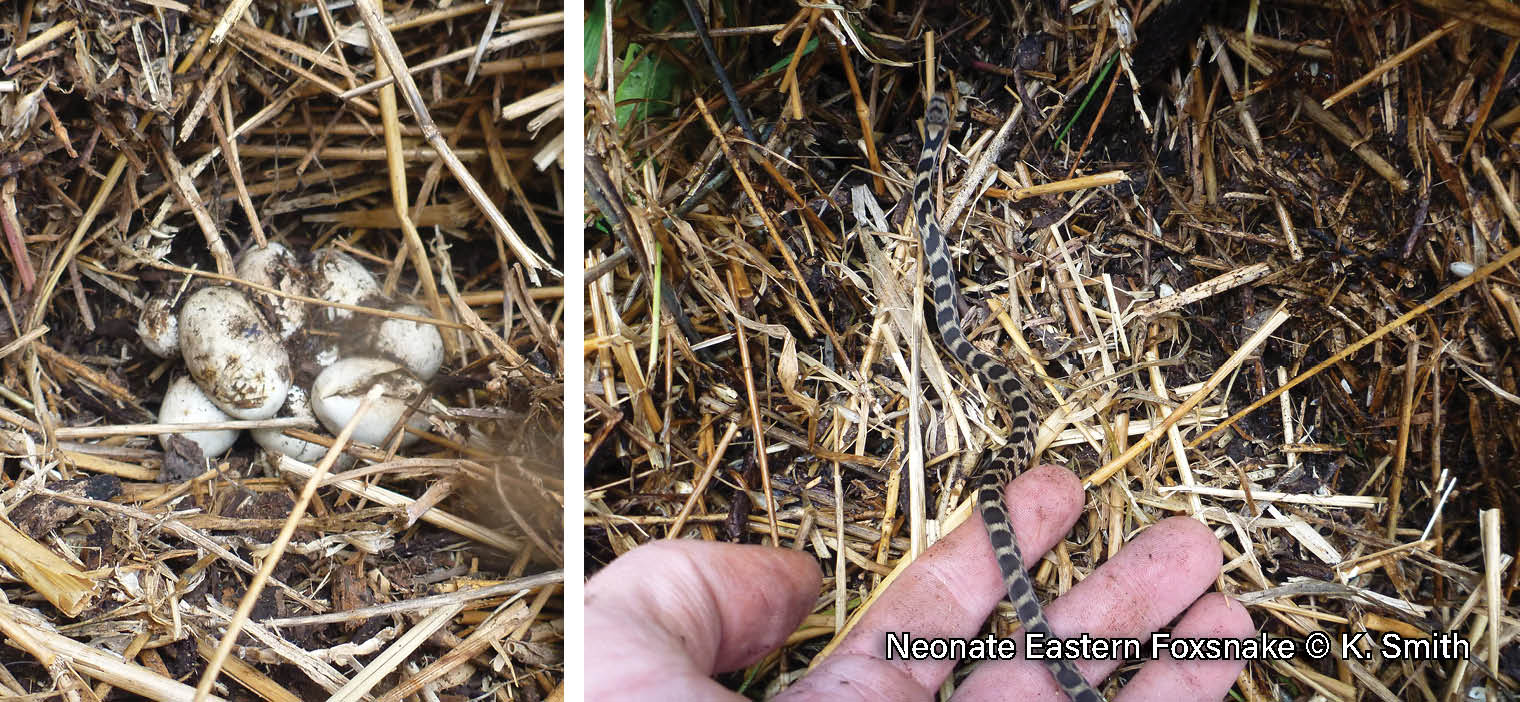
Biologists at the SCRCA maintain and monitor snake nesting boxes in the watershed. The left photo is a clutch of hatched eggshells found at the end of the season in a nesting box. The right photo is of a recently hatched Foxsnake.
Partners in Conservation
The SCRCA has held informational species at-risk snake workshops to spread awareness and reduce fear around these often misunderstood animals. Staff also work with rural landowners to improve habitat on their property. SCRCA Staff continue to deliver this program with the generous support of the Environment and Climate Change Canada program the Carolinian Life Zone Priority Place.