River Darter
Percina shumardi

Percina shumardi
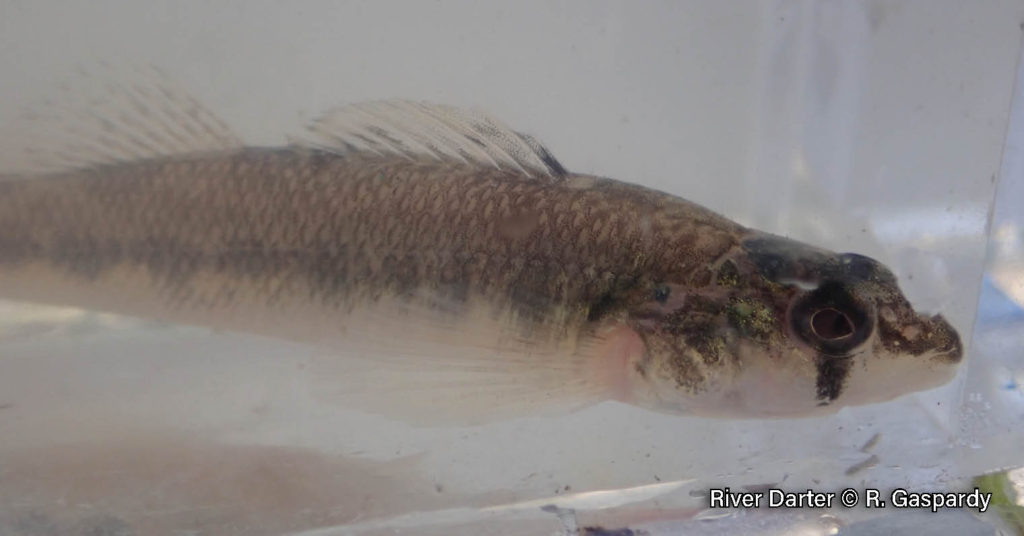
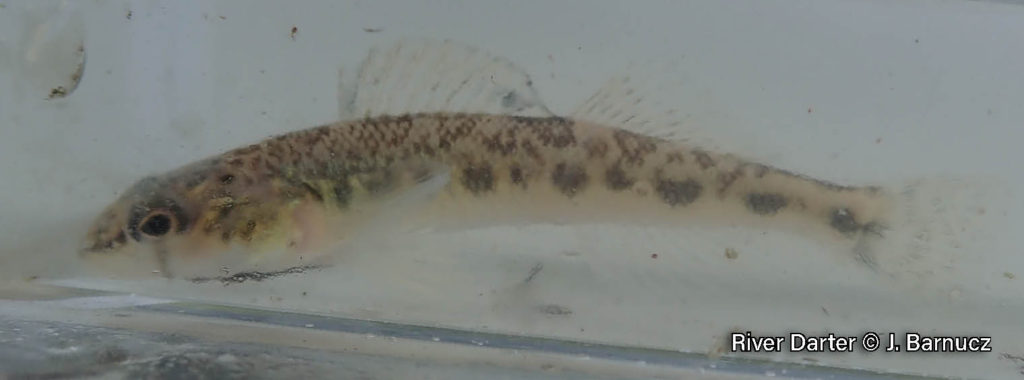
The River Darter, reaching an average length of 5cm, is a small member of the family Percidae (Perches and Darters). The species’ genus name Percina means “little perch.” This fish is one of Ontario’s 12 darter species. The body is typically light brown to dark olive with several distinct markings that help distinguish this species from other small darters. Faint saddle patches sit across the back, a series of dark blotches decorate the sides, a distinct teardrop marking resides below the eye. Unlike other Ontario darters, the first dorsal fin of the River Darter has two well-defined dark spots.
The River Darter is a benthic species, that lives on the bottom of large streams with a moderate current and shorelines of lakes in areas that have an abundance of gravel and cobble. In these depths, they forage for a variety of small crustaceans, fish eggs, and aquatic insect larvae, including mayflies and caddisflies.
River Darters are found in North America from southern Texas to Northern Manitoba. Throughout the states and provinces where they occur, this species status ranges from secure to critically imperilled. In Canada, there are three main populations in the drainages of the Saskatchewan-Nelson River, Hudson Bay, and Great Lakes – the two northern populations are not at risk but the southern Ontario population has faced large declines in their range.
The Great Lakes population in southern Ontario is restricted to just the Lake St. Clair watershed where it has been found in nearshore areas in the lake including Mitchell’s Bay as well as the Sydenham and Thames rivers. In the Sydenham watershed, River Darters have been documented in Bear Creek, the North Sydenham River, and the East Sydenham River. There have not been any records of River Darter from the North Sydenham in recent years and is believed to be extirpated from this part of the watershed.
Threats impacting the River Darter are not well understood. Habitat alterations resulting from shoreline hardening, dredging, agricultural runoff or spills, and urban runoff and waste are suspected to have negative impacts. Sediment loading and excessive nutrient enrichment occurs throughout the Sydenham River watershed and can negatively affect darters and other fishes as siltation of the riverbed can reduce benthic prey abundance and excess phosphorus can lower dissolved oxygen levels through algal blooms. Invading Round Goby can negatively impact native darter species through competition for food resources, space, and habitat – the continued expansion of Round Goby in the Sydenham is like to continue to negatively affect River Darter populations.
© 2026 · St. Clair Region Conservation Authority - The Sydenham River Watershed