Skip to content
  • Biodiversity
    • Why is Biodiversity Important?
    • Threats to Biodiversity
    • What are Species at Risk?
    • Recovery Planning
    • Environmental Monitoring
  • Species at Risk
    • Species at Risk
      • SAR in the Sydenham
      • Mussels
      • Fishes
      • Snakes
      • Turtles
    • Mussels
      • Eastern Pondmussel
      • Fawnsfoot
      • Kidneyshell
      • Lilliput
      • Mapleleaf
      • Northern Riffleshell
      • Purple Wartyback
      • Rainbow
      • Rayed Bean
      • Round Hickorynut
      • Round Pigtoe
      • Salamander Mussel
      • Snuffbox
      • Threehorn Wartyback
      • Wavy-rayed Lampmussel
    • Fishes
      • Blackstripe Topminnow
      • Eastern Sand Darter
      • Grass Pickerel
      • Northern Madtom
      • Northern Sunfish
      • Pugnose Minnow
      • Pugnose Shiner
      • River Darter
      • Silver Lamprey
      • Spotted Sucker
    • Snakes
      • Eastern Foxsnake
      • Eastern Hog-nosed Snake
      • Eastern Milksnake
    • Turtles
      • Blanding’s Turtle
      • Midland Painted Turtle
      • Northern Map Turtle
      • Snapping Turtle
      • Spiny Softshell
  • Stewardship
    • Healthy Watersheds Program
      • Sydenham Phosphorus Reduction Initiative
    • Managing Phosphorus
    • Phosphorus StoryMap
    • Reducing Pollution in Runoff
    • Best Management Practices Resources
  • Stories
  • Get Involved
    • What Can I Do?
    • Take the Stewardship Survey
    • Test Your ID Skills!
    • Report a Turtle Sighting
  • Resources
  • Contact Us
Sydenham River WatershedSydenham River Watershed
  • Biodiversity
    • Why is Biodiversity Important?
    • Threats to Biodiversity
    • What are Species at Risk?
    • Recovery Planning
    • Environmental Monitoring
  • Species at Risk
    • Species at Risk
      • SAR in the Sydenham
      • Mussels
      • Fishes
      • Snakes
      • Turtles
    • Mussels
      • Eastern Pondmussel
      • Fawnsfoot
      • Kidneyshell
      • Lilliput
      • Mapleleaf
      • Northern Riffleshell
      • Purple Wartyback
      • Rainbow
      • Rayed Bean
      • Round Hickorynut
      • Round Pigtoe
      • Salamander Mussel
      • Snuffbox
      • Threehorn Wartyback
      • Wavy-rayed Lampmussel
    • Fishes
      • Blackstripe Topminnow
      • Eastern Sand Darter
      • Grass Pickerel
      • Northern Madtom
      • Northern Sunfish
      • Pugnose Minnow
      • Pugnose Shiner
      • River Darter
      • Silver Lamprey
      • Spotted Sucker
    • Snakes
      • Eastern Foxsnake
      • Eastern Hog-nosed Snake
      • Eastern Milksnake
    • Turtles
      • Blanding’s Turtle
      • Midland Painted Turtle
      • Northern Map Turtle
      • Snapping Turtle
      • Spiny Softshell
  • Stewardship
    • Healthy Watersheds Program
      • Sydenham Phosphorus Reduction Initiative
    • Managing Phosphorus
    • Phosphorus StoryMap
    • Reducing Pollution in Runoff
    • Best Management Practices Resources
  • Stories
  • Get Involved
    • What Can I Do?
    • Take the Stewardship Survey
    • Test Your ID Skills!
    • Report a Turtle Sighting
  • Resources
  • Contact Us

Midland Painted Turtle

Home Species at Risk in the SydenhamTurtlesMidland Painted Turtle

Midland Painted Turtle

Chrysemys picta marginata

COSEWIC: Special Concern
SARA: Special Concern
COSSARO: Not at Risk
SARO: Not at Risk

Species Description

The Midland Painted Turtle is a small to medium-sized turtle that has a carapace (upper shell) that reaches up to 14cm in length. Its smooth, slightly domed, oval carapace ranges in colour from olive green to black with edges that are decorated with red markings. Its skin is dark green with red stripes on its legs and lower neck that turn to yellow on its head. The plastron (lower shell) of the Midland Painted Turtle is yellow with a dark blotch in the centre that fades with age.
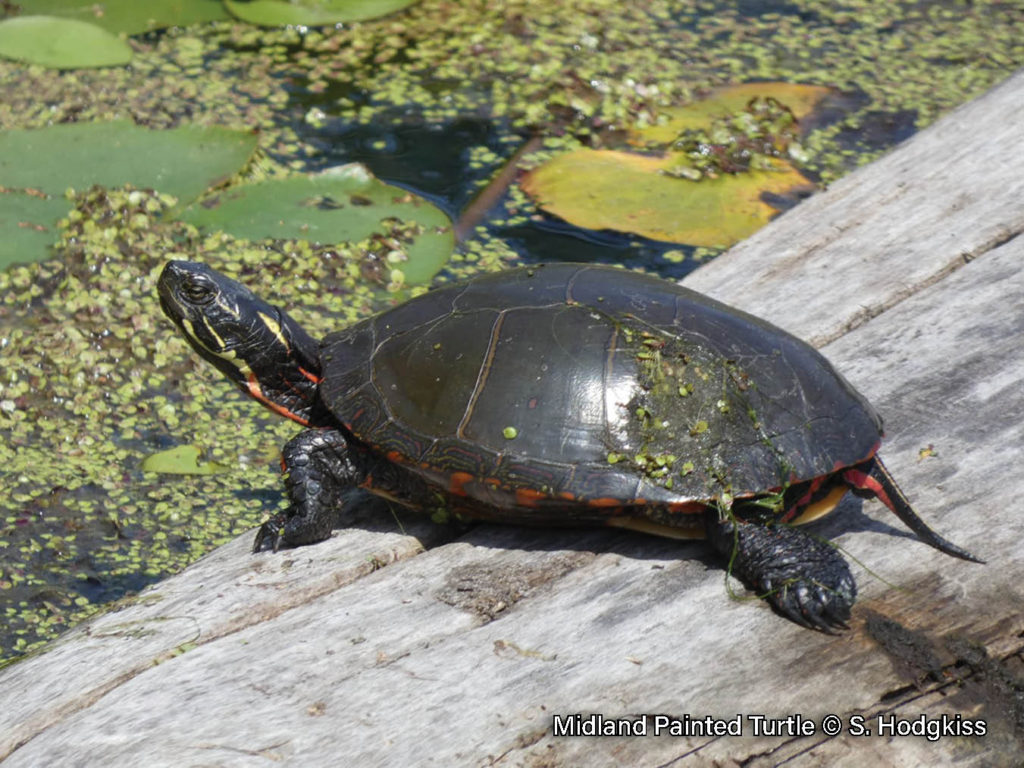
Picture of a Midland Painted Turtle on a log at the water's edge. A medium-sized turtle with a smooth, dark green, oval shell with red markings on its margins. It has yellow and red stripes on its head and neck.

Painted turtles are sexually dimorphic, meaning males and females look different – males are smaller than females with a less domed carapace, longer front claws, and a longer tail. Painted Turtles grow most rapidly as hatchlings and juveniles until they reach sexual maturity at which point their growth rate slows down, the males mature at a smaller size and younger age than females. Northern populations (like those in Canada) reach maturity at a larger size and older age than southern populations (like those in the US) – in Canada males reach maturity at about 7-10 years of age and females at 12-15 years. Painted Turtles more than 50 years of age have been documented in the wild in Ontario, but the maximum lifespan of these northern populations is likely much longer.

They are an omnivorous turtle that feeds on plants, aquatic insects, small fish, frogs, and carrion (dead animals) with their diet becoming more plant based as they age. They play an important ecological role as they cycle nutrients, cleanup waterbodies, and disperse the seeds of aquatic plants.

Picture of twelve Midland Painted Turtles lined up and basking on a log at the water's edge. A medium-sized turtle with a smooth, dark green, oval shell with red markings on its margins. It has yellow and red stripes on its head and neck.

Habitat

Midland Painted Turtles are found in the slow-moving waters of relatively shallow, heavily vegetated wetlands, creeks, rivers, and lakes in areas with organic substrate and plenty of basking sites. They are often seen basking in groups sometimes even piled on top of one another.

Painted turtles use shoreline and terrestrial habitats for nesting and overland movement through corridors. They overwinter at the bottom of wetlands and shallow bays buried in the soft substrate.

Distribution

Painted Turtles have the largest range of any freshwater turtle in Canada. There are three subspecies in Canada – the Western, Midland, and Eastern. The Western Painted Turtle is found from northeastern Ontario west to British Columbia and the Eastern Painted Turtle is found from Québec east to Nova Scotia. The Midland Painted Turtle is the subspecies present in central and southern Ontario, including the Sydenham watershed.

The Midland Painted Turtle subspecies is found in Canada (Ontario and Québec) and the US in the Great Lakes/St. Lawrence basin, the Canadian Shield, and south through the Ohio Valley to Tennessee and northern Alabama.

Threats to the Midland Painted Turtle

Like Ontario’s other turtles and some snake species, Painted Turtles populations are vulnerable to the loss of just a few reproductive adults due to their long lifespan, delayed age at maturity, and very low percentage of eggs that hatch and make it to adulthood. The main threats to Midland Painted Turtles include road mortality, invasive species, wetland and habitat loss from development, and unnaturally large populations of predators that do well in human-impacted landscapes such as raccoons, skunks, crows, and coyotes. They are also threatened by illegal collection for the food and pet trade, commercial and recreational fisheries bycatch, poor water quality, and climate change.
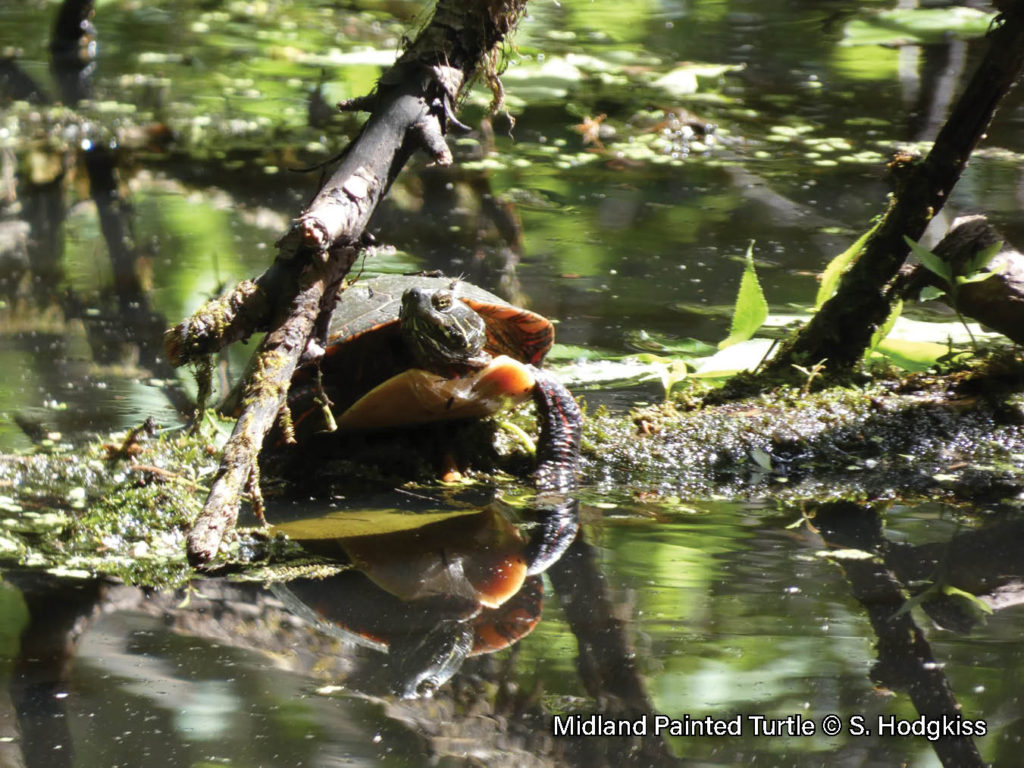
Picture of a Midland Painted Turtle on a log in the water. A medium-sized turtle with a smooth, dark green, oval shell with red markings on its margins. It has yellow and red stripes on its head and neck.

Threat: Invasive Species
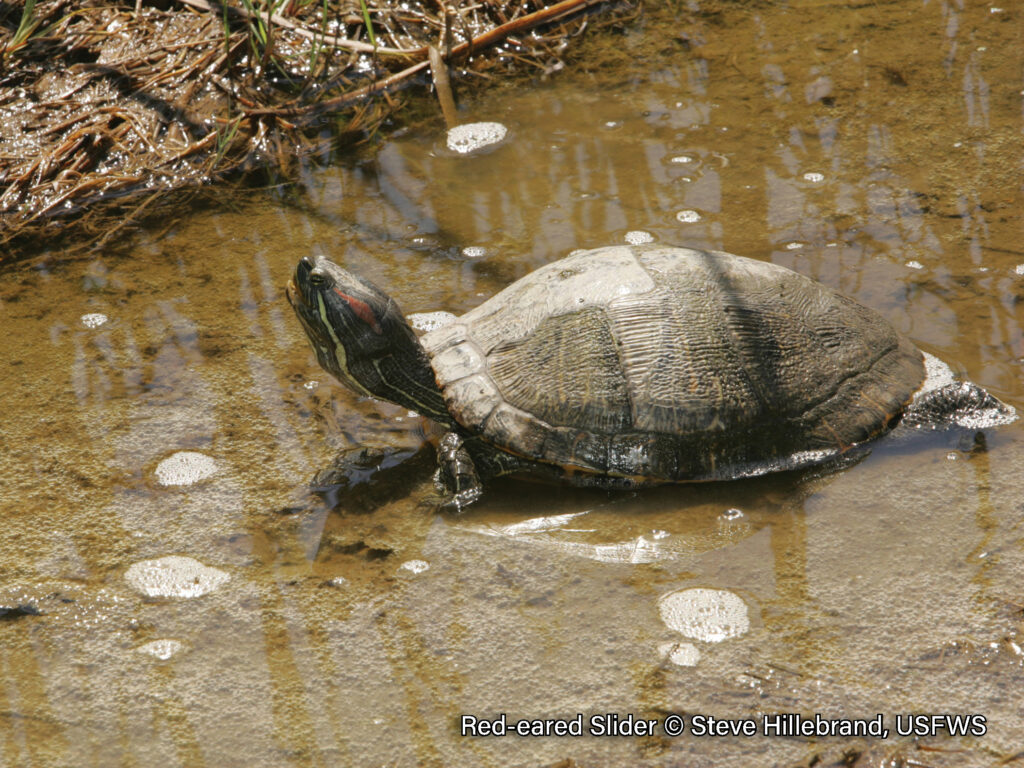
The illegal release of non-native turtles from the pet trade, such as Red-eared Sliders, into the wild in Canada poses a threat to Painted Turtles as they can be a source of parasites and disease as well as an unnatural source of competition for resources like food and basking sites.

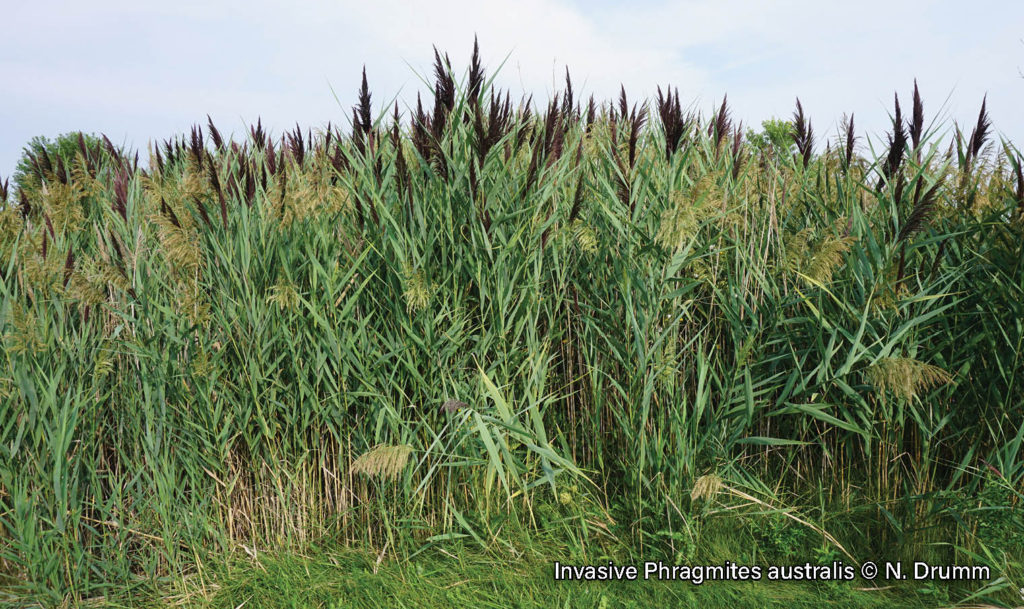
Invasive Phragmites is a non-native reed grass that forms tall, dense stands that reduce the amount of riparian and shoreline habitat available to turtles and block their access to different areas of habitat.

Picture of a dense stand of the Invasive Phragmites australis, a tall reed grass with large, feather-like seed heads.

Turtles at Risk

  • SAR in the Sydenham
  • Mussels
  • Fishes
  • Snakes
  • Turtles
    • Blanding’s Turtle
    • Midland Painted Turtle
    • Northern Map Turtle
    • Snapping Turtle
    • Spiny Softshell
Test Your ID Skills!
Report a Turtle Sighting
Check out our latest newsletter! Download

© 2026 · St. Clair Region Conservation Authority - The Sydenham River Watershed

  • Privacy

Press Enter to search · Esc to close