Eastern Milksnake
Lampropeltis triangulum
Lampropeltis triangulum
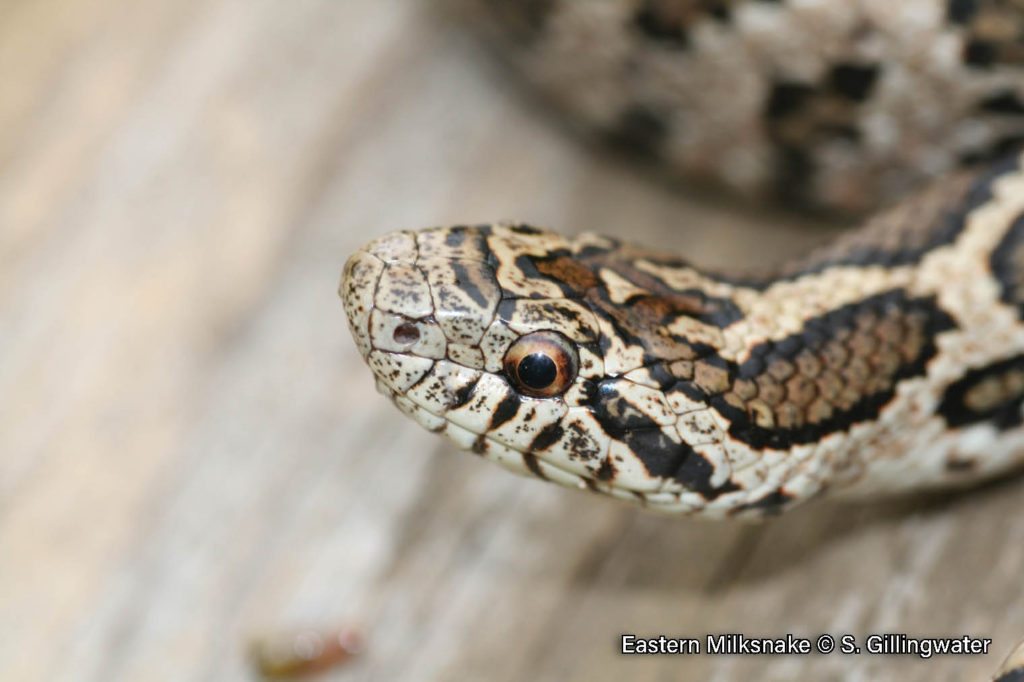
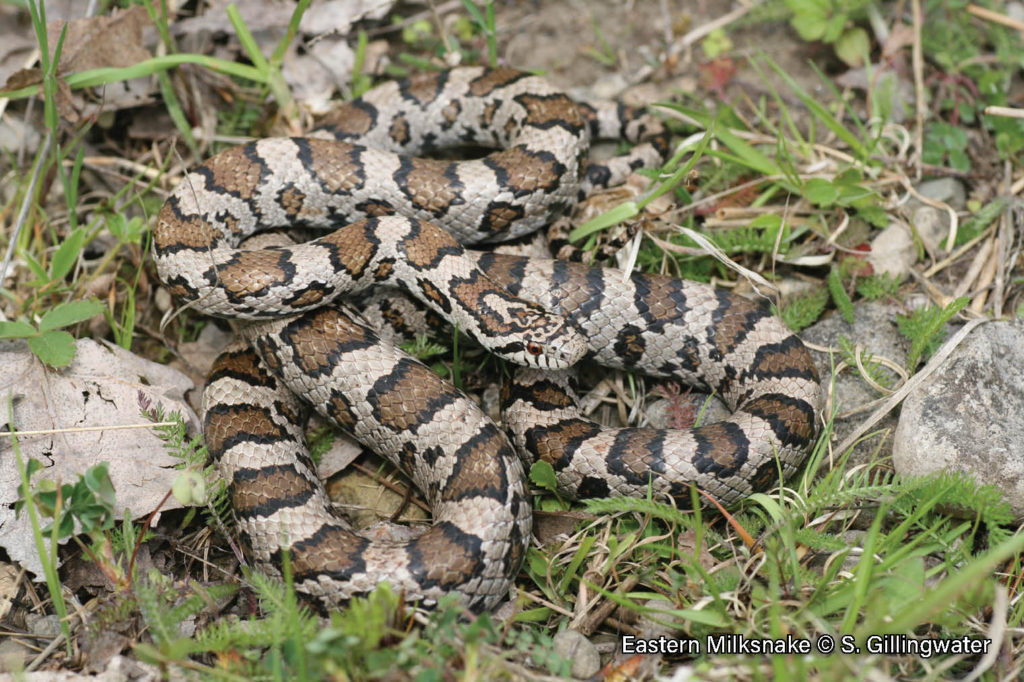
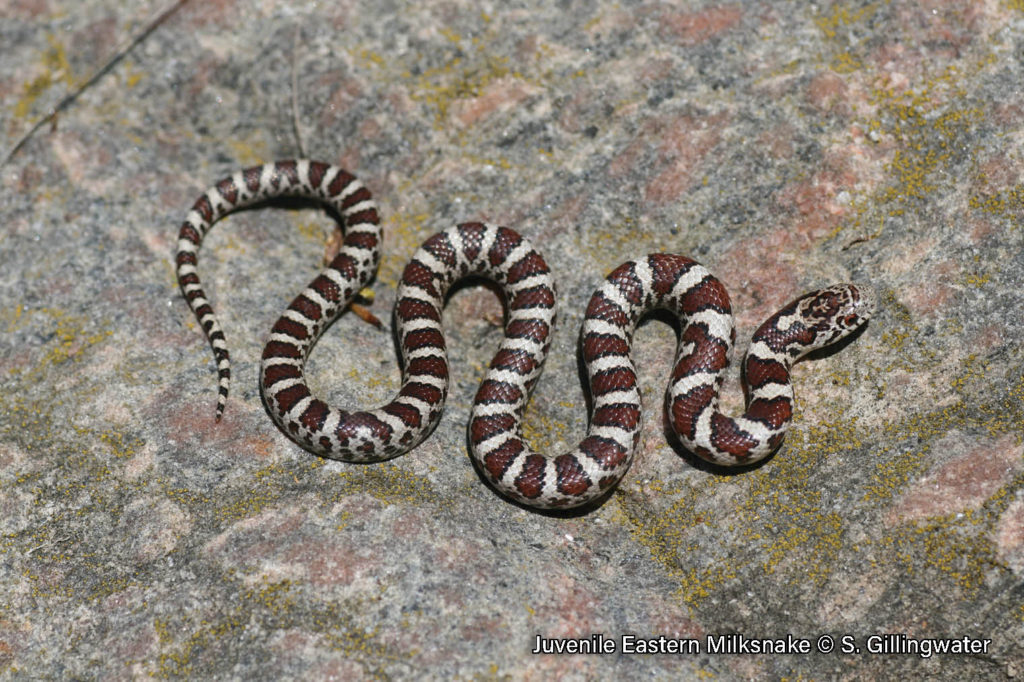
The Eastern Milksnake is a non-venomous constrictor that can reach lengths of 1.3m and live for 20 years. They have a grey-tan body that is slender and displays bright, glossy, reddish dorsal blotches that alternate from head to tail. Each blotch has a distinctive black border and a characteristic ‘Y’ or ‘V’ shaped pattern is present on the head. The underside of the body is decorated with a white and black checkerboard pattern, this combination of colour and pattern makes the Milksnake one of Ontario’s most dazzling snake species.
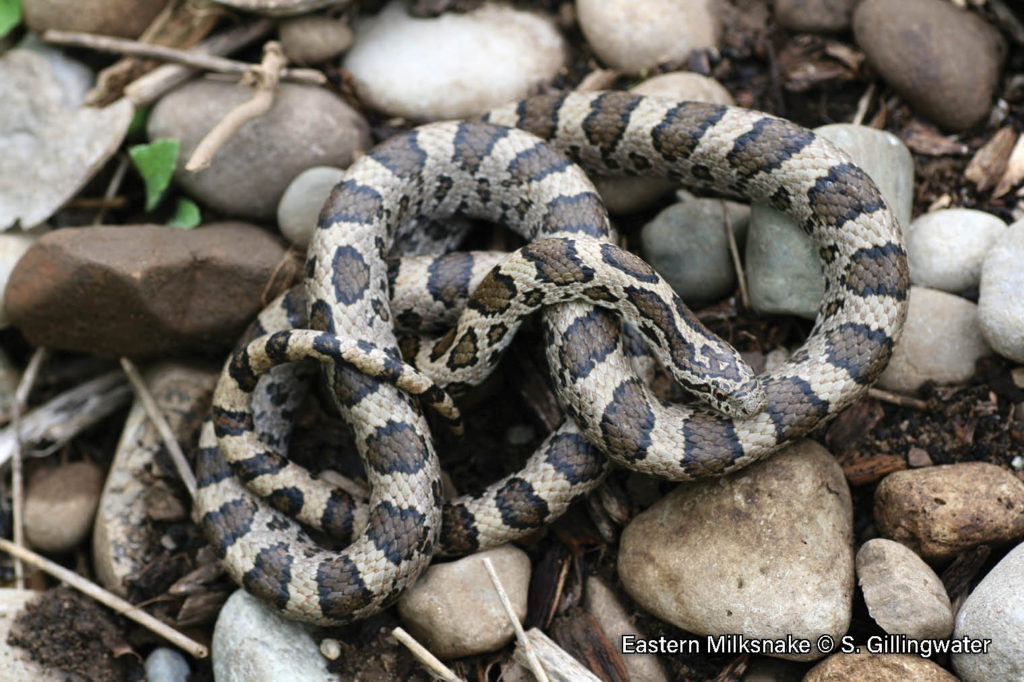

Being one of five species in Ontario that exhibit a blotch pattern, the Eastern Milksnake is often confused with the Northern Watersnake, Eastern Foxsnake, Eastern Hog-nosed Snake, and Eastern Massasauga Rattlesnake. The Northern Watersnake has horizontal faint banding instead of blotches on a much darker body. The Eastern Foxsnake has a yellow to light brown body with brown blotches that lack a black border. The Eastern Hog-nosed Snake has a distinctive upturned snout. The Eastern Massasauga Rattlesnake has a much thicker body, a rattle on a blunt tail, triangular head and most distinctively, a vertical pupil. Although Milksnakes often imitate rattlesnakes by vibrating their tail on dry leaf litter to create a buzzing noise, they do not produce venom and use this tactic as a deterrent against potential predators.

Eastern Milksnakes inhabit a wide range of both natural and human-modified habitats. The species can be found in areas with high forest cover as well as open habitats such as prairies, meadows, pastures, hayfields, and rocky outcrops. They prefer areas near a source of water that also have cover for egg-laying and hibernation. Milksnakes are opportunistic and will inhabit buildings found in rural areas such as barns, sheds, houses as well as utility corridors, suburban parks and gardens. Milksnakes move frequently throughout their home range using corridors to access breeding sites, basking areas, and areas for hibernation known as hibernaculum.
These human-dominated habitats often support high numbers of rodents, which is one of the main sources of food for adult Milksnakes. Milksnakes will also eat other small mammals, eggs, birds, reptiles, fish, amphibians, and invertebrates. Young snakes will hunt for worms, other young snakes, and small amphibians like frogs and salamanders.
Fact Check
The old folktale that gave rise to the species’ common name “Milksnake” came about because they were often encountered in barns where they were hunting rodents but people came to (mistakenly) believe that they were drinking milk from cows.
The Eastern Milksnake is found in eastern North America in Canada and the US. In Canada, they are found in Ontario and southwestern Quebec in the Carolinian and Great Lakes/St. Lawrence regions. There is evidence that their numbers are declining in locations they were once common.

Threats facing the Eastern Milksnake are numerous, the majority of population declines are caused through human-based activities such as road mortality, habitat loss from urban and agricultural development, removal of old farm buildings, collection for the pet trade, and unwarranted persecution. Due the visual similarities between the Eastern Milksnake and Eastern Massasauga Rattlesnake as well as widespread misinformation and misplaced fear of snakes in general, Milksnakes are often killed without cause. Predation rates also influence the survival of Milksnakes as the list of predators is long – known predators include bullfrogs, birds (hawks and owls), weasels, raccoons, skunks, opossums, foxes, coyotes, and feral/pet dogs and cats.
© 2026 · St. Clair Region Conservation Authority - The Sydenham River Watershed