


Follow the Yellow Fish Road!
November 2022 | SCRCA Biology Team
What we do on land impacts water
In 2022, the St. Clair Region Conservation Authority worked with five classes to deliver the Yellow Fish RoadTM program to communities in the Sydenham River watershed. This environmental awareness program, developed by Trout Unlimited Canada, reminds Canadians that the water that goes down storm drains is not treated and that these drains are connected directly to our streams, lakes and rivers.
The program participants learned that just because pollution is on the ground, it doesn’t mean it will stay there. During a heavy rain or snow melt, water washes across the land picking up pollutants like fertilizers, pesticides, exposed soil, road salt, pet waste, and yard waste, where it is carried to local storm drains, ditches, rivers and lakes. Other types of pollution may also be spilled or intentionally dumped such as litter, unwanted chemicals, paints, oil, and car washing detergents.
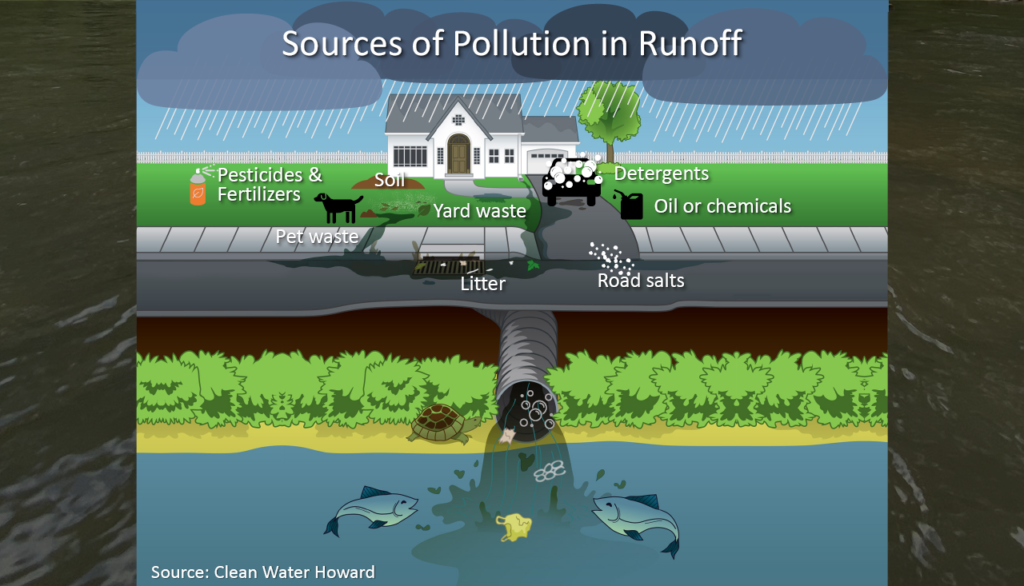
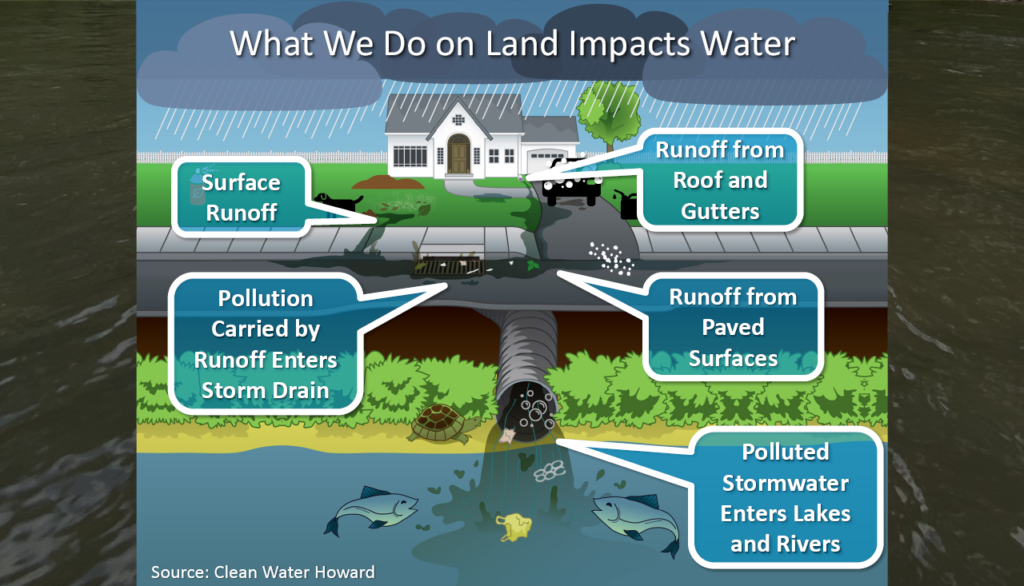
Downstream impacts of stormwater pollution
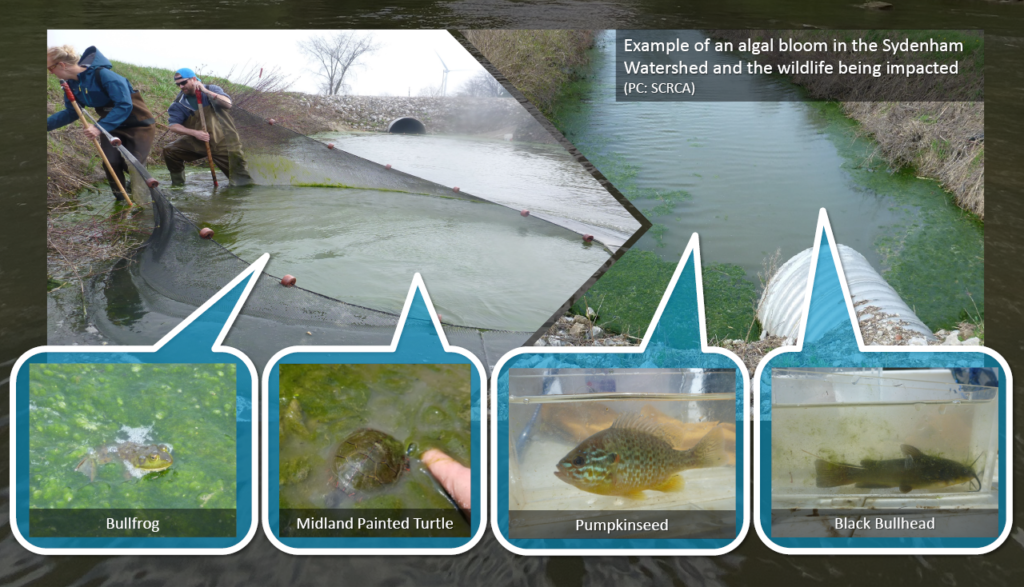
Pollution from overland runoff is one of the biggest threats to the aquatic environment. One impact of pollution in runoff that is of particular concern in the Sydenham River Watershed and greater Lake Erie basin is algal blooms.
Algae are a natural part of the environment but just as fertilizers help plants to grow on land, if they get washed off the land they cause algae to grow in the water – except this ready supply of nutrients causes them to grow uncontrollably forming algal blooms, which cause a lot of problems. For example, algal blooms can be toxic, clog water intakes, foul beaches, and cause low oxygen levels that fish and other aquatic animals need to survive.
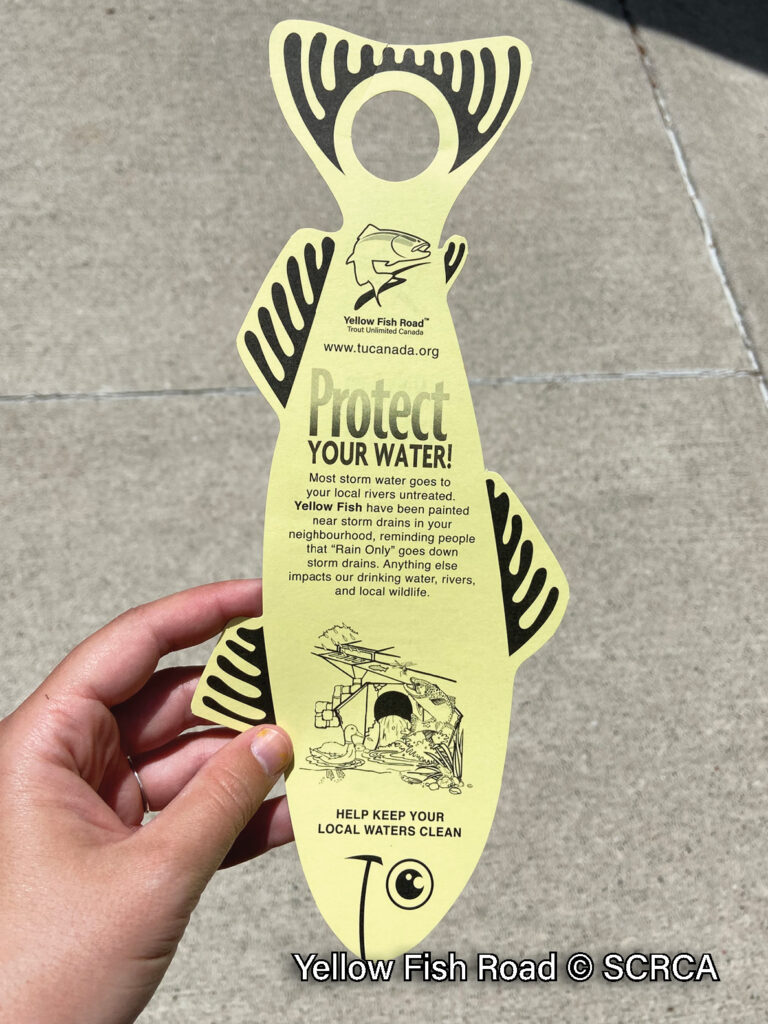
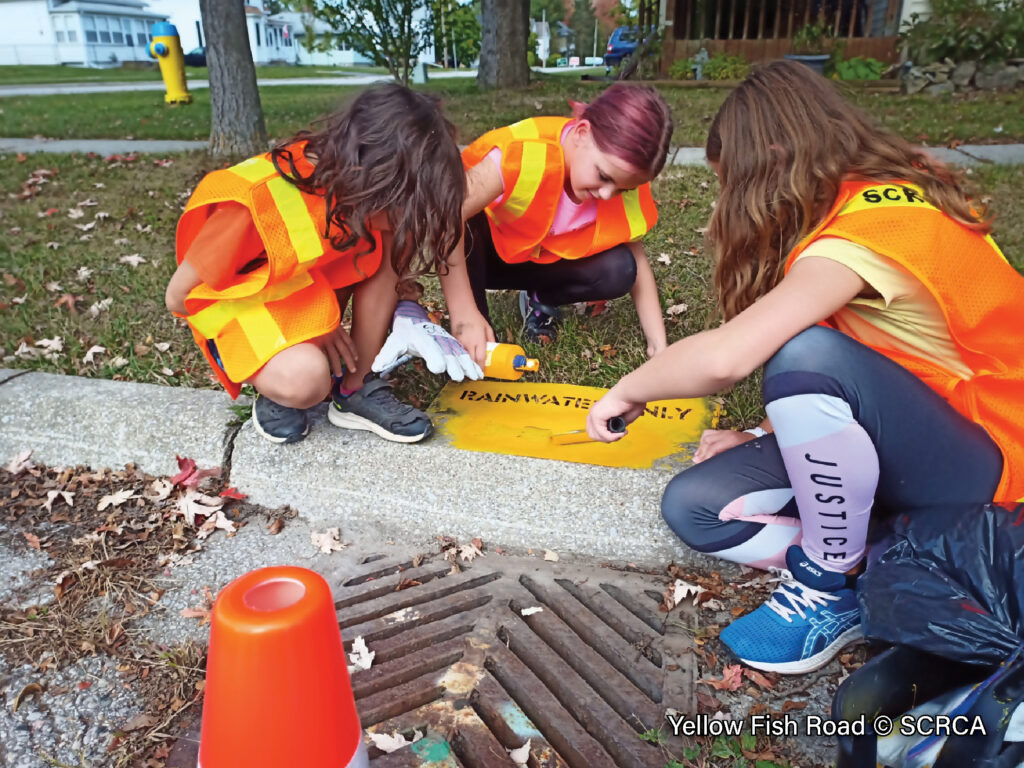
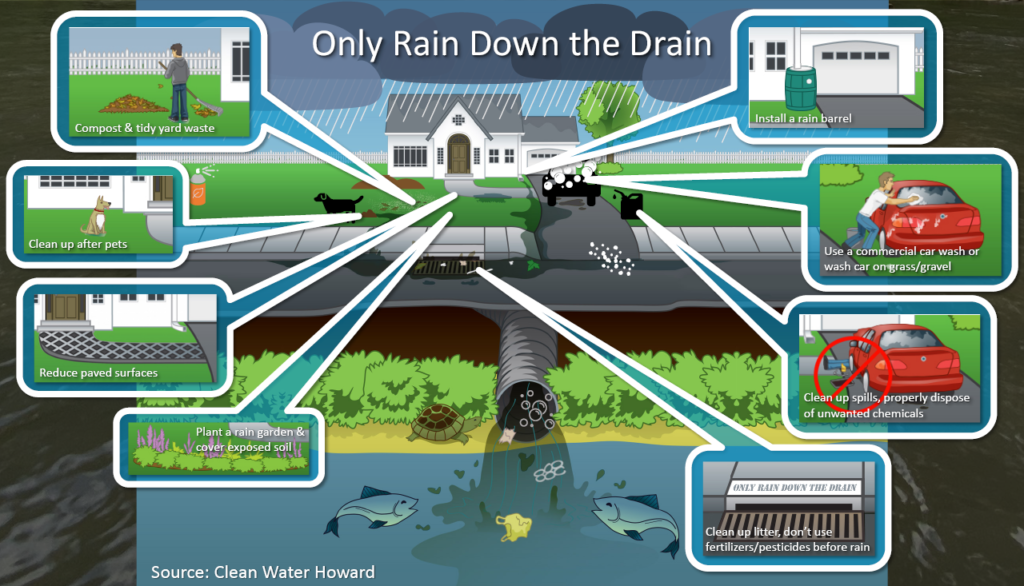
Only rain goes down the drain
The Yellow Fish Road participants learned about ways we can all work to protect our local waterways by reducing these sources of pollution and capturing excess runoff for beneficial uses like gardening.
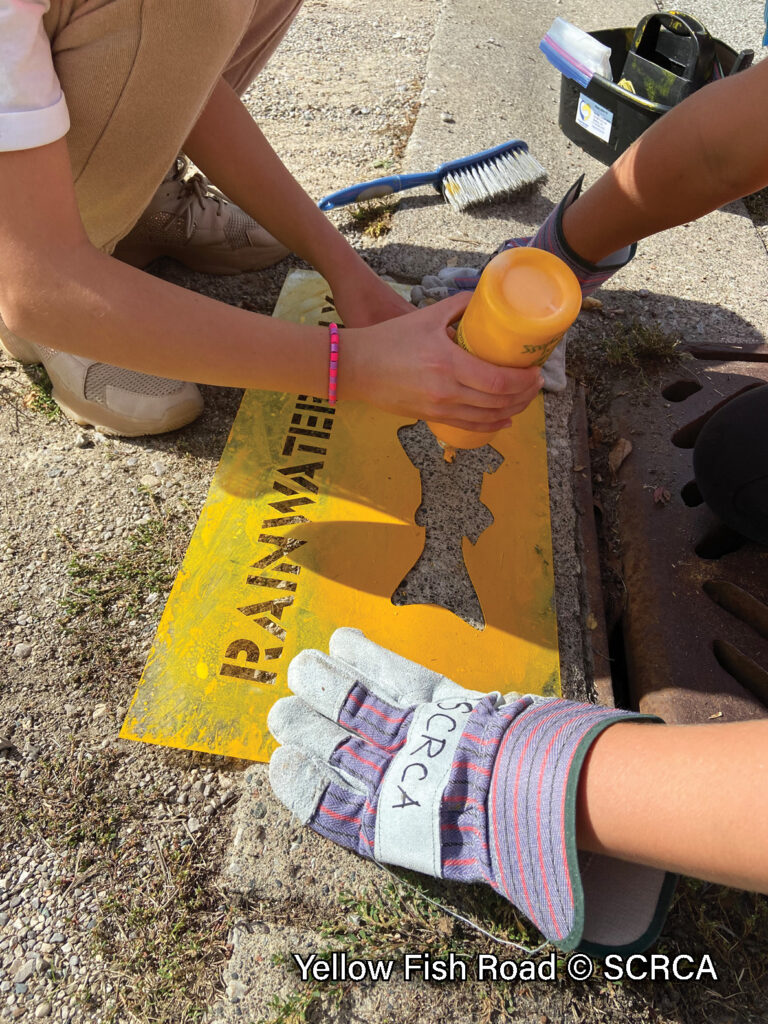
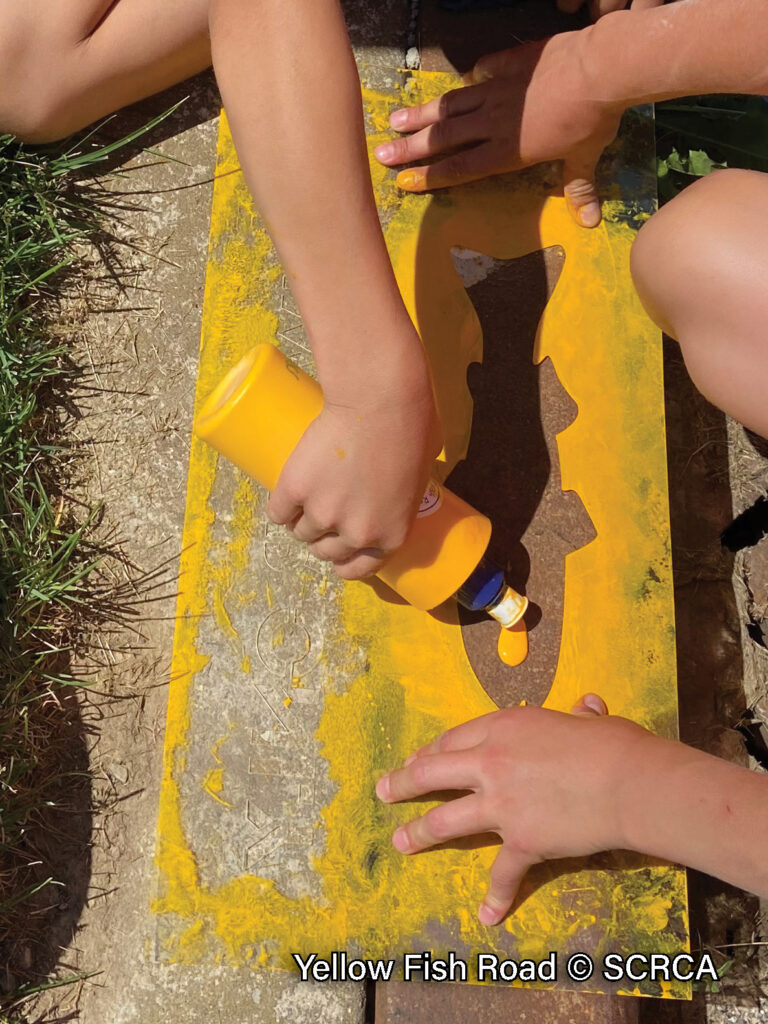
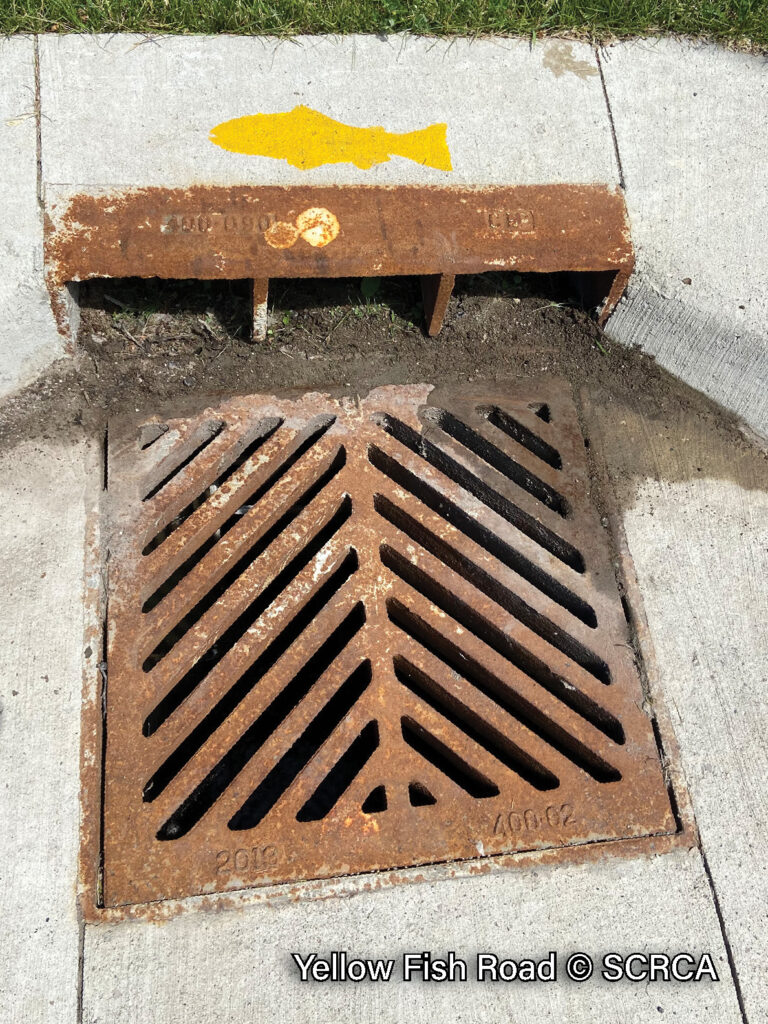
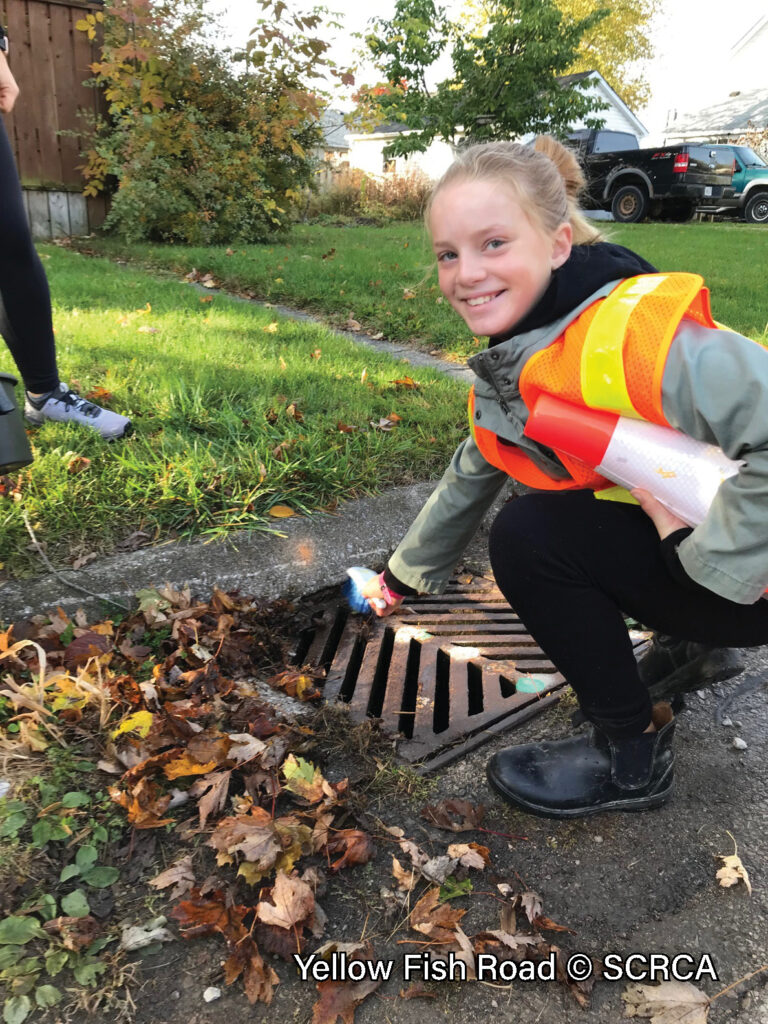
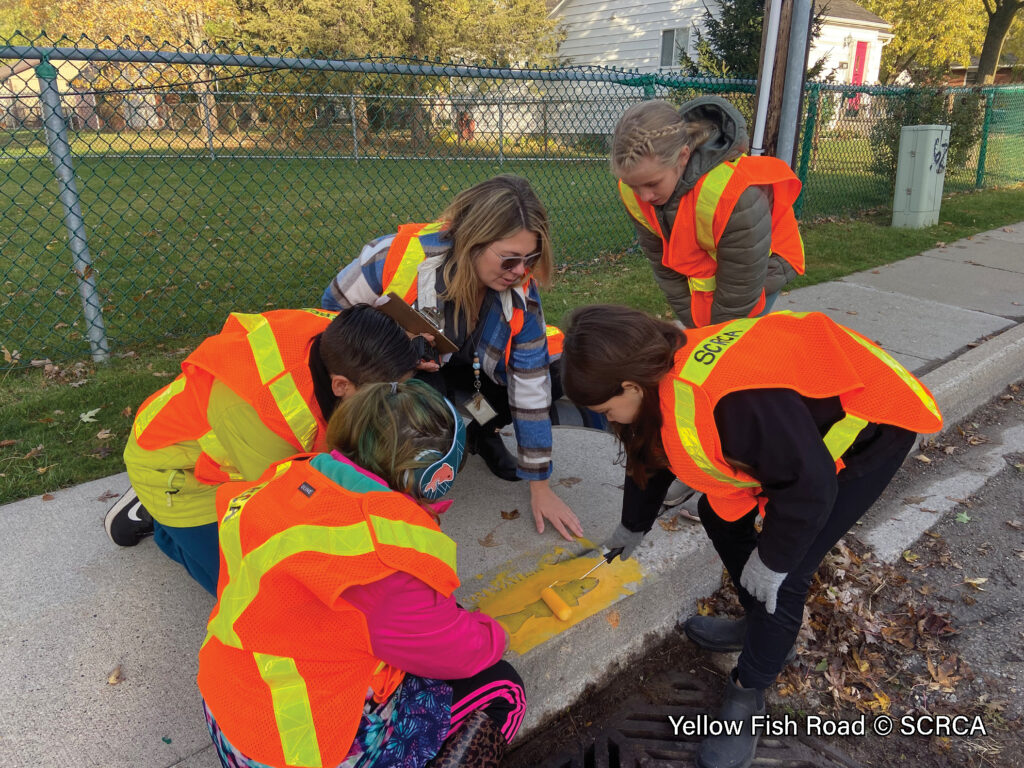
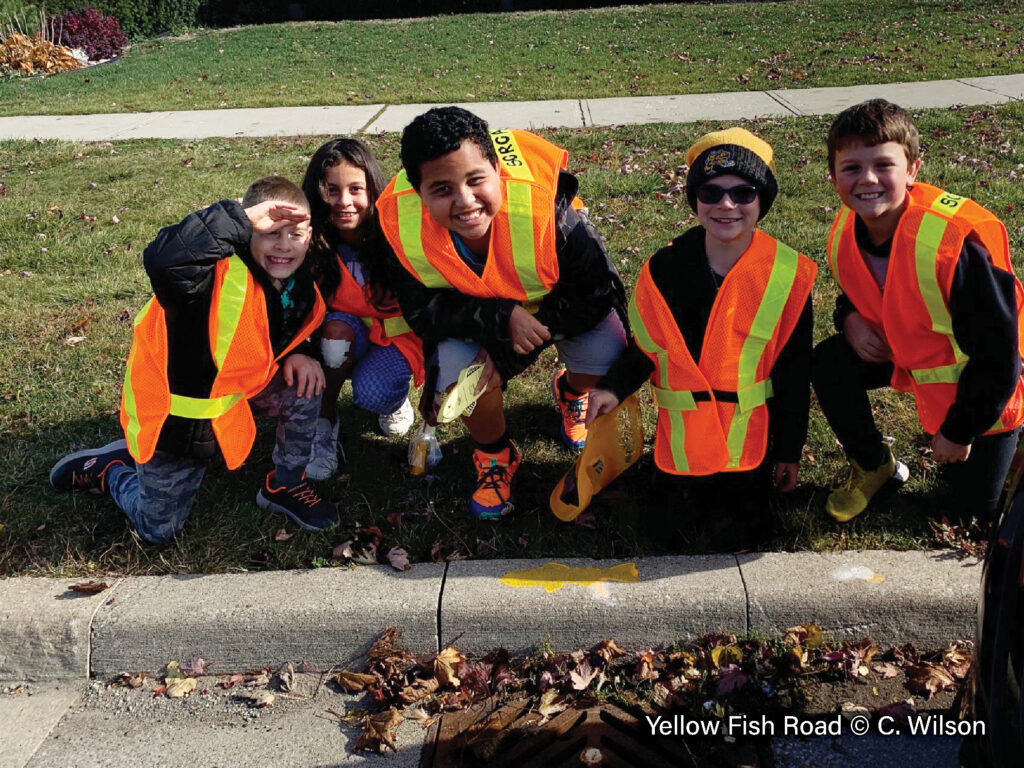
They then helped to raise awareness among their communities by painting yellow fish next to storm drains and distributing informational fish-shaped door hangers to remind people that these drains are connected to natural waterways and only rain should go down the drain.
The groups accomplished a great deal during the five events: 108 youth and 35 adult participants from three different municipalities, painted yellow fish next to 226 storm drains on 34 roads and distributed educational flyers to 650 homes in the Sydenham watershed.
The participating schools and municipalities included:
- St. Peter Canisius Catholic School, Warwick Township
- St. Philip Catholic School, Town of Petrolia
- Hillcrest Public School, Town of Petrolia
- Sir John Moore Public School, St. Clair Township
Community action and awareness
In addition to clean water and healthy habitats, the Yellow Fish RoadTM program supports community action and awareness. Preventing pollutants from entering our storm drains is critical to protecting water quality, aquatic habitat, and the health of our watersheds.
The program was offered by the St. Clair Region Conservation Authority with help from the participating municipalities and through financial support from the Ontario Ministry of Environment, Conservation and Parks and Environment and Climate Change Canada.

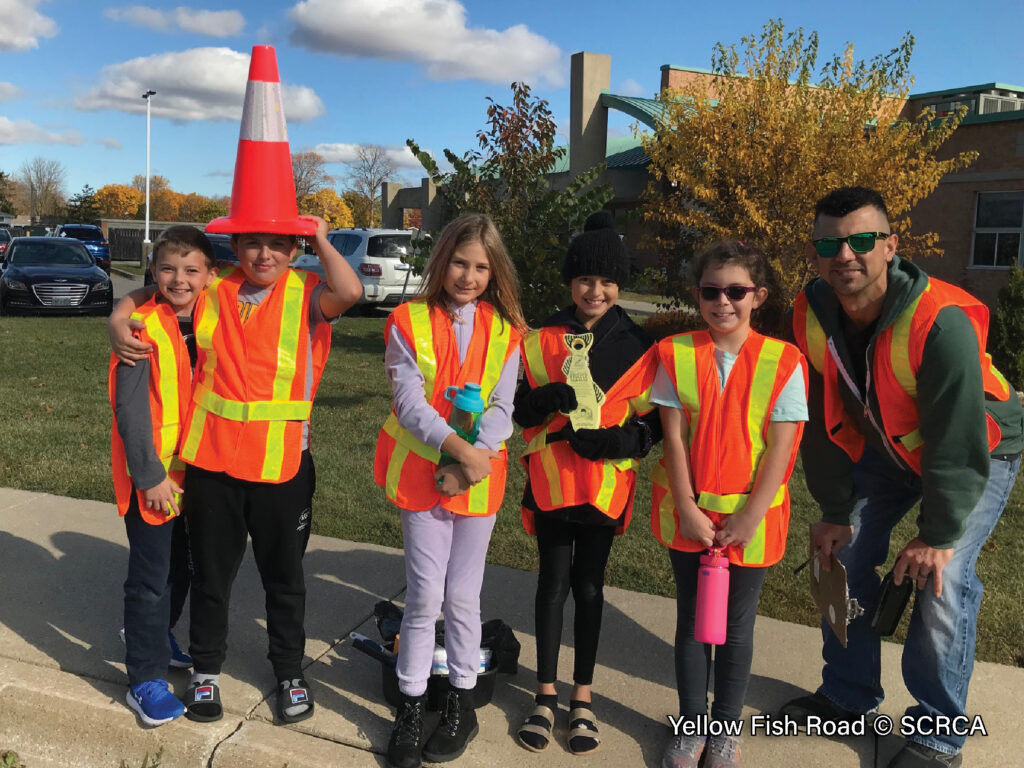
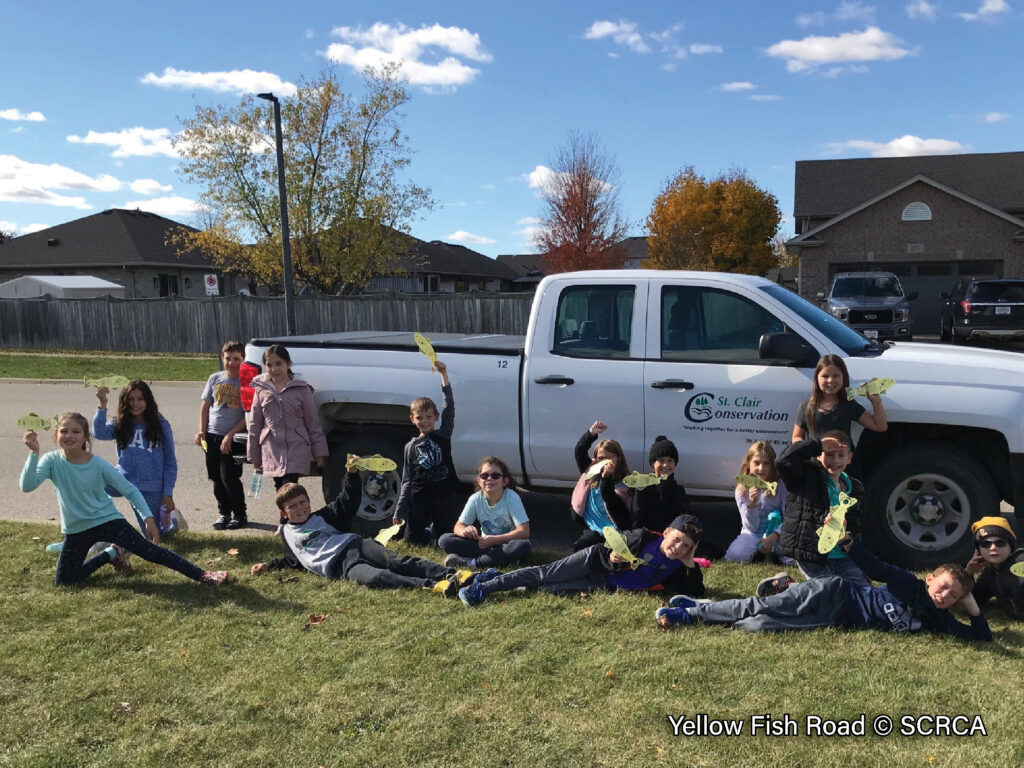

Completing the Yellow Fish Road program with the St. Clair Region Conservation Authority was a fantastic opportunity for my Grade 4 class to learn more about local conservation issues then go out into our community and show that small changes can have a big impact on our environment. The program was very well done and the kids had a great time helping to support local conservation efforts.”
– Curtis Wilson, Gr. 4 Teacher, Sir John Moore Public School
How you can help to protect our watershed
Here are some ways you can help to protect our watershed and reduce the amount of pollution that reaches lakes and rivers:
- Clean up yard waste, pet waste, and litter
- Compost
- Build soil health and use ground covering plants or mulch to cover exposed soils and prevent erosion
- Use fertilizers, pesticides, road salts, and other chemicals sparingly, only where needed, and not before it rains
- Use a commercial car wash so the wash water gets treated (or if that’s not possible, wash your car on grass/gravel)
- Clean up spills and properly dispose of household chemicals
- Reduce the amount of paved surfaces like concrete, instead use permeable surfaces like paving stones
- Plant a rain garden
- Install rain barrels
- Ensure your septic system undergoes regular maintenance
- Share what you’ve learned with friends and family!
Additional Resources:
- Video: Reducing Pollution in Stormwater Runoff
- Managing Phosphorus in the Sydenham Watershed
- Clean Water Howard