

2016 Bear Creek Barrier Removal Project
March 2019 | SCRCA Biology Team
Biologists from the St. Clair Region Conservation Authority (SCRCA) came across an old metal barrier that spanned the width of Bear Creek on the North Branch of the Sydenham. The barrier had no current function and impeded the movement of fish and other aquatic animals as well as the natural flow of the river.
Starting in 2015-16, the SCRCA began work to restore this habitat by removing the barrier. Staff needed to secure the necessary funding, obtain the appropriate permits, and relocate fish and mussels out of the construction area to ensure their safety.
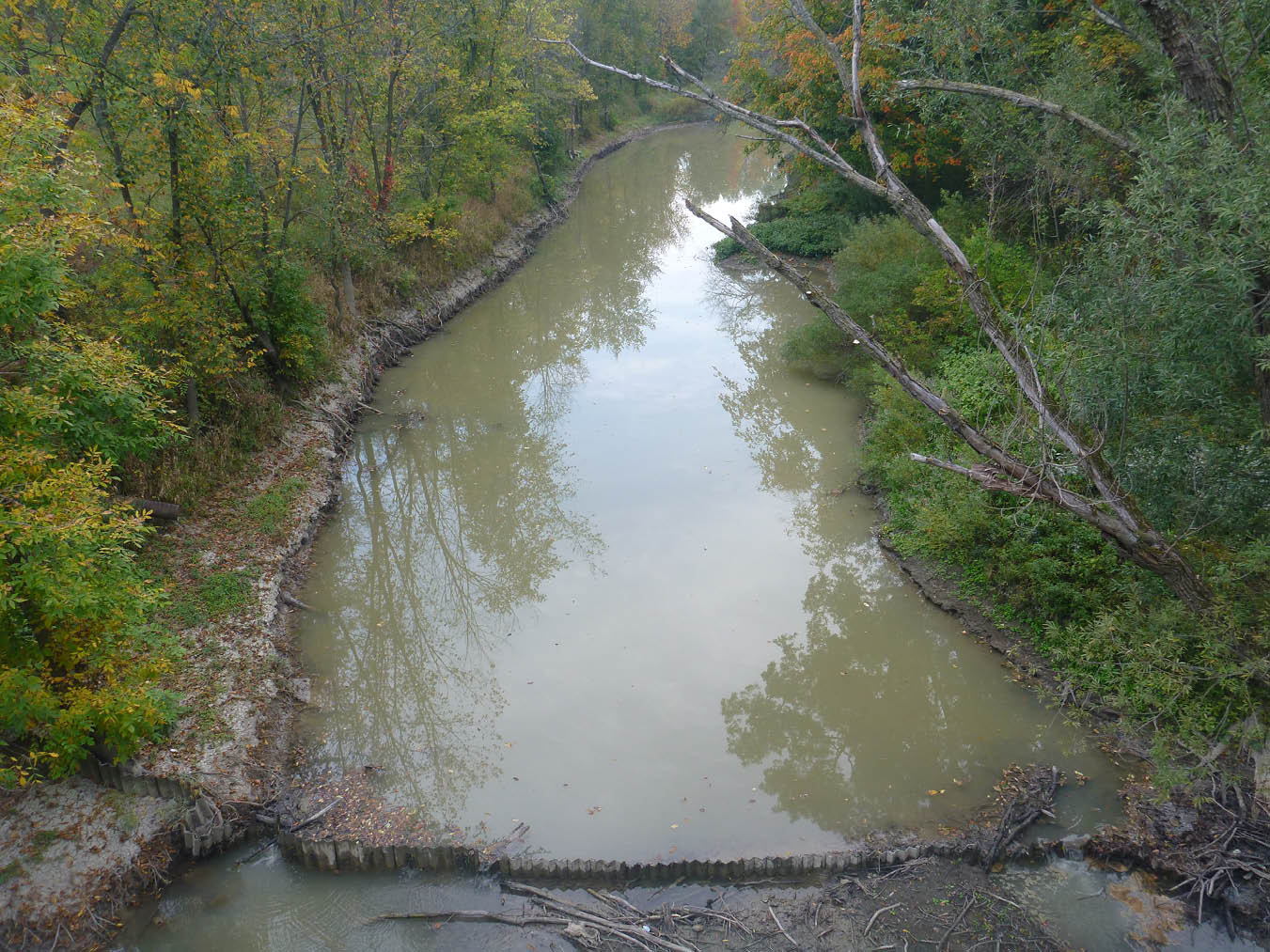
A steel corrugated barrier spanning the width of Bear Creek was blocking fish passage during low flows (photo: September 2015)
Mussel Relocation
Mussels are relatively sedentary animals, only moving short distances horizontally or vertically within the sediment. The mussels had to be removed from the construction site by hand. Mussels were captured using the tactile search technique known as raccooning followed by the use of a mussel scoop and sieve to search for juveniles. Each mussel was measured, recorded and tagged.
With help from the MNRF youth rangers, SCRCA staff relocated over 300 mussels from the 30m stretch of the river to a suitable area upstream. Species encountered included White Heelsplitter, Pink Heelsplitter, Giant Floater, Fragile Papershell, Deertoe, Flutedshell, Spike, Threeridge, and the Mapleleaf mussel, a species at risk.
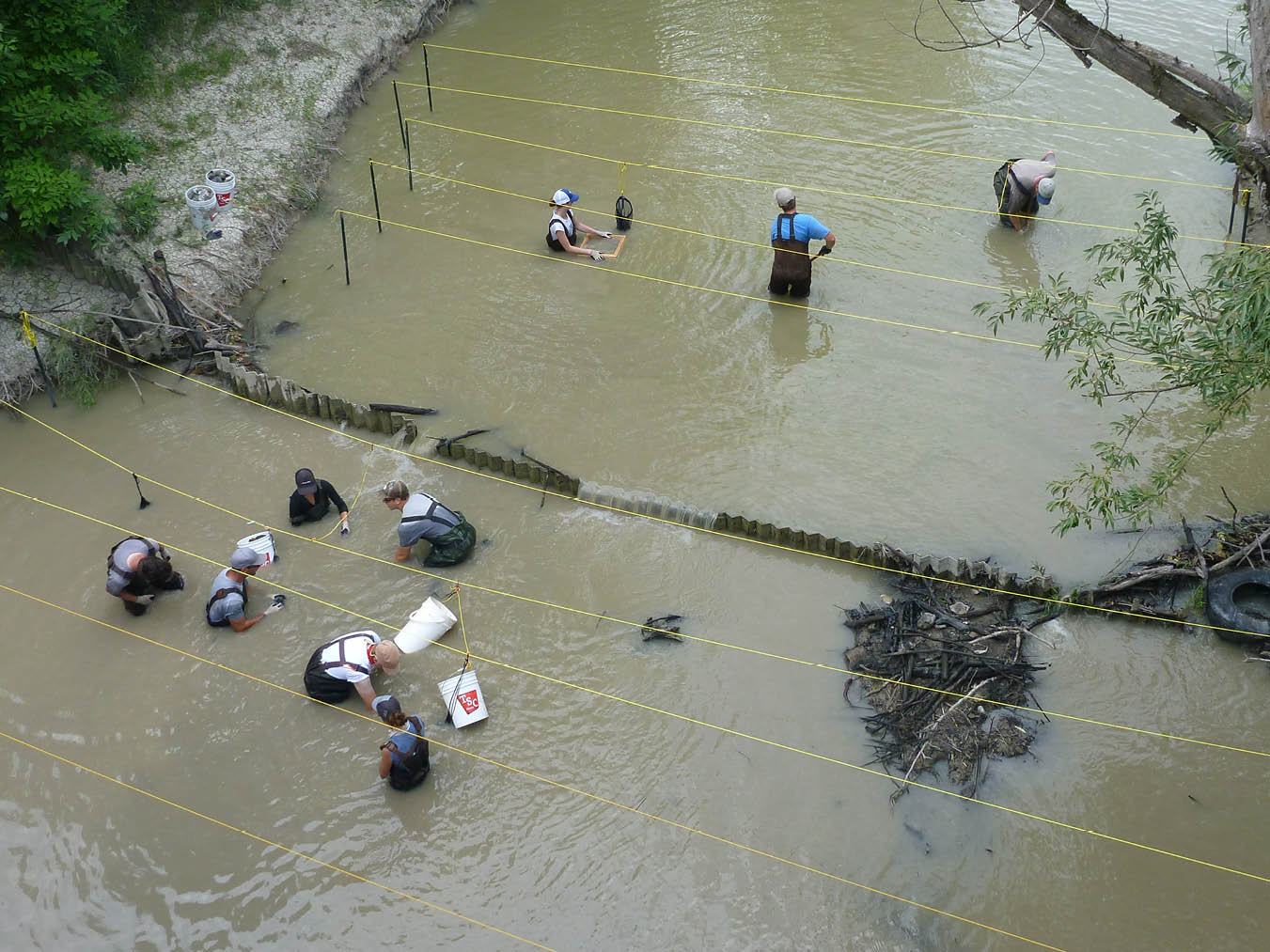
SCRCA staff systematically completed mussel searches in 1m transects of the 30m project area (photo: August 2016)
Fish Exclusion
A fish exclusion was also completed by SCRCA staff by setting up block nets upstream and downstream of the construction area. Fish within the area were then captured, recorded, and released in the river outside of the construction area.
Riffle Habitat Created
Following the mussel relocation and fish exclusion, the steel barrier was removed and an engineered riffle habitat was constructed in its place by strategically placing approximately 250 metric tons of rock in the river. The riffle was created to provide fish and invertebrate habitat and improve oxygen levels in the water downstream.
Construction was completed in September 2016 – fish and other aquatic species are now free to travel up and down-stream through the river in search of food and preferred habitats.
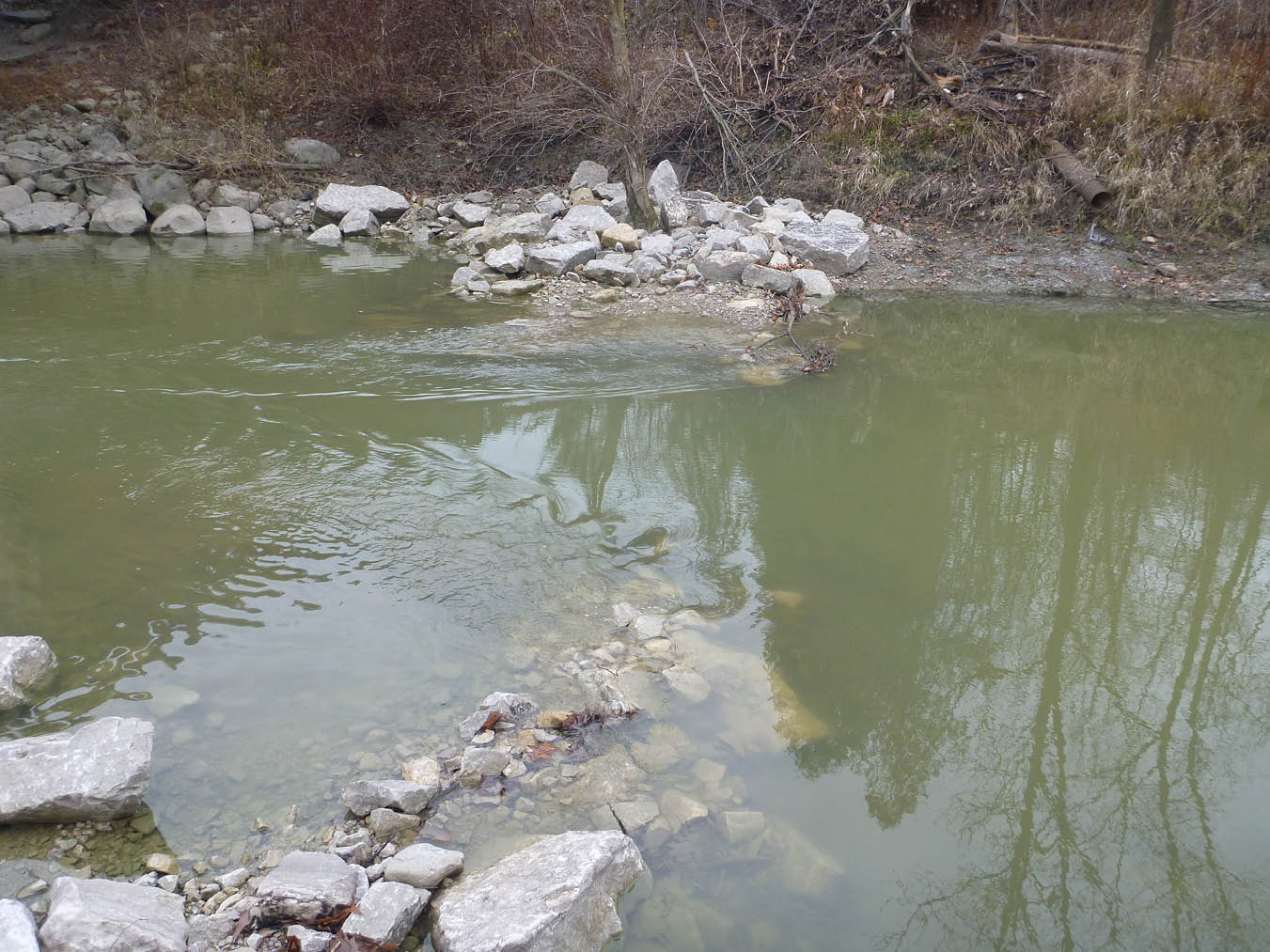
Following the removal of the steel barrier that was blocking fish movement, rocks were used to create a riffle to improve habitat in the river (photo: December 2016)
Follow-up Surveys
Follow-up mussel survival assessment surveys were completed after 30 days, 1 year, and 2 years resulting in approximately 800 additional mussel observations, including new sightings as well as recaptures of the tagged mussels that had been moved out of the construction area.
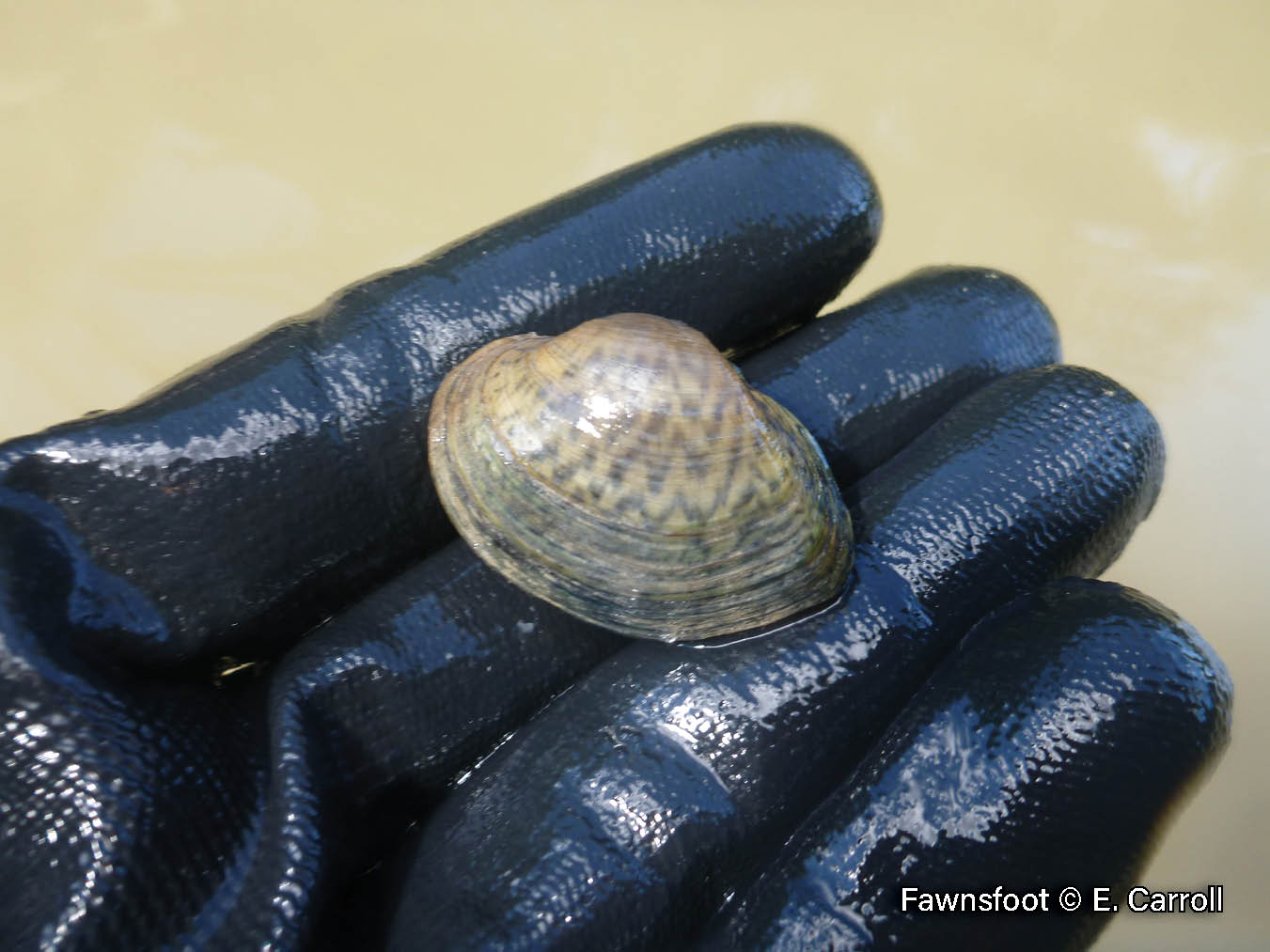
During the 30-day follow-up survey, there was a rare find – an endangered Fawnsfoot mussel was observed, which was the first record of this species on the North Branch of the Sydenham (photo: September 2016)
Partners in Conservation
This project was undertaken by the SCRCA with financial support from Fisheries and Oceans Canada’s Recreational Fisheries Conservation Partnership Program, Ontario Trillium Foundation through the Friends of the St. Clair River, Ministry of Natural Resources and Forestry, and the federal Habitat Stewardship Program – Prevention.