MUSSEL GLOSSARY
Mollusc: refers to the large phylum of soft-bodied invertebrates that includes a wide range of animals. Mussels, snails, octopuses, and squid all fall under different classes in the phylum “Mollusca.”
Bivalve: refers to the class of aquatic molluscs, “Bivalvia,” that have shells formed by two valves that open and close with a hinge. The shells are hard and calcareous meaning they are largely made of calcium carbonate. Bivalves are found in fresh and salt water, they include mussels, clams, and oysters.
Unionid: refers to the family of freshwater river mussels, “Unionidae.” All mussel species native to the Sydenham River are unionids.
Dreissenid: refers to the family of freshwater mussels, “Dreissenidae,” that includes Zebra and Quagga mussels. They firmly attach to surfaces using a byssus. Dreissenids are invasive in the Great Lakes where they are having large, detrimental impacts on the ecosystem and threaten the survival of native mussels.
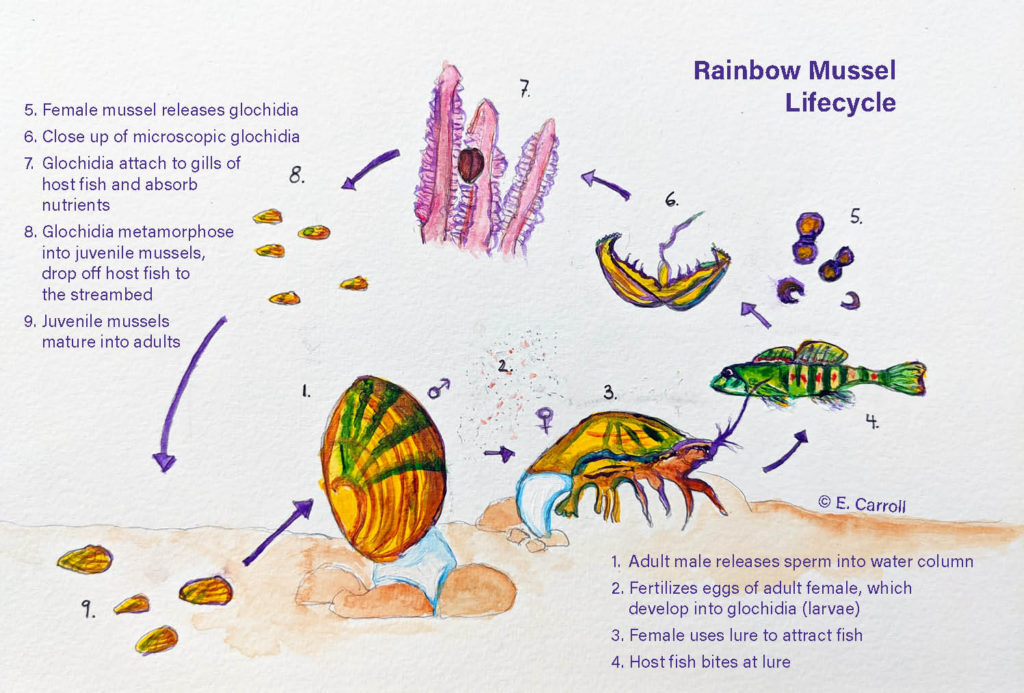
Glochidia: (singular glochidium) the larvae of unionids. After a mussel’s eggs are fertilized by sperm, they develop into glochidia. The glochidia are parasitic and require a fish host. They attach to their host’s gills, fins or skin, absorbing nutrients for a period of days to weeks before metamorphosing and dropping off to the river bottom as a juvenile mussel.
Valve: a half shell of a bivalve.
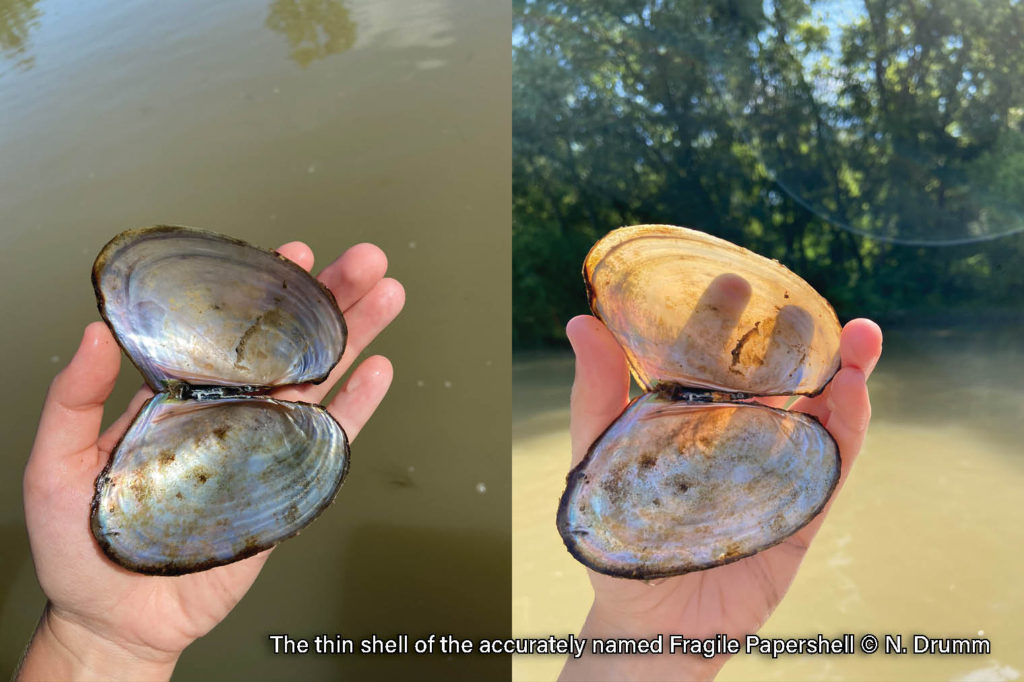
Periostracum: the thin, skin-like outermost layer of the mussel shell.
Nacre: the hard, iridescent inner layer of the shell, also known as mother of pearl.
Mantle: also known as the pallium, a layer of tissue that covers the internal organs of the mussel and produces its shell. The mantle can also form other structures like the siphons or lures.
Siphon: mussels have inhalant and exhalent siphons they use to filter water. Siphons allow them to breathe oxygen; consume algae, bacteria and other food; and for females to take in sperm to fertilize their eggs.
Marsupium: (plural marsupia) modified gill pouch of female unionid mussels where eggs are fertilized and develop into glochidia.
Conglutinate: packet of glochidia encapsulated by mucous, look like host fish prey items.
Foot: muscular part of the body, mussels use their foot to move, burrow, and anchor to the sediment; juveniles also use their foot for pedal feeding.
Byssal thread: a strong, fine thread made from protein that some mussels use to attach to gravel, rocks and other surfaces.