
Skip to content
  • Biodiversity
    • Why is Biodiversity Important?
    • Threats to Biodiversity
    • What are Species at Risk?
    • Recovery Planning
    • Environmental Monitoring
  • Species at Risk
    • Species at Risk
      • SAR in the Sydenham
      • Mussels
      • Fishes
      • Snakes
      • Turtles
    • Mussels
      • Eastern Pondmussel
      • Fawnsfoot
      • Kidneyshell
      • Lilliput
      • Mapleleaf
      • Northern Riffleshell
      • Purple Wartyback
      • Rainbow
      • Rayed Bean
      • Round Hickorynut
      • Round Pigtoe
      • Salamander Mussel
      • Snuffbox
      • Threehorn Wartyback
      • Wavy-rayed Lampmussel
    • Fishes
      • Blackstripe Topminnow
      • Eastern Sand Darter
      • Grass Pickerel
      • Northern Madtom
      • Northern Sunfish
      • Pugnose Minnow
      • Pugnose Shiner
      • River Darter
      • Silver Lamprey
      • Spotted Sucker
    • Snakes
      • Eastern Foxsnake
      • Eastern Hog-nosed Snake
      • Eastern Milksnake
    • Turtles
      • Blanding’s Turtle
      • Midland Painted Turtle
      • Northern Map Turtle
      • Snapping Turtle
      • Spiny Softshell
  • Stewardship
    • Healthy Watersheds Program
      • Sydenham Phosphorus Reduction Initiative
    • Managing Phosphorus
    • Phosphorus StoryMap
    • Reducing Pollution in Runoff
    • Best Management Practices Resources
  • Stories
  • Get Involved
    • What Can I Do?
    • Take the Stewardship Survey
    • Test Your ID Skills!
    • Report a Turtle Sighting
  • Resources
  • Contact Us
Sydenham River WatershedSydenham River Watershed
  • Biodiversity
    • Why is Biodiversity Important?
    • Threats to Biodiversity
    • What are Species at Risk?
    • Recovery Planning
    • Environmental Monitoring
  • Species at Risk
    • Species at Risk
      • SAR in the Sydenham
      • Mussels
      • Fishes
      • Snakes
      • Turtles
    • Mussels
      • Eastern Pondmussel
      • Fawnsfoot
      • Kidneyshell
      • Lilliput
      • Mapleleaf
      • Northern Riffleshell
      • Purple Wartyback
      • Rainbow
      • Rayed Bean
      • Round Hickorynut
      • Round Pigtoe
      • Salamander Mussel
      • Snuffbox
      • Threehorn Wartyback
      • Wavy-rayed Lampmussel
    • Fishes
      • Blackstripe Topminnow
      • Eastern Sand Darter
      • Grass Pickerel
      • Northern Madtom
      • Northern Sunfish
      • Pugnose Minnow
      • Pugnose Shiner
      • River Darter
      • Silver Lamprey
      • Spotted Sucker
    • Snakes
      • Eastern Foxsnake
      • Eastern Hog-nosed Snake
      • Eastern Milksnake
    • Turtles
      • Blanding’s Turtle
      • Midland Painted Turtle
      • Northern Map Turtle
      • Snapping Turtle
      • Spiny Softshell
  • Stewardship
    • Healthy Watersheds Program
      • Sydenham Phosphorus Reduction Initiative
    • Managing Phosphorus
    • Phosphorus StoryMap
    • Reducing Pollution in Runoff
    • Best Management Practices Resources
  • Stories
  • Get Involved
    • What Can I Do?
    • Take the Stewardship Survey
    • Test Your ID Skills!
    • Report a Turtle Sighting
  • Resources
  • Contact Us

Fishes

Home Species at Risk in the SydenhamFishes

Fishes of the Sydenham

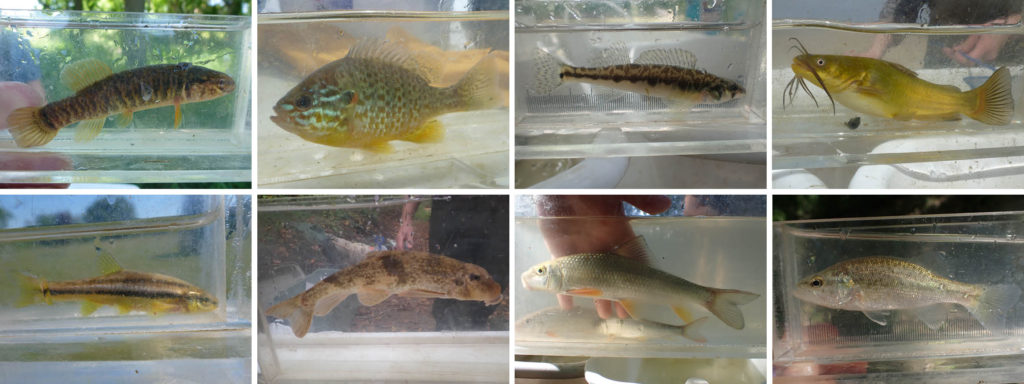
There are 129 freshwater fish species native to Ontario with the Sydenham River being home to at least 80 species. Many of these species are sensitive to environmental change, 10 species in the Sydenham River have been listed as species at risk and there are several other rare species that live in the river.
How are Fish Populations Monitored?

In the Sydenham watershed, fish are primarily sampled using seine nets or a technique called electrofishing. But first the survey area needs to be set up.

Setting up the Sampling Site

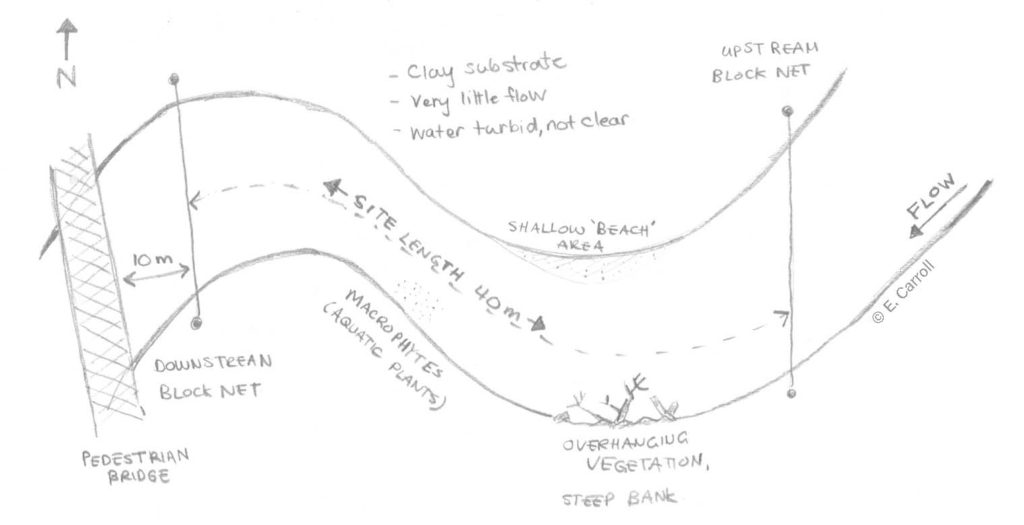
To set up a site, a 40m portion of the watercourse is excluded using blocknets at the upstream and downstream ends of the survey area – this prevents fish from swimming in or out of the sampling area while the survey is taking place.

A hand drawn diagram of a fish survey site on a meandering stretch of a river, block nets are set up 40 metres apart at the upstream and downstream ends of the survey area
Seine Netting

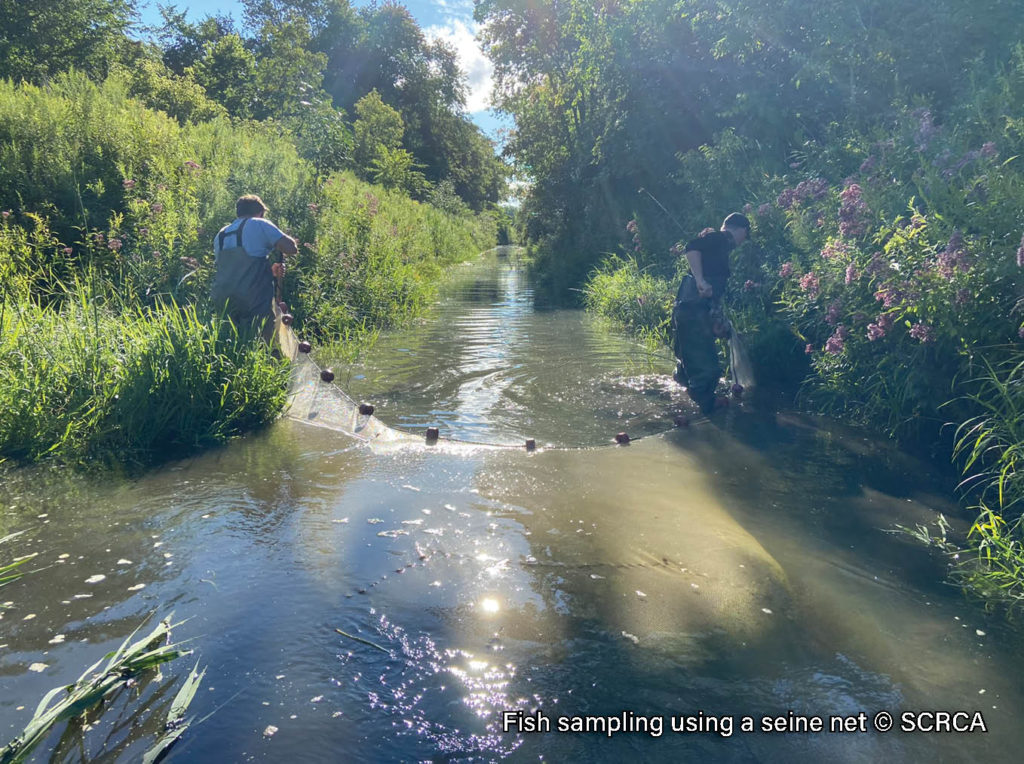
Biologists pull a seine net through the sampling site to collect fish. Sampling of the survey area is usually repeated three times or until there are no new species detected. After each sampling run, biologists will see “depletion” meaning the most fish are collected in the first run with fewer and fewer in each subsequent run.

Picture of two biologists, one on either stream bank, pulling a seine net through a small watercourse
Hand-drawn diagram of a seine net, a fine mesh net (one-eighth inch) with a wooden handle on either end with floats along the top, metal weights along the bottom, and an expanded part called the bag where the fish are collected while seining

Diagram of a Seine Net
A seine net is a large net with floats along the top and a lead-line along the bottom, it is held by poles on either side. The net has an enlarged area in the middle, referred to as the “bag” that fish are funneled into. After passing the net through the survey area, biologists are able to collect the fish from the bag portion of the net.

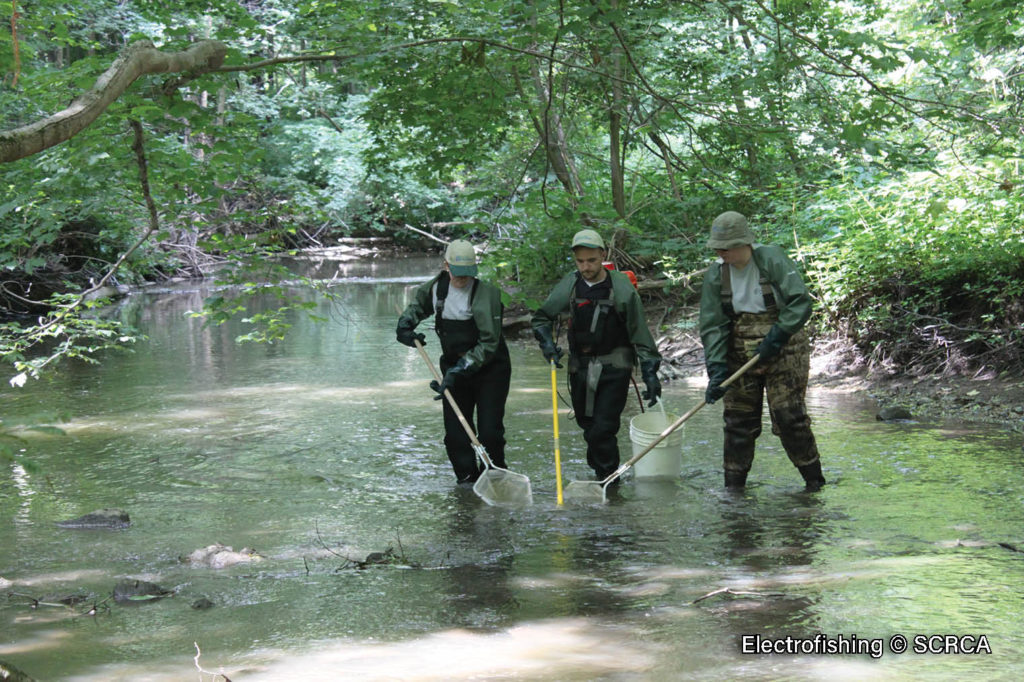
Picture of three biologists electrofishing in a river, one is operating the electrofisher and the other two are using nets to collect the stunned fish
Electrofishing

Electrofishing involves temporarily stunning the fish with an electric current sent through the water. Biologists scoop up the stunned fish using hand-held nets and collect them in a bucket. As with seine netting, sampling of the study area is typically repeated three times.

Species Identification

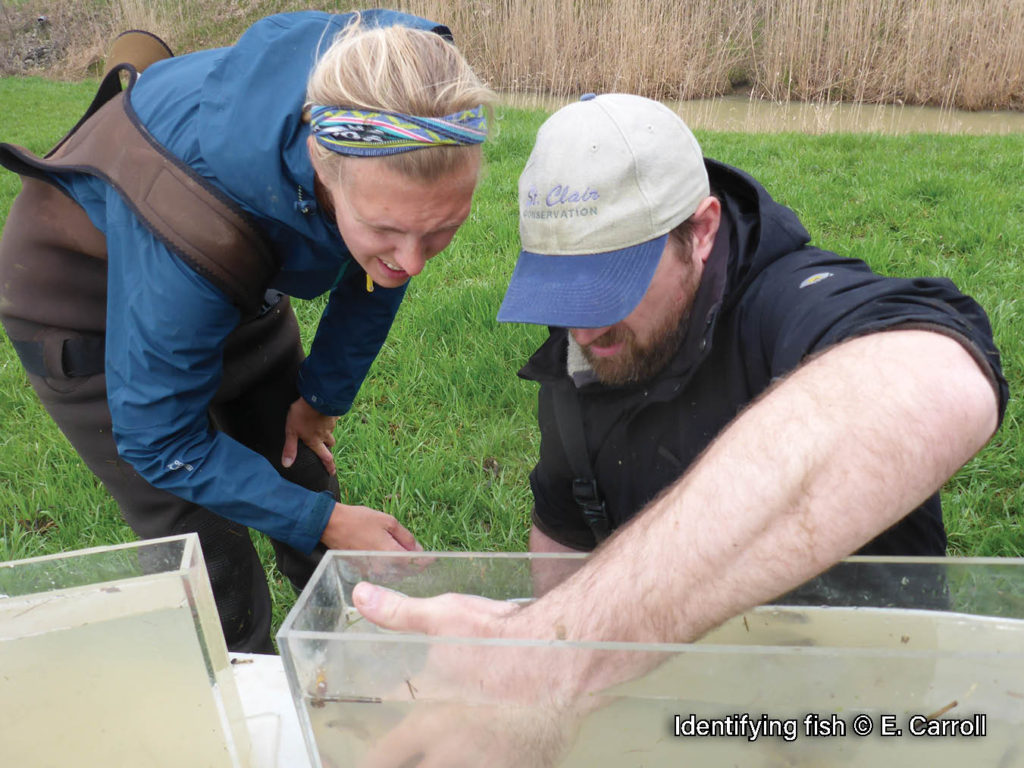
Once collected, the fish are quickly identified, measured, and counted before being released back to the river.

Picture of two biologists identifying fish in a large clear viewing box

Why Monitor Fish Populations?

The purpose of fish community surveys is to gain important information on the status of fish populations and watershed health. Changes to the fish community over time can tell us about changing water quality and habitat conditions as well as the effectiveness of remediation efforts. This information is also used to guide decisions on potential restoration project sites and watershed planning.

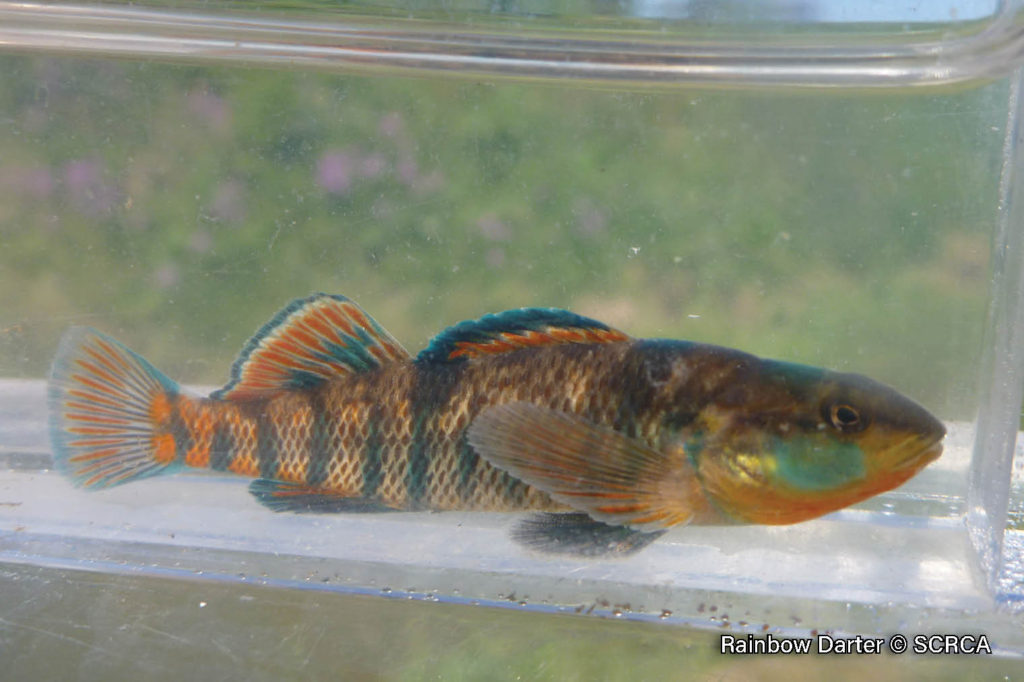
Picture of a rainbow darter in a clear viewing box, a small, colourful benthic fish with bright orange and blue markings

Biological Indicators
The brightly coloured and surprisingly tropical looking Rainbow Darter is an example of a fish species that is sensitive to pollution and habitat disturbance that can be found in the Sydenham watershed. Their presence can help to indicate a healthy aquatic system.

Fishes at Risk

  • SAR in the Sydenham
  • Mussels
  • Fishes
    • Blackstripe Topminnow
    • Eastern Sand Darter
    • Grass Pickerel
    • Northern Madtom
    • Northern Sunfish
    • Pugnose Minnow
    • Pugnose Shiner
    • River Darter
    • Silver Lamprey
    • Spotted Sucker
  • Snakes
  • Turtles
Test Your ID Skills!
Check out our latest newsletter! Download

© 2026 · St. Clair Region Conservation Authority - The Sydenham River Watershed

  • Privacy

Press Enter to search · Esc to close