


The North Sydenham Shows off its Mussels
March 2019 | SCRCA Biology Team
The Sydenham River watershed supports the greatest diversity of freshwater mussels in all of Canada with at least 34 of the 55 species residing here. The East Branch of the Sydenham has prime mussel habitat and has been studied for many years. By comparison, the North Branch has few mussel records.
In 2016, while completing a mussel relocation for a barrier removal project in Bear Creek on the North Sydenham, biologists at the St. Clair Region Conservation Authority (SCRCA) encountered an endangered Fawnsfoot mussel, which was first record of this species on the North Branch.
The discovery of this endangered species combined with the lack of current mussel data was the driver to complete additional surveys on the North Branch of the Sydenham. As a result, the SCRCA undertook a 2-year project inventorying mussels on the two main tributaries of the North Sydenham, Bear Creek and Black Creek, to fill these data gaps and gain a better understanding of what species reside in this part of the watershed.
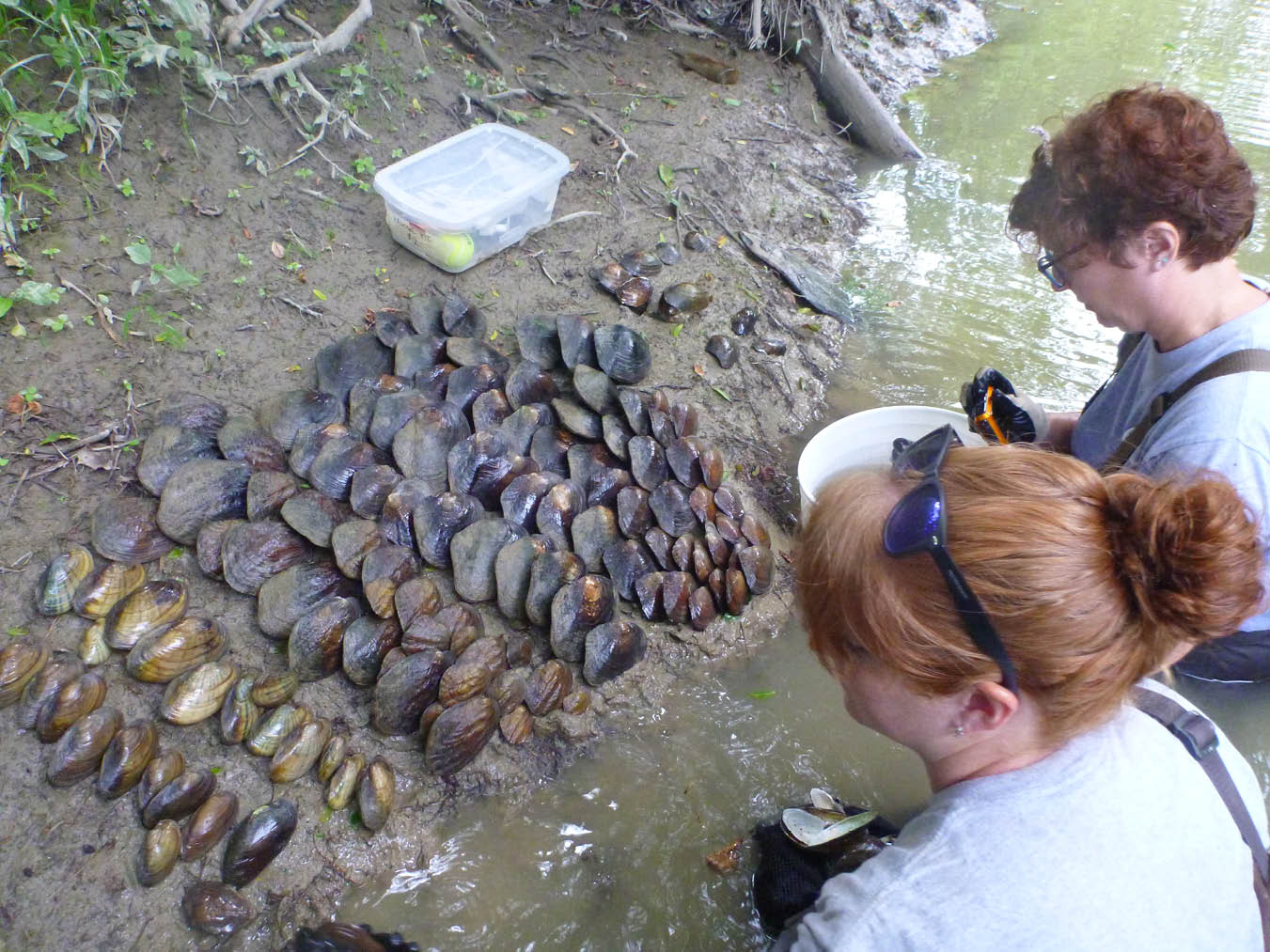
Biologists identified, measured, and recorded each mussel collected during the surveys before returning them back to the river
Filling in Data Gaps
For these mussel surveys, SCRCA staff would search within 500m segments of river by hand, feeling for mussels within the top 5-10cm of sediment until reaching a total of 4.5 person-search-hours. Both live and dead mussels found during this time were collected, identified, recorded and returned to the river where they were found.
Two years of hard work paid off, as the North Sydenham produced some fascinating results. Over 2017 and 2018, a total of 58 surveys were completed on Bear Creek and Black Creek adding 15,765 mussel observations to records for the North Branch. A total of 7,945 live mussels and 7,820 dead mussel shells were observed representing 27 different species, including 8 Species at Risk.
Of note, four species were recorded for the first time on the North Sydenham including two Species at Risk. These species included Pimpleback, Slippershell, Threehorn Wartyback (Threatened), and Kidneyshell (Endangered). Live Lilliput (Threatened) mussels were observed in Black Creek in both 2017 and 2018, which was significant as there was only one previous Lilliput record for the North Sydenham and it was a sighting from 1967.
Records of mussel species are important in tracking changes to their populations and environmental conditions over time. The information collected is also helpful for identifying areas to direct future stewardship projects that will benefit mussel habitat and the health of the watershed.
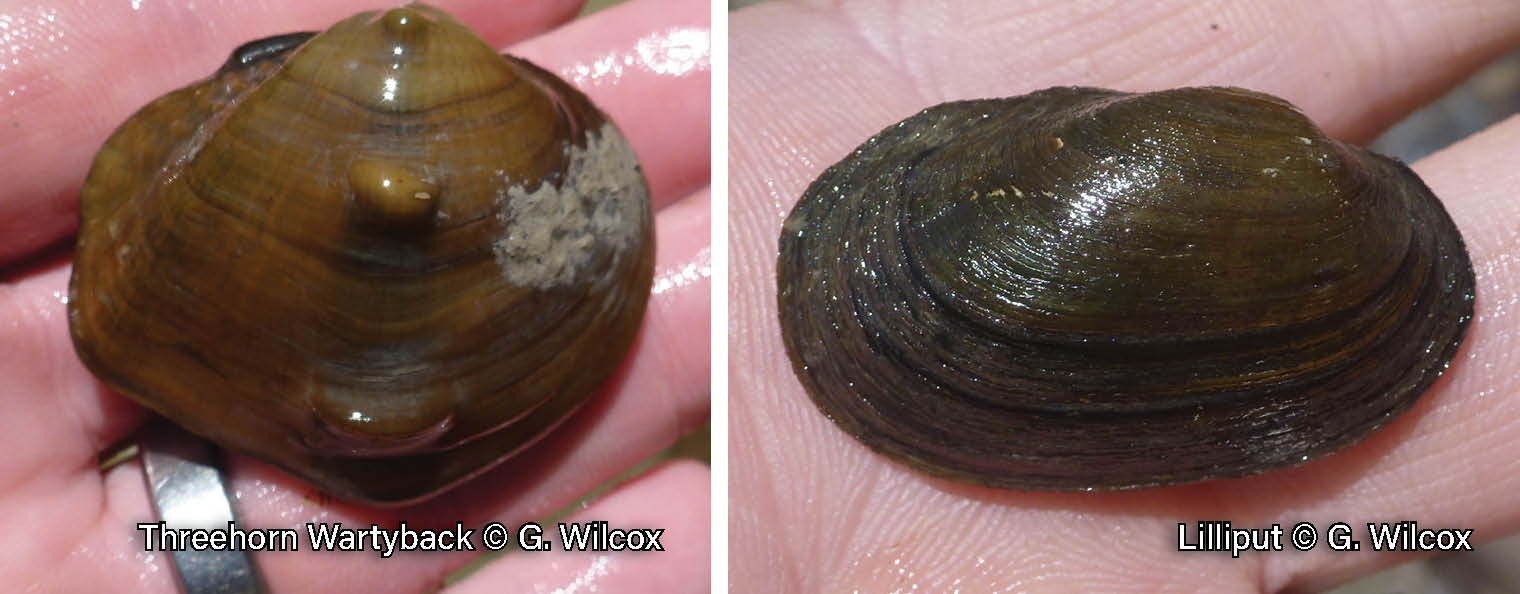
From 2016 to 2018, SCRCA recorded five mussel species for the first time on the North Branch – Pimpleback, Slippershell, Threehorn Wartyback (Threatened), Fawnsfoot (Endangered), and Kidneyshell (Endangered). Lilliput (Threatened) were also observed on the North Branch for the first time in decades.
Partners in Conservation
Financial support for this project was provided by Environment and Climate Change Canada through the Habitat Stewardship Program (SAR stream) and the Ontario Trillium Foundation through a partnership with Friends of the St. Clair River.