

• Biodiversity
    • Why is Biodiversity Important?
    • Threats to Biodiversity
    • What are Species at Risk?
    • Recovery Planning
    • Environmental Monitoring
  • Species at Risk
    • Species at Risk
      • SAR in the Sydenham
      • Mussels
      • Fishes
      • Snakes
      • Turtles
    • Mussels
      • Eastern Pondmussel
      • Fawnsfoot
      • Kidneyshell
      • Lilliput
      • Mapleleaf
      • Northern Riffleshell
      • Purple Wartyback
      • Rainbow
      • Rayed Bean
      • Round Hickorynut
      • Round Pigtoe
      • Salamander Mussel
      • Snuffbox
      • Threehorn Wartyback
      • Wavy-rayed Lampmussel
    • Fishes
      • Blackstripe Topminnow
      • Eastern Sand Darter
      • Grass Pickerel
      • Northern Madtom
      • Northern Sunfish
      • Pugnose Minnow
      • Pugnose Shiner
      • River Darter
      • Silver Lamprey
      • Spotted Sucker
    • Snakes
      • Eastern Foxsnake
      • Eastern Hog-nosed Snake
      • Eastern Milksnake
    • Turtles
      • Blanding’s Turtle
      • Midland Painted Turtle
      • Northern Map Turtle
      • Snapping Turtle
      • Spiny Softshell
  • Stewardship
    • Healthy Watersheds Program
      • Sydenham Phosphorus Reduction Initiative
    • Managing Phosphorus
    • Phosphorus StoryMap
    • Reducing Pollution in Runoff
    • Best Management Practices Resources
  • Stories
  • Get Involved
    • What Can I Do?
    • Take the Stewardship Survey
    • Test Your ID Skills!
    • Report a Turtle Sighting
  • Resources
  • Contact Us
Sydenham River WatershedSydenham River Watershed
  • Biodiversity
    • Why is Biodiversity Important?
    • Threats to Biodiversity
    • What are Species at Risk?
    • Recovery Planning
    • Environmental Monitoring
  • Species at Risk
    • Species at Risk
      • SAR in the Sydenham
      • Mussels
      • Fishes
      • Snakes
      • Turtles
    • Mussels
      • Eastern Pondmussel
      • Fawnsfoot
      • Kidneyshell
      • Lilliput
      • Mapleleaf
      • Northern Riffleshell
      • Purple Wartyback
      • Rainbow
      • Rayed Bean
      • Round Hickorynut
      • Round Pigtoe
      • Salamander Mussel
      • Snuffbox
      • Threehorn Wartyback
      • Wavy-rayed Lampmussel
    • Fishes
      • Blackstripe Topminnow
      • Eastern Sand Darter
      • Grass Pickerel
      • Northern Madtom
      • Northern Sunfish
      • Pugnose Minnow
      • Pugnose Shiner
      • River Darter
      • Silver Lamprey
      • Spotted Sucker
    • Snakes
      • Eastern Foxsnake
      • Eastern Hog-nosed Snake
      • Eastern Milksnake
    • Turtles
      • Blanding’s Turtle
      • Midland Painted Turtle
      • Northern Map Turtle
      • Snapping Turtle
      • Spiny Softshell
  • Stewardship
    • Healthy Watersheds Program
      • Sydenham Phosphorus Reduction Initiative
    • Managing Phosphorus
    • Phosphorus StoryMap
    • Reducing Pollution in Runoff
    • Best Management Practices Resources
  • Stories
  • Get Involved
    • What Can I Do?
    • Take the Stewardship Survey
    • Test Your ID Skills!
    • Report a Turtle Sighting
  • Resources
  • Contact Us

The Spread of the Round Goby

Home Sydenham StoriesThe Spread of the Round Goby

The Spread of the Round Goby

The Spread of the Round Goby

The Round Goby is an invasive fish species native to the Black and Caspian Sea region that has been spreading throughout the Great Lakes Basin. Gobies are aggressive bottom-feeders and spawn several times each year. They compete for resources with the native bottom-dwelling fish like mottled sculpin, logperch, as well as species at risk like the Eastern Sand Darter and Northern Madtom. Gobies also indirectly impact freshwater mussels by threatening the host fish populations they rely on for survival and by acting as a sink for mussel larvae known as glochidia.
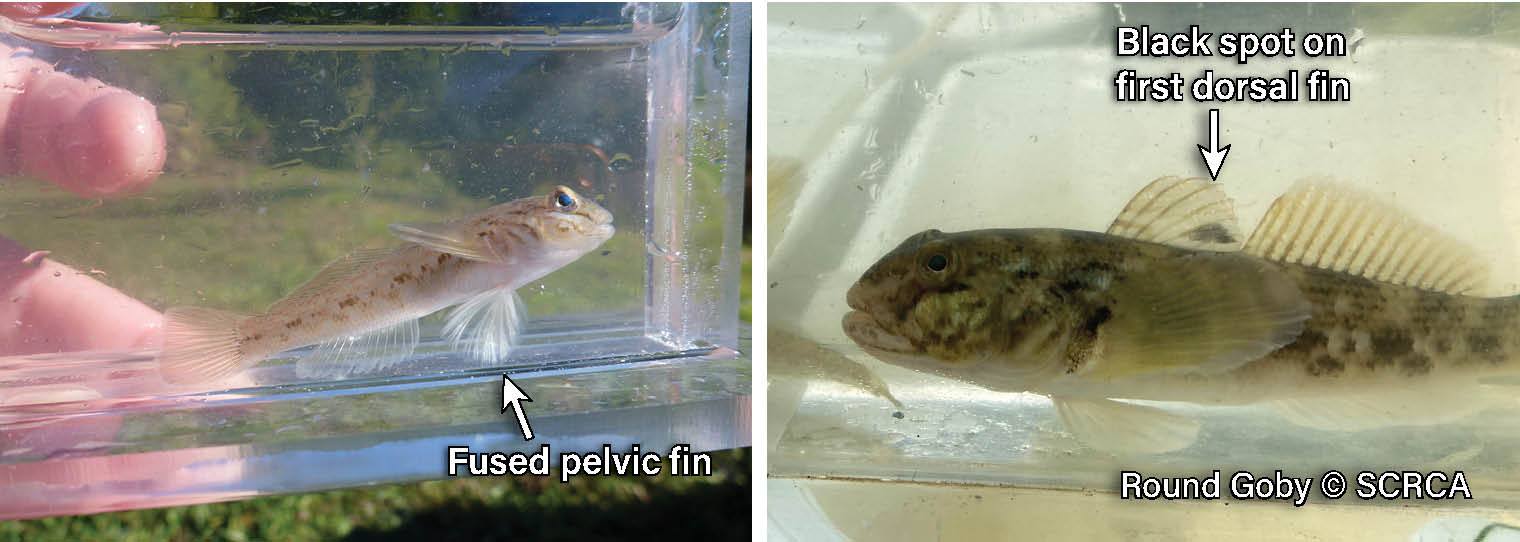
Helpful ID features for the Round Goby include a fused scallop-shaped pelvic fin and a prominent black spot on its first dorsal fin.

Range Expansion in the Sydenham

The Round Goby was first found in the St. Clair River in 1990, likely introduced through ballast water released by ships travelling from Europe, and has since spread to all five Great Lakes. As of 2002, the Round Goby had not been detected in the Sydenham, despite intensive sampling by Fisheries and Oceans Canada, but it was present in abundant numbers in Lake St. Clair at this time. In 2008, it was detected on the East Branch as far upstream as Florence (upstream of Dresden, downstream of Alvinston). By 2016 it was documented three-quarters of the way up the East Branch between Alvinston and Strathroy at Napier Road. This range expansion is significant for the Sydenham River because the Round Goby is a threat to the river’s native species including SAR fishes like the Eastern Sand Darter and the river’s globally significant mussel populations.

Historically, ship ballast water has been the culprit for the introduction of many aquatic invasive species in the Great Lakes including Zebra Mussels and Round Goby. The International Convention for the Control and Management of Ships’ Ballast Water and Sediments, 2004 was established to create a standard for ballast water treatment. In 2006, Canada strengthened the Ballast Water Control and Management Regulations under the Canada Shipping Act (2001) to reduce the risk of introducing aquatic invasive species.

Here are some ways you can help stop the spread of aquatic invasive species:

  • Be sure to drain, clean, and dry your watercraft, trailer, and equipment after each use and before using them in a new waterbody to ensure invasive species don’t hitch a ride
  • Don’t use invasive species like Round Goby as baitfish – it is illegal (DFO’s Baitfish Primer is a helpful resource)
  • Never introduce plants or wildlife into a waterbody:
    • Properly dispose of unused baitfish, never dump them in the water
    • Do not release aquarium plants, fish or pets to the natural environment (this is how Goldfish and Red-eared Sliders were introduced as invasive species in Ontario)
  • Learn how to identify invasive species (they often have similar-looking native species)
  • Report your invasive species sightings to the Invading Species Hotline at 1-800-563-7711 or EDDMapS Ontario


Learn more about Round Goby and Ontario’s invasive species at www.invadingspecies.com

Check out our latest newsletter! Download

© 2026 · St. Clair Region Conservation Authority - The Sydenham River Watershed

  • Privacy
Prev Next

Press Enter to search · Esc to close