Environmental Monitoring
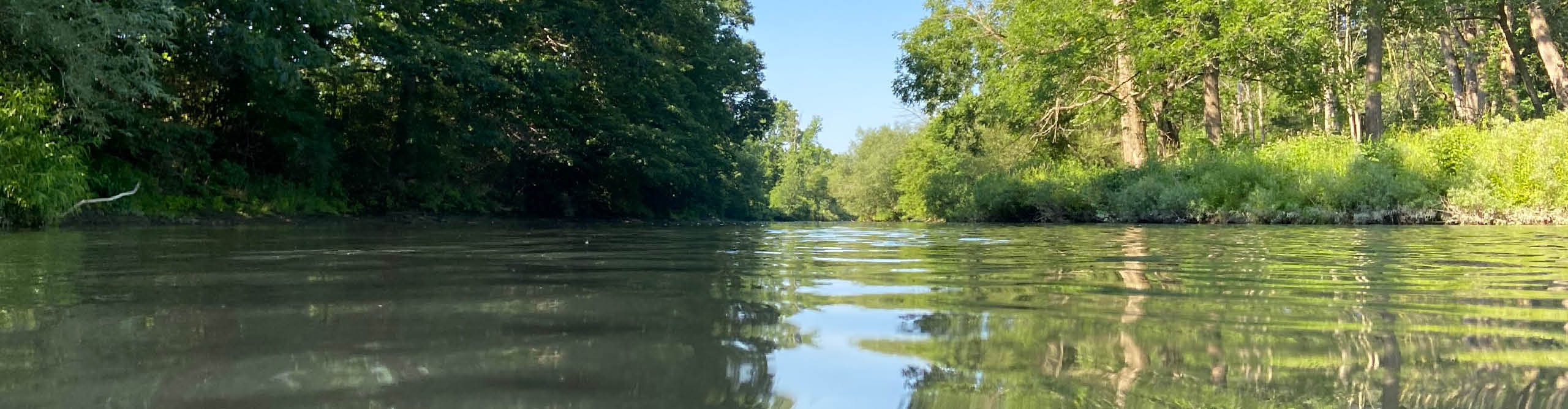
Different monitoring programs can be used to understand the health of the environment and track changes over time.
Different monitoring programs can be used to understand the health of the environment and track changes over time.
Water quality samples are collected regularly from long-term monitoring sites to detect changes in the aquatic environment. Grab samples collected by hand provide snapshots in time whereas higher frequency sampling by an automatic sampler can provide a more detailed picture.
Surface water quality samples are collected throughout the Sydenham watershed and greater St. Clair Region by the St. Clair Region Conservation Authority (SCRCA). The SCRCA has been collecting monthly water quality samples in the region since 1969. Grab samples are collected by the SCRCA from 21 long-term monitoring sites in the region, 12 of which are in the Sydenham River basin, on a monthly or bimonthly basis for different monitoring programs including the Provincial Water Quality Monitoring Network (PWQMN), COA Species at Risk, and Healthy Lake Huron.
Grab samples are simply collected by using a bottle or bucket to take a water sample from a stream or river. A probe is also used to record data about the river at the time of collection such as temperature, pH, and dissolved oxygen. After collection, the samples are put on ice and sent to a lab for chemical analysis.

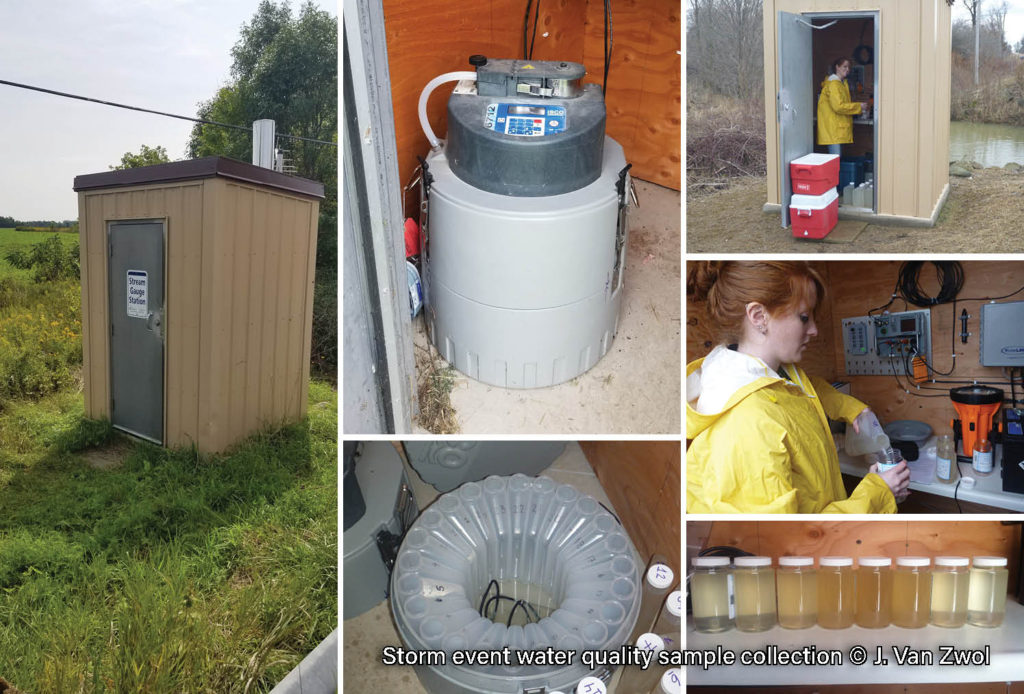
An automatic sampler is a unit that can be set up by scientists to automatically draw water from the river with a pump and store samples in a series of collection bottles inside the unit. The sampler is programmed to collect water depending on the purpose of the sampling program, for example, they might collect samples at a set frequency or they could be used for storm event sampling.
Environment and Climate Change Canada operates an automatic sampler on the East Sydenham River at Florence that collects samples regularly. Collecting samples at a high frequency interval helps to provide a more detailed understanding of what is happening in the river as conditions change throughout the day, month, and year.
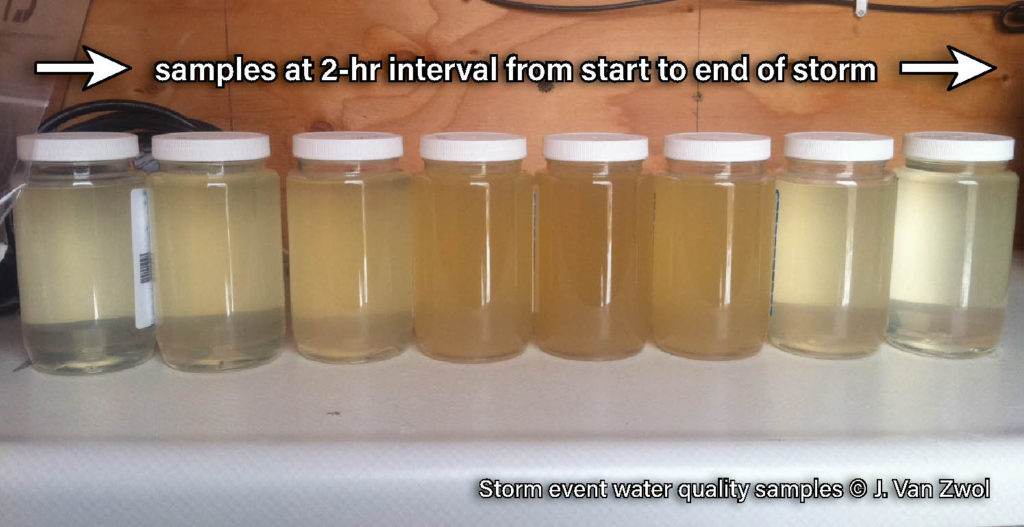
Automatic samplers can also be used for storm event sampling. Large rainstorms or spring snowmelt result in overland runoff that washes sediment, nutrients, and contaminants off the land into watercourses. This pollutes the aquatic environment and threatens the plants and animals that live there. The SCRCA operates one such station just outside of the Sydenham watershed on a tributary of Lake Huron. The sampler is set to trigger every 2-hours during storm events. The change in water quality caused by a storm is not only apparent from the lab results, it is visible in the series of samples, which start off fairly clear, then become cloudier from suspended sediment, and return to being clear after the storm. Employing best management practices on the landscape can help to keep sediment and nutrients on the land, where they are needed, and out of drains, rivers, and lakes.
Benthic macroinvertebrates, also known as benthos, are bottom-dwelling invertebrates like insects, worms, snails, and crayfish. They are an example of a biological indicator or “bioindicator.” Unlike water quality that can be directly measured but provides a snapshot in time, bioindicators can be used to gain a more well-rounded understanding of the health of the environment.
What’s in a word?
Benthic macroinvertebrates are collected using a D-net and the kick-and-sweep method. The net is held against the riverbed while the biologist stands upstream stirring up the substrate with their feet. They sweep the net back and forth capturing the benthos living at the river bottom.

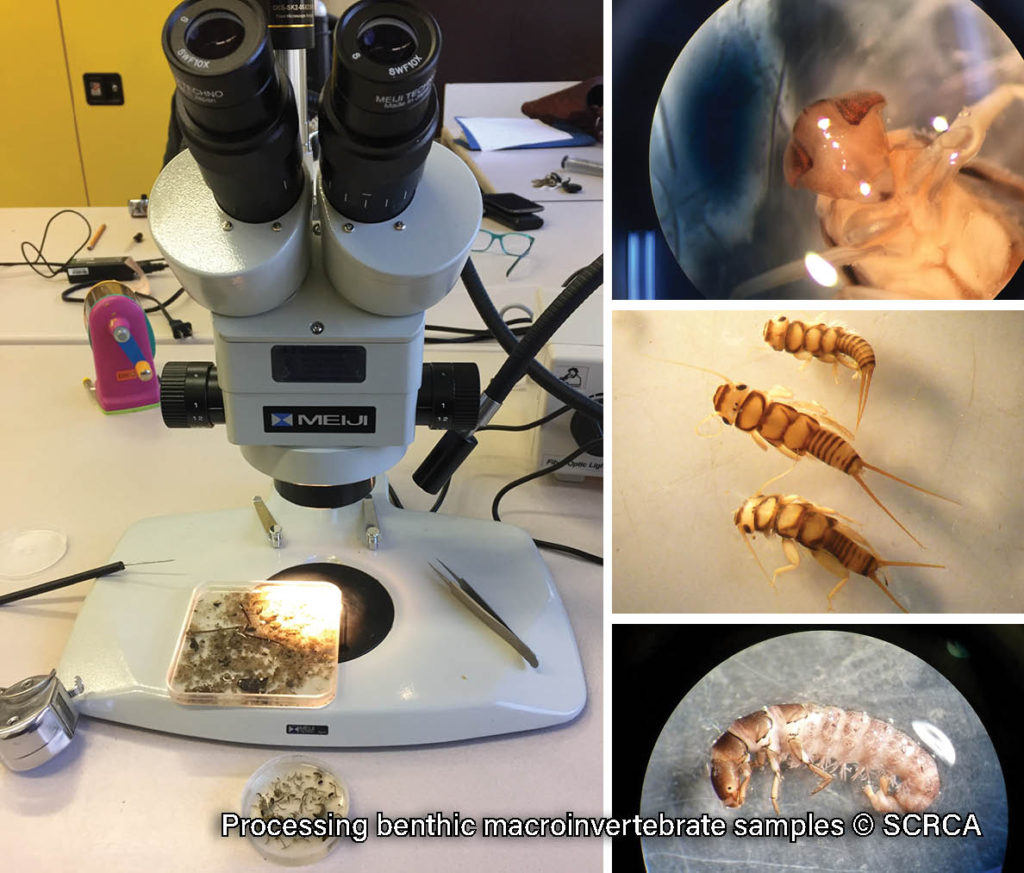
Benthic macroinvertebrate community samples are then processed using a microscope. The number of animals from different families are recorded and used with values from the Family Biotic Index (FBI values) to assess the health of the watercourse based on the benthos present.
Some benthos are more pollution tolerant and others are sensitive to pollution. If a sample only contains animals that are pollution tolerant then that is an indication of a degraded system. If the benthic community is varied and includes different species including those that are sensitive to pollution, that indicates that the system is healthy.
A Bioindicator of Water Quality
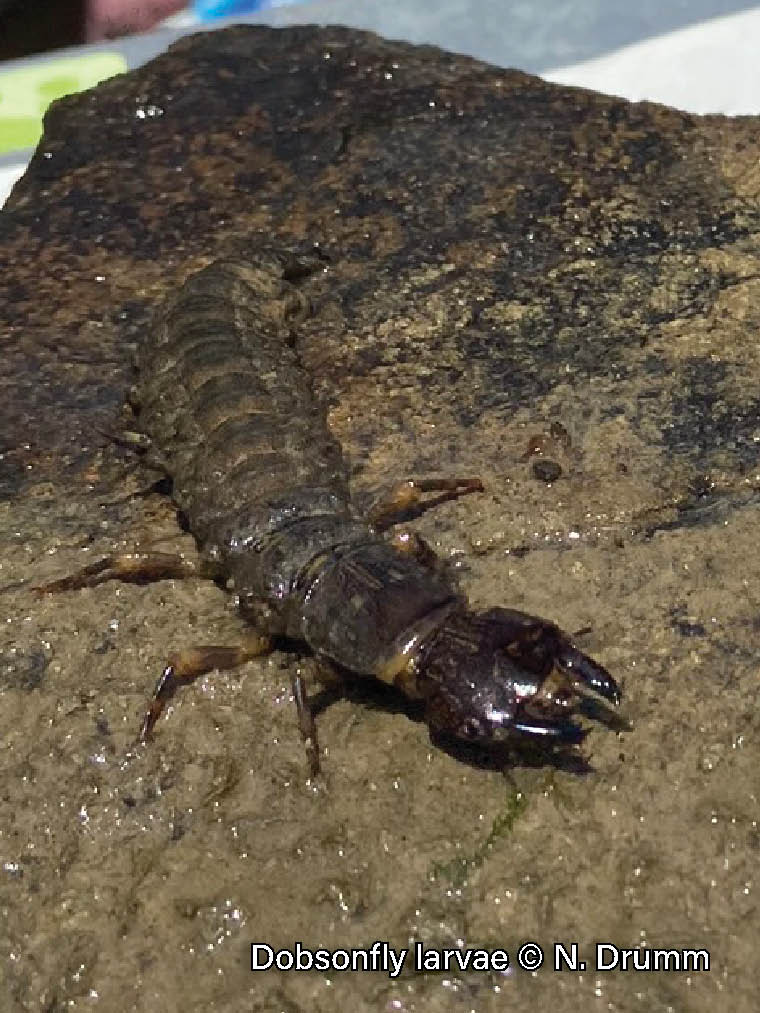
Dobsonfly larvae, known as Hellgrammites, are an example of benthos that are sensitive to pollution. That means that their presence can help to indicate a healthy aquatic environment. Not only are biologists happy to see them, they are also commonly used as bait by anglers.
In the Sydenham watershed, biologists also monitor mussel, fish, turtle, and snake populations to track changes in distribution and abundance over time, to understand the health of the watershed, determine potential threats, and help with directing habitat restoration as well as Species at Risk recovery efforts.
© 2026 · St. Clair Region Conservation Authority - The Sydenham River Watershed