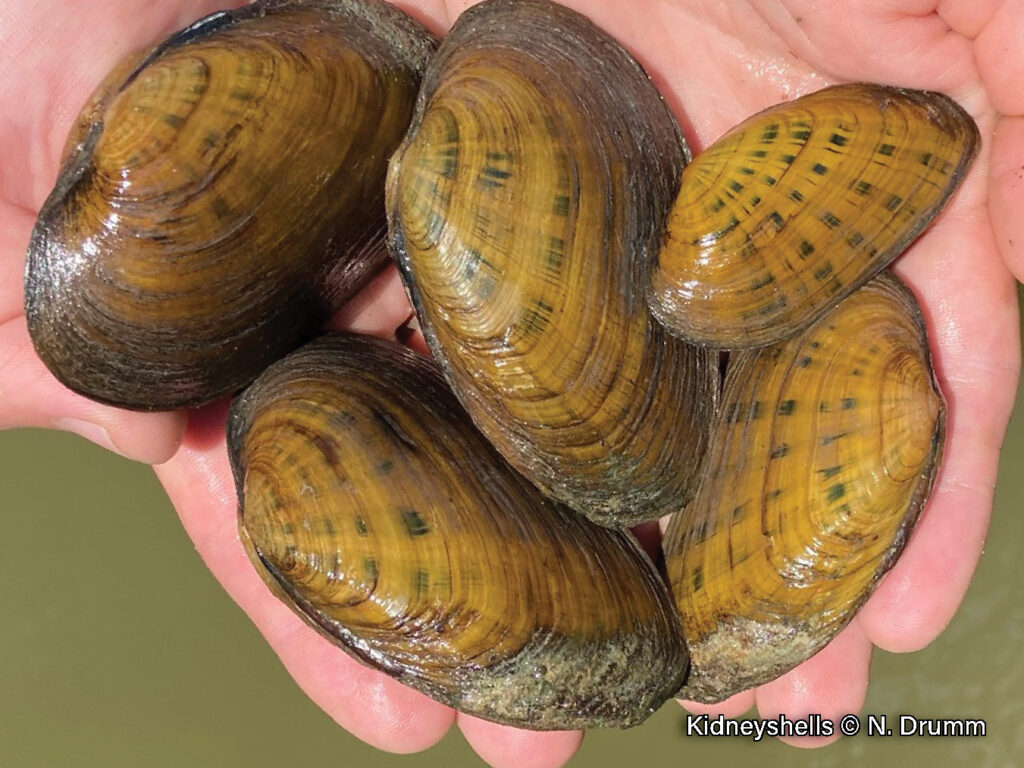
Kidneyshell
Ptychobranchus fasciolaris


Ptychobranchus fasciolaris
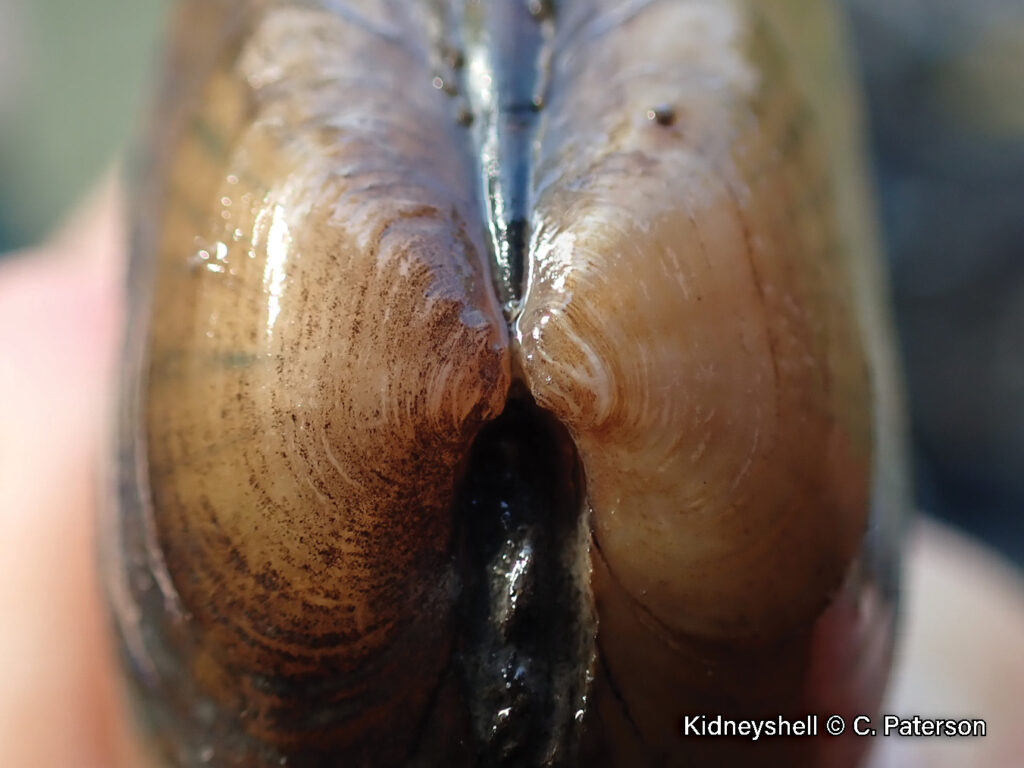
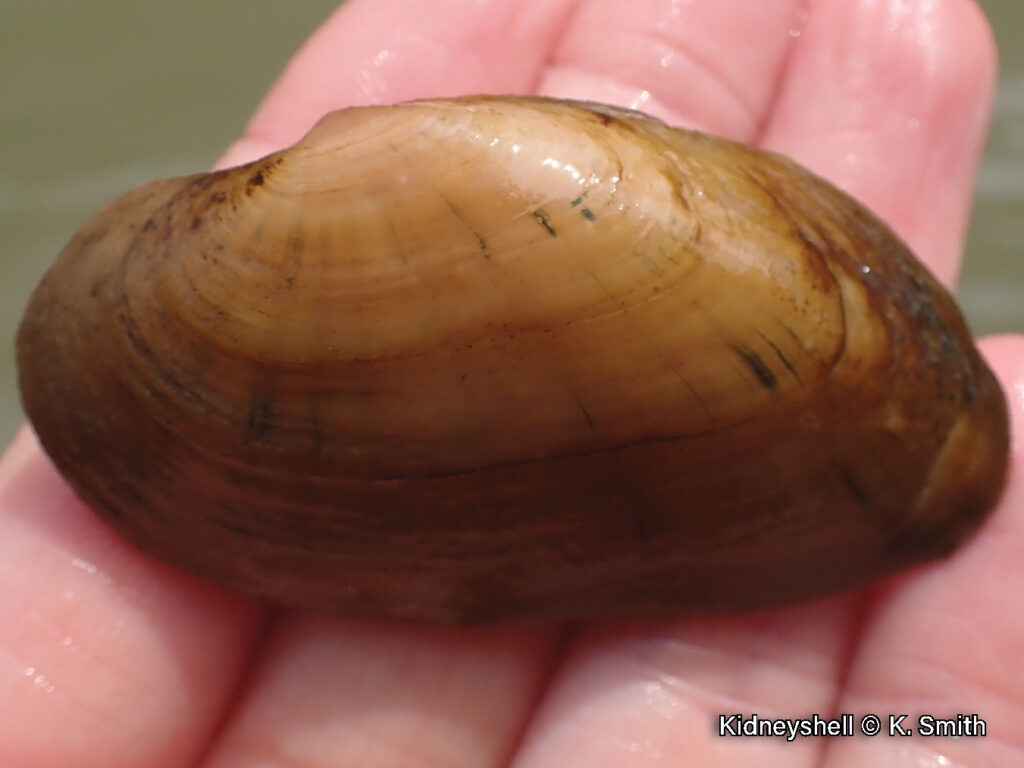
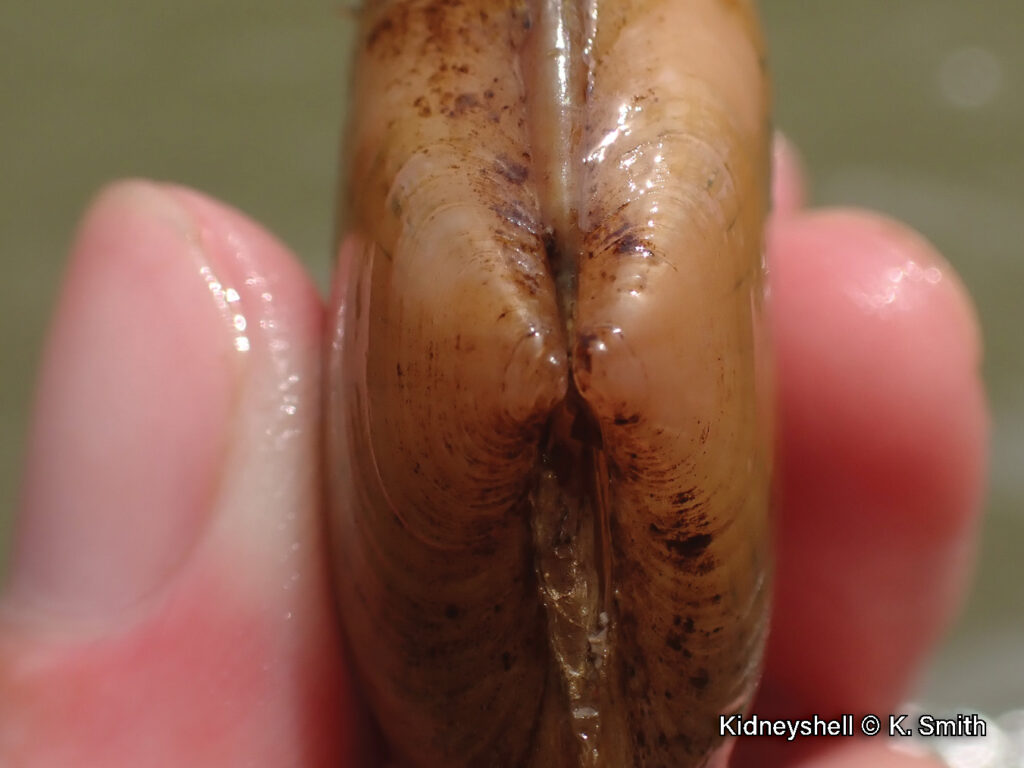
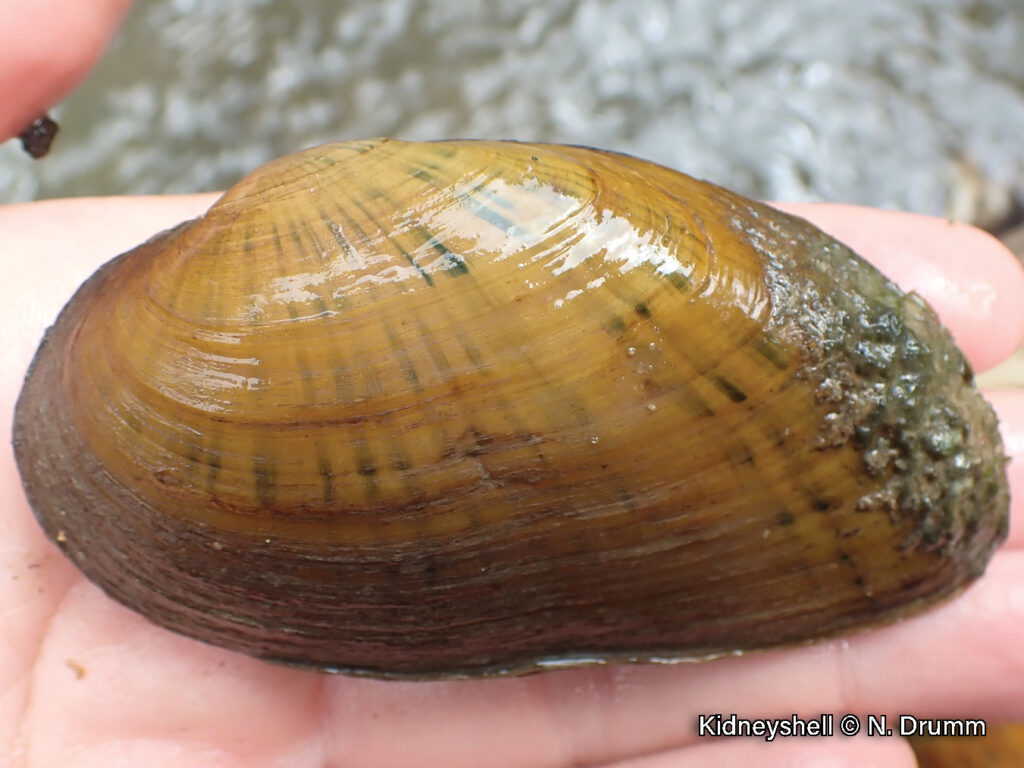
Kidneyshell mussels are an eye-catching species found in the Sydenham, with elliptical yellowish shells decorated with interrupted green rays creating rows of squared spots. As Kidneyshells age, the rays can fade and the yellowish shell darkens to a rich chestnut colour. They are a medium to large mussel that can reach up to 12cm in length.
Like Ontario’s other freshwater mussel species, a successful reproductive cycle requires a suitable fish host for glochidia to attach and develop into juvenile mussels. Kidneyshell mussels have evolved to use the power of mimicry to ensure the next generation reaches a host.
Female Kidneyshells release their glochidia encased in a package of mucous known as a conglutinate. Their conglutinates resemble blackfly larvae and are very convincing – they even have eye-spots! This imitation of a prey item encourages fish to ingest the conglutinates, at which point they rupture and the glochidia attach to the gills of the fish. This allows the glochidia to hitch a ride to new areas of habitat and absorb nutrients, once they’ve developed into juveniles they let go of the fish to start life as a free-living mussel on the water bottom. Known fish host species for Kidneyshell include Blackside Darter, Fantail Darter, Johnny Darter, and Brook Stickleback.
They have specific habitat requirements, as they need the swift flowing waters of riffle areas with firmly packed course gravel and sand substrate with good water quality.
Within Canada, Kidneyshell are only found in southwestern Ontario; they have been lost from 70% of their historical range. Much of the species decline throughout its range can be attributed to the invasion of Zebra Mussels and the increase in siltation and pollutants from agricultural practices and urban developments. Once found in Lake St. Clair and Erie, and the Detroit, Grand, Thames and Niagara rivers, reproducing populations of Kidneyshell are now restricted to just the East Sydenham and Ausable rivers. There are also small populations in the St. Clair River delta and Medway Creek (a tributary of the Thames River). In the East Sydenham River, the reproducing population is limited to a 100 km stretch of the river.
Water quality is crucial to the survival of remaining populations. Pollution and siltation of rivers and streams from agricultural runoff and urban and industrial effluent, as well as the introduction of the Zebra Mussel, have contributed to declines in freshwater mussel populations. Any threats to the survival of native host fish species also negatively impact the Kidneyshell population in the Sydenham River.
© 2026 · St. Clair Region Conservation Authority - The Sydenham River Watershed