

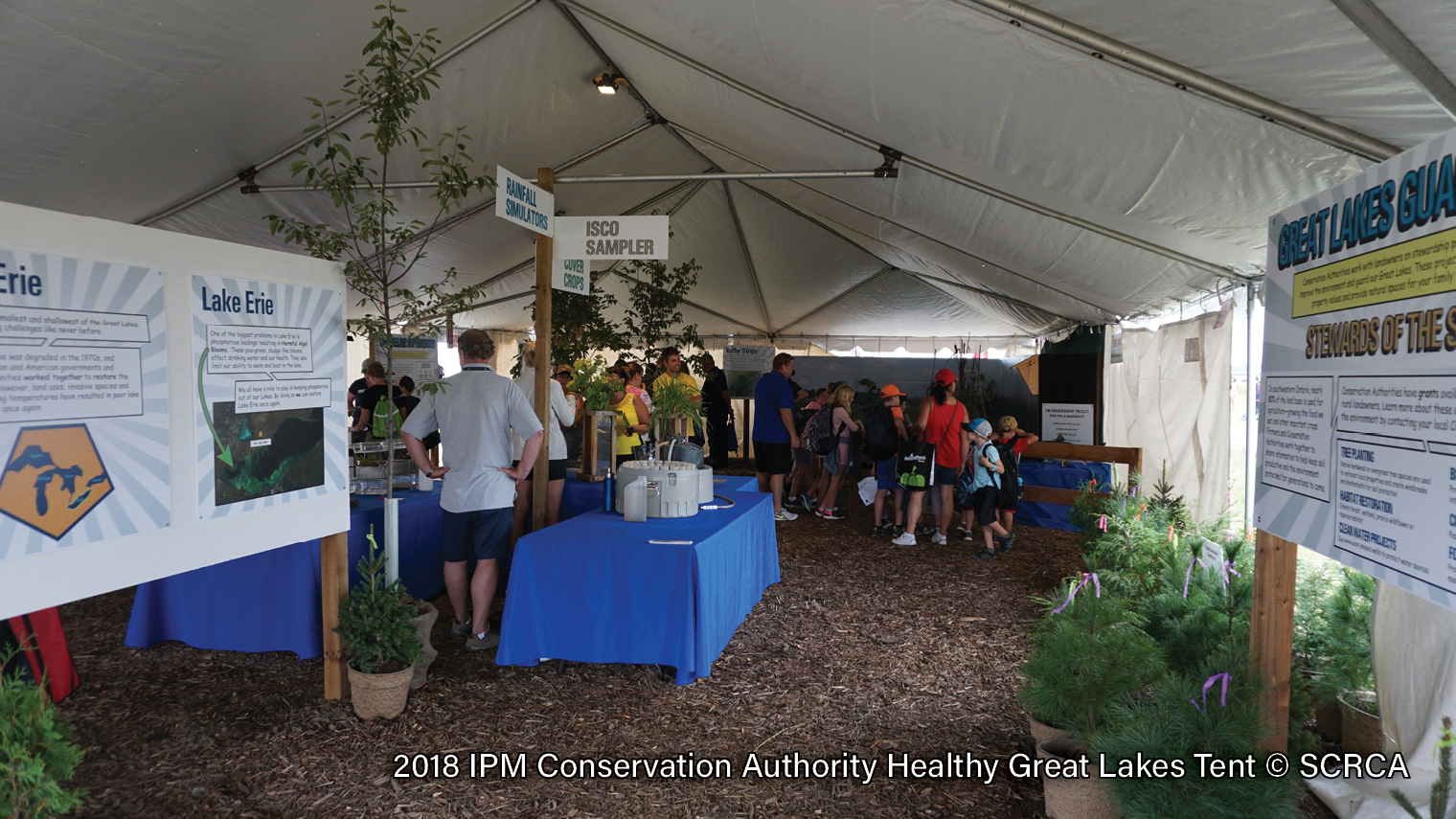
Healthy Great Lakes: A Watershed Adventure
Conservation Authority Tent at the 2018 International Plowing Match
September 18-22, 2018 | SCRCA Stewardship Team
The 2018 International Plowing Match (IPM) was held from September 18-22, 2018 in the village of Pain Court, located in the Municipality of Chatham-Kent.
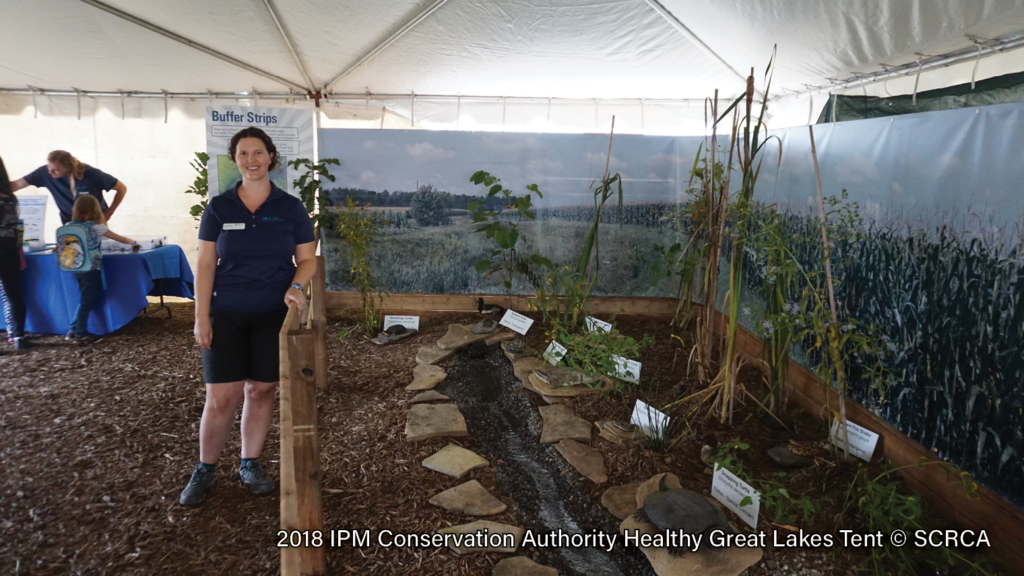
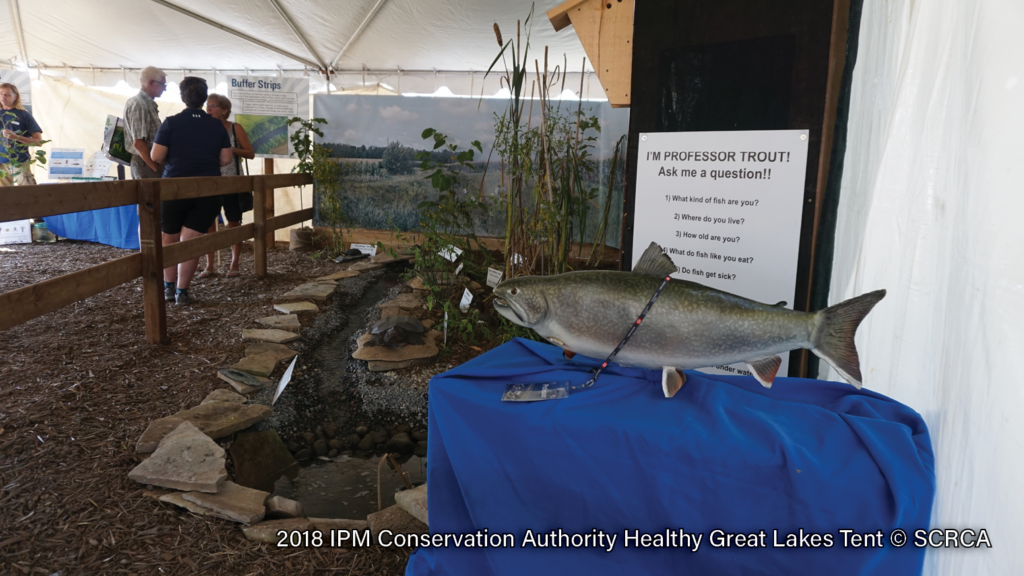
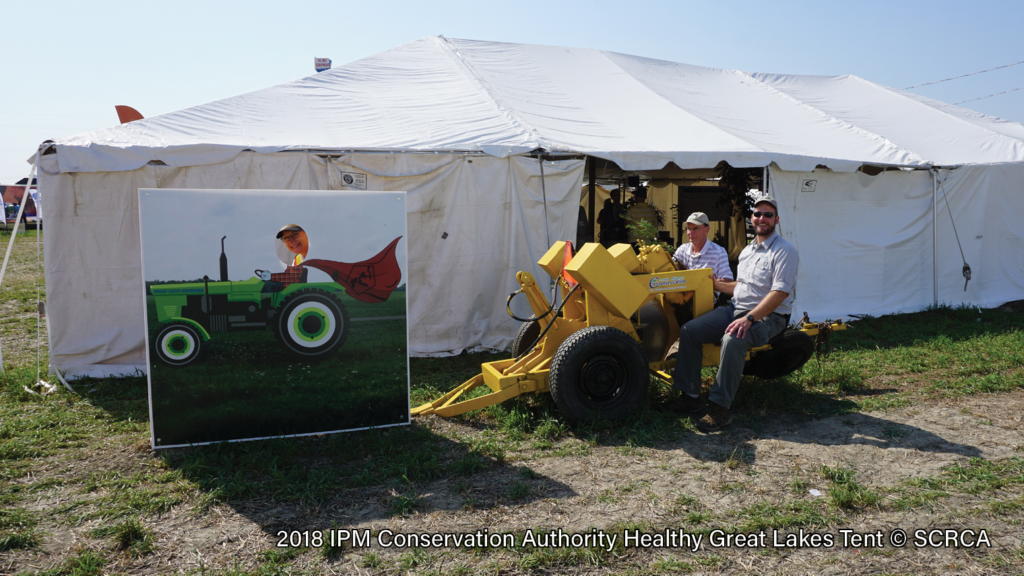
The St. Clair Region, Lower Thames Valley, and Essex Region Conservation Authorities partnered to host a tent at the 2018 IPM. The three Conservation Authorities came together to build interactive displays to teach visitors about the role Conservation Authorities play in protecting our local environment and promoting Healthy Great Lakes. The tent had a superhero theme on how each one of us can become a “Great Lakes Guardian.”
Over the course of the five-day event, Conservation Authority staff reached to over 6,000 people.
In addition to the local community and farmers, the tent drew many school children as the tent was included as a stop on the “IPM Education Passport.” This activity required the students to visit four of five tents listed on their “passport” and answer a question submitted by the organization running the tent.
Displays highlighted Conservation Authority programs related to stewardship and Healthy Great Lakes. A broad range of topics were covered including:
- Water quality monitoring
- Cover crops and buffer strips
- Local Species at Risk (SAR)
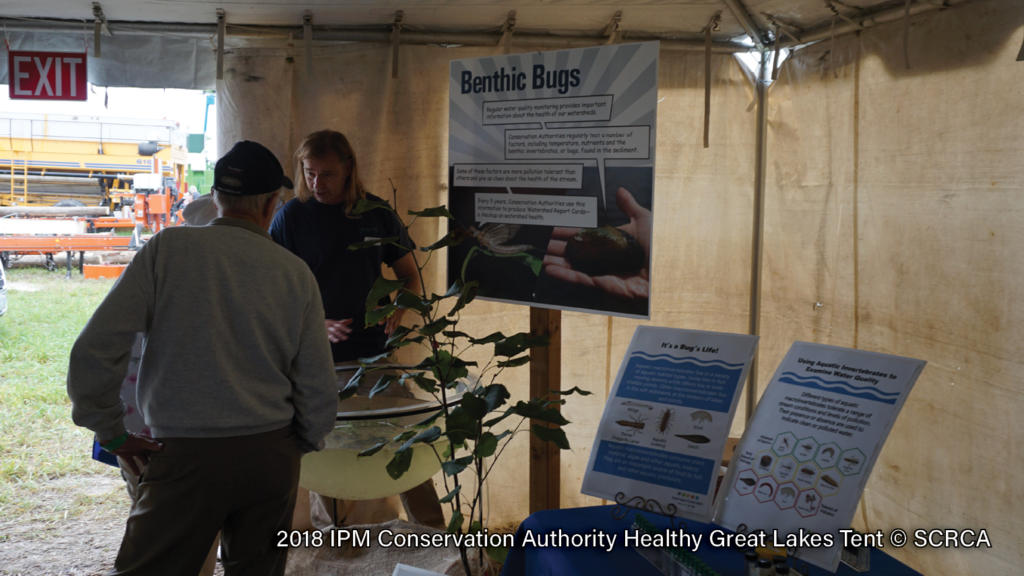
- Biomonitoring techniques (benthic invertebrates)
- Tree planting and wind breaks
- Watersheds and flooding hazards
- Regulations and planning
- Campgrounds and conservation areas
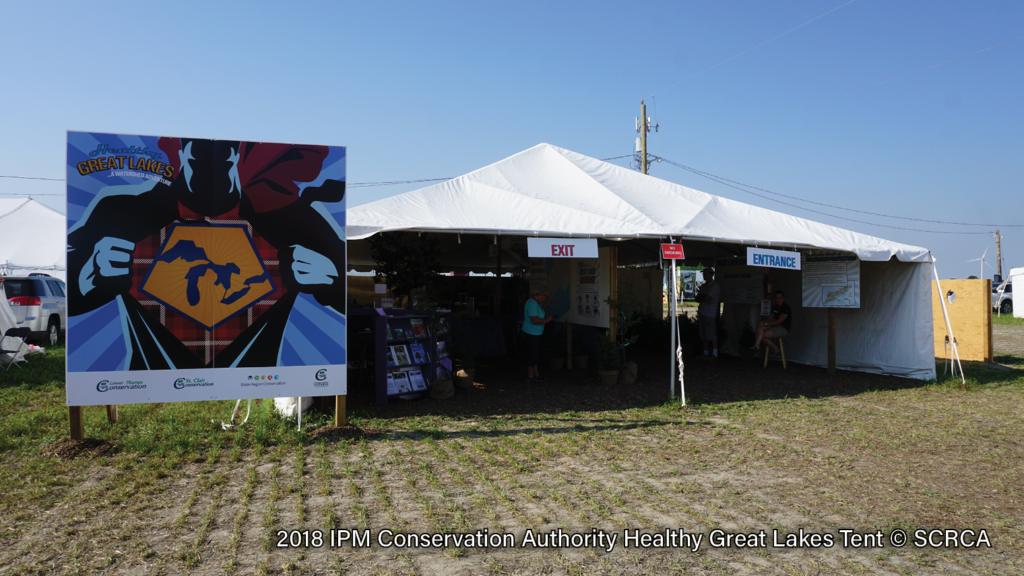
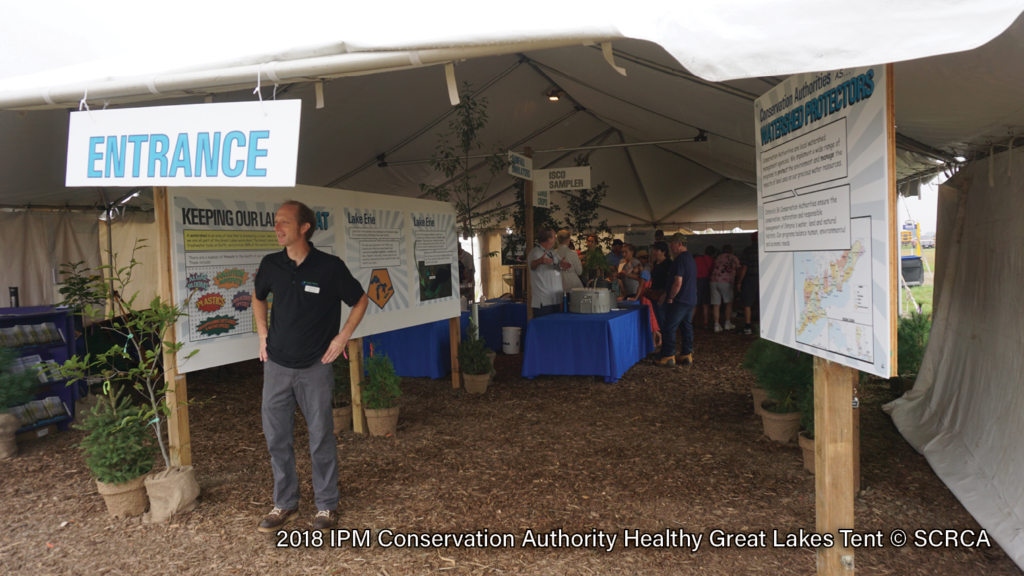
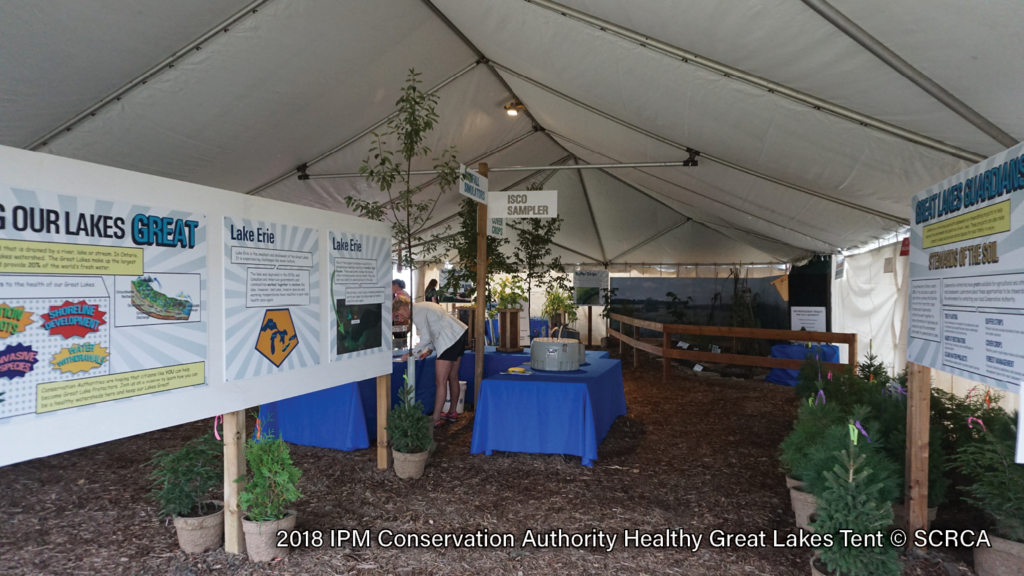
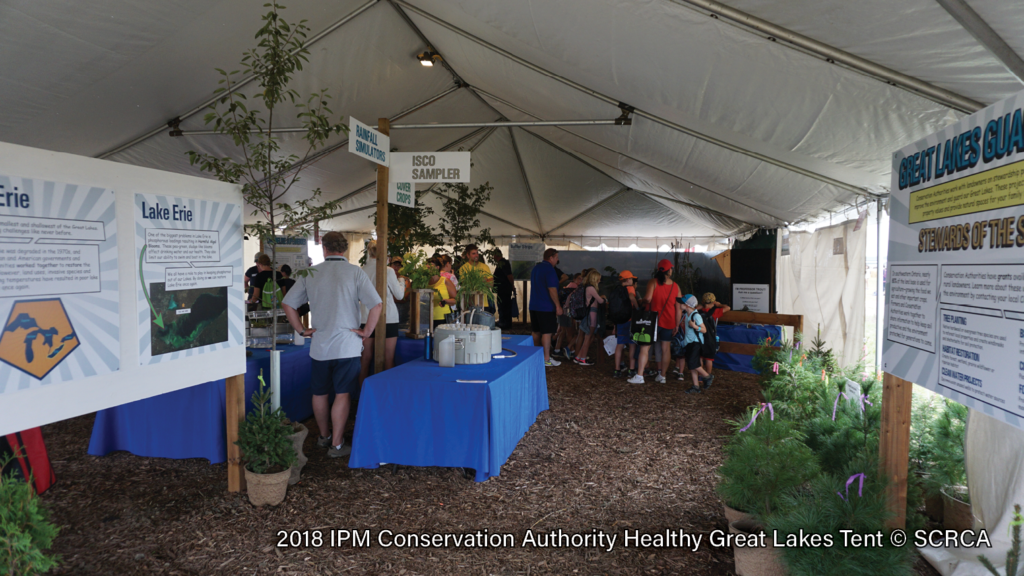
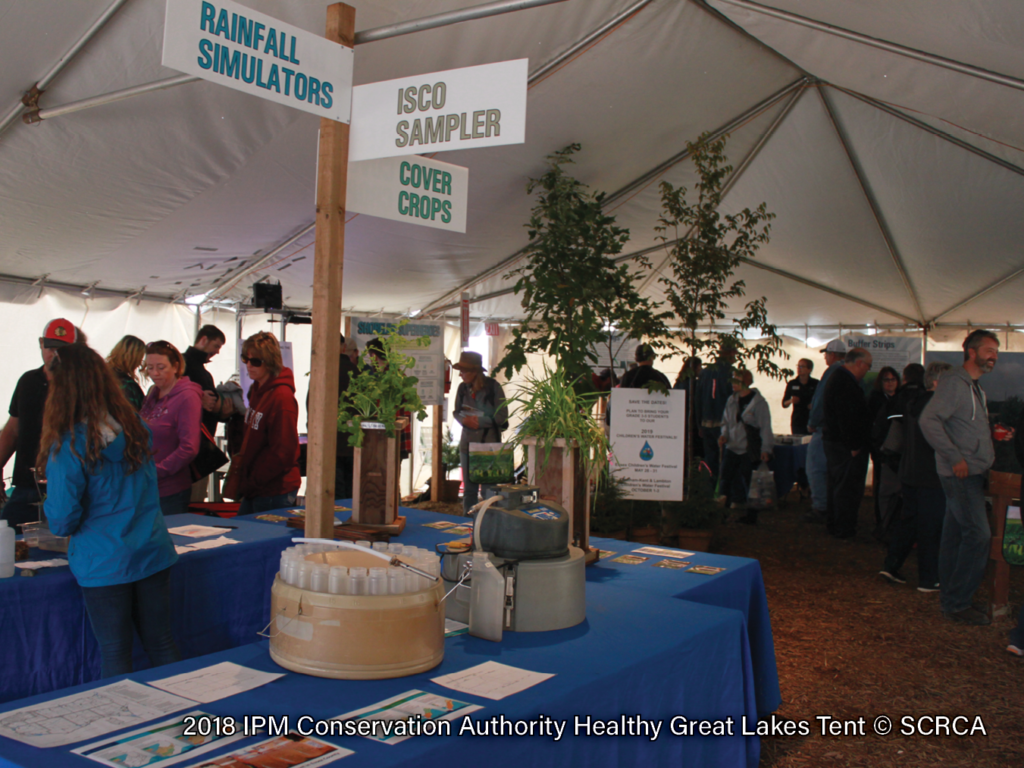
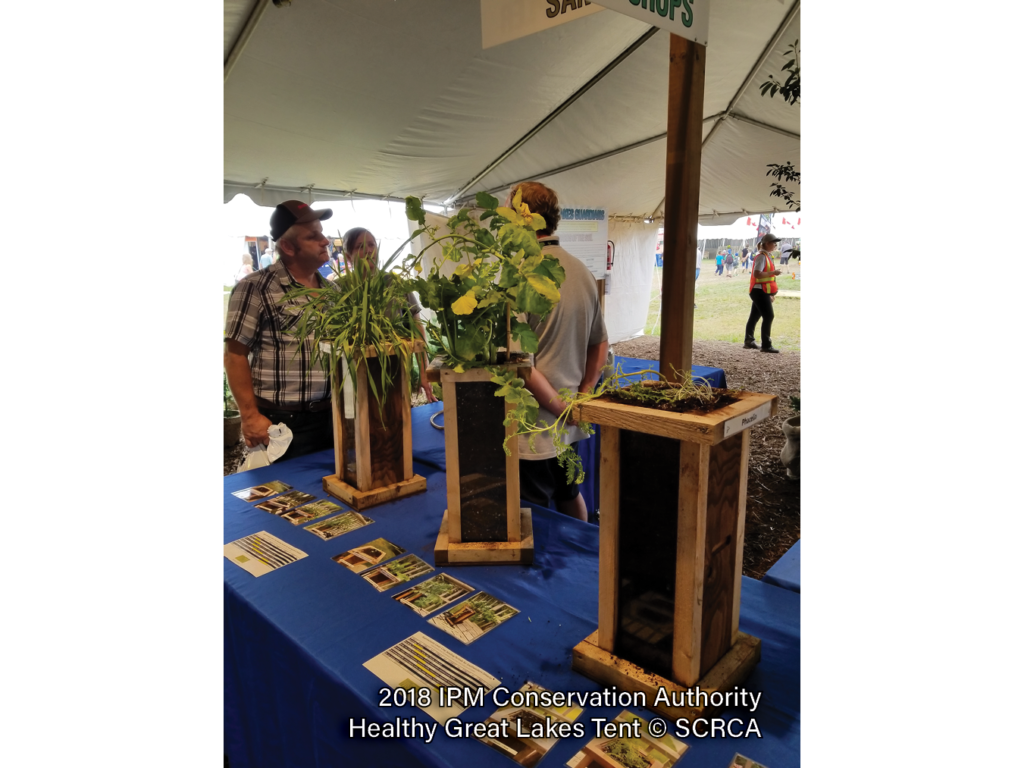
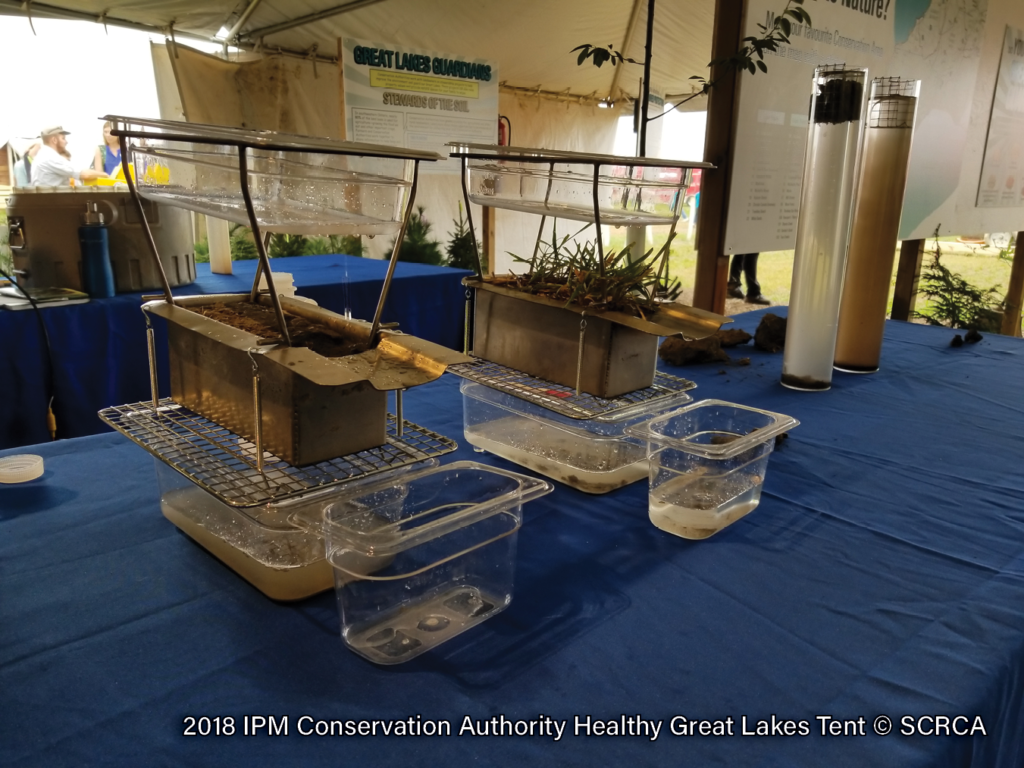
Cross-sectional displays of cover crops and their root systems as well as rainfall simulators were used to show visitors how different farming practices (for example, cover crops vs. no cover crops) can influence the water quality of local watercourses. An automatic water quality sampler was also on hand to show how the deployment of these units across the watershed help to better understand the movement of excess nutrients and other pollutants off the landscape into watercourses.
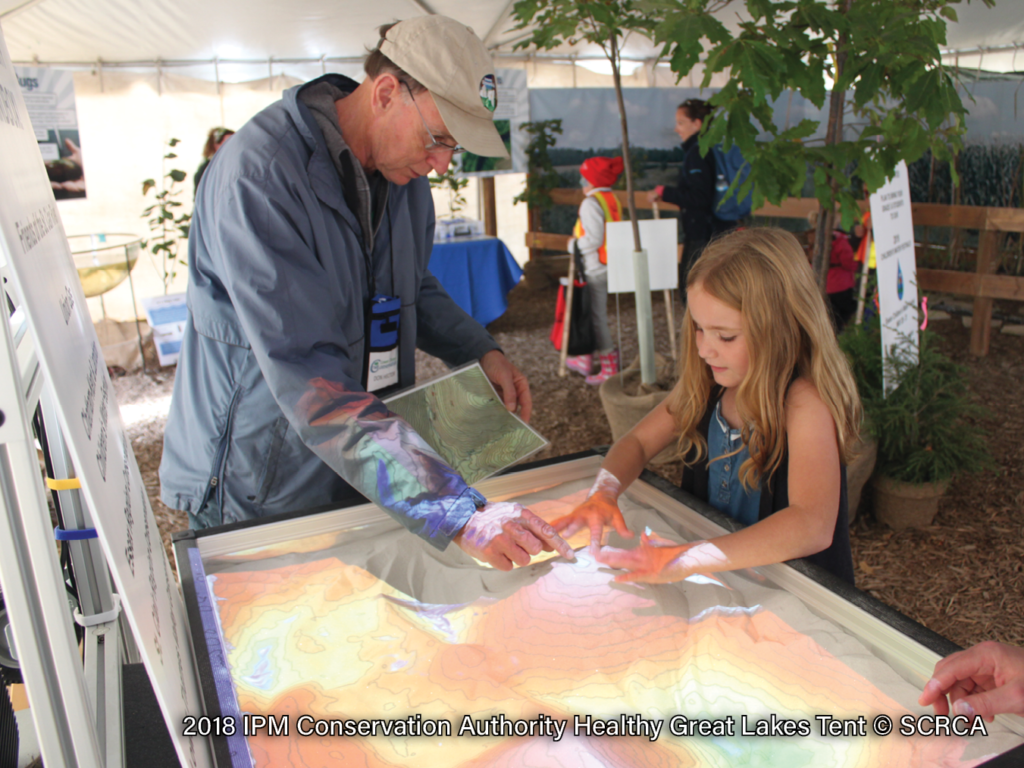
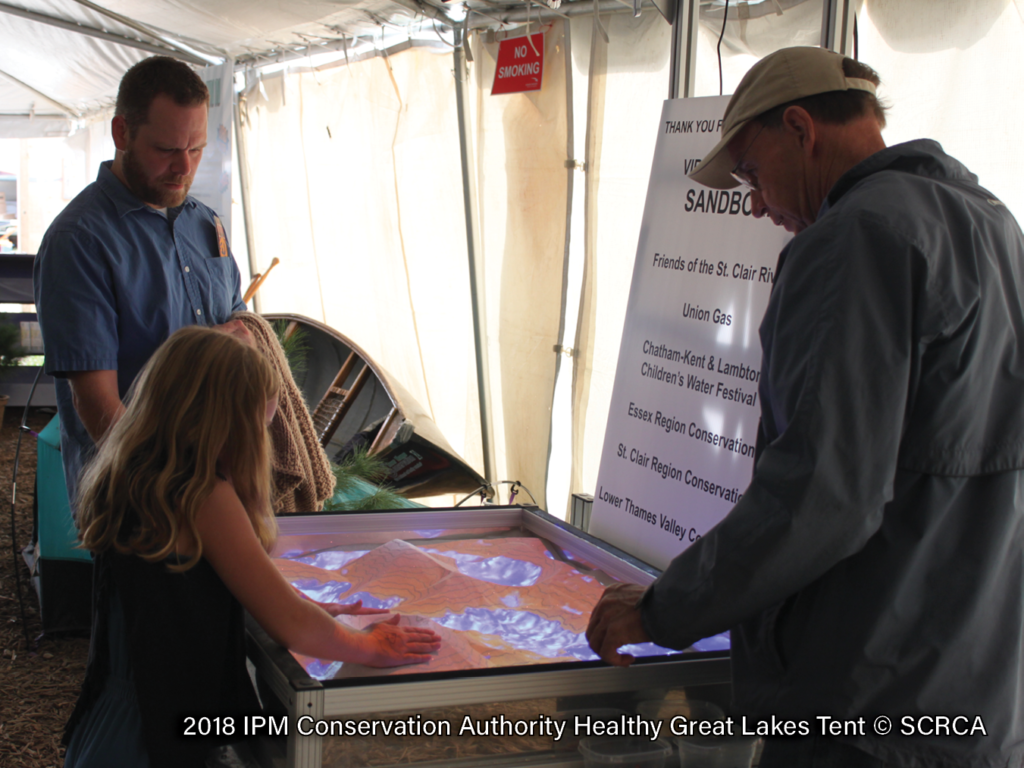
An interactive Virtual Reality Sandbox was used to educate visitors on watersheds and on how water flows across the landscape as well as pollution in overland runoff; erosion; landforms; and flooding hazards. The VR Sandbox works by projecting contour lines on the sand displaying the different elevations, which change as the sand is moved around to create different landforms, then rainfall can be simulated to show how the water moves across these landforms. The VR Sandbox was purchased with funding support from all three Conservation Authorities; the Friends of the St. Clair River; the Chatham-Kent and Lambton Children’s Water Festival; and Union Gas.