

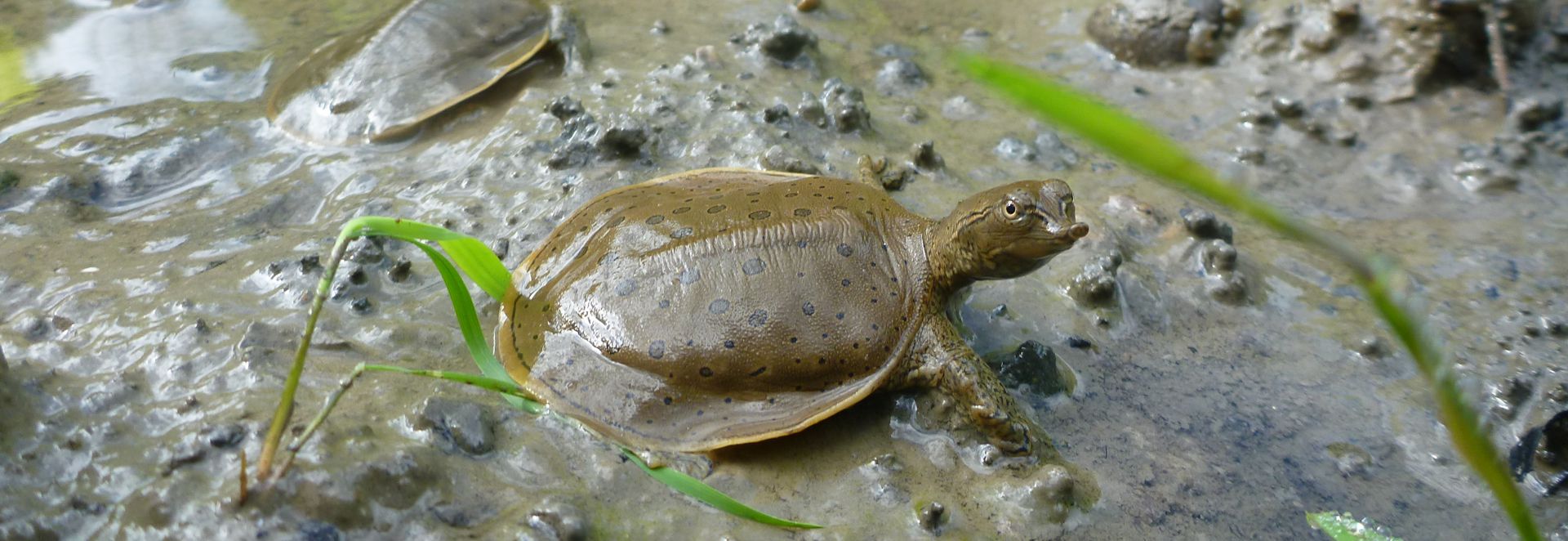
Turtles at Risk
All eight of Ontario’s native turtles are listed as species at risk. Turtles have long life spans with some species reaching up to 100 years. The loss of just a few adults can have a big impact on a local population as turtles are slow growing, have a late age of maturity (15-20 years in some species) and a slow rate of reproduction. This makes the turtle populations less resilient to threats including habitat loss, road mortalities, and egg predators. Less than 1 in 100 turtle eggs hatch and make it to adulthood.
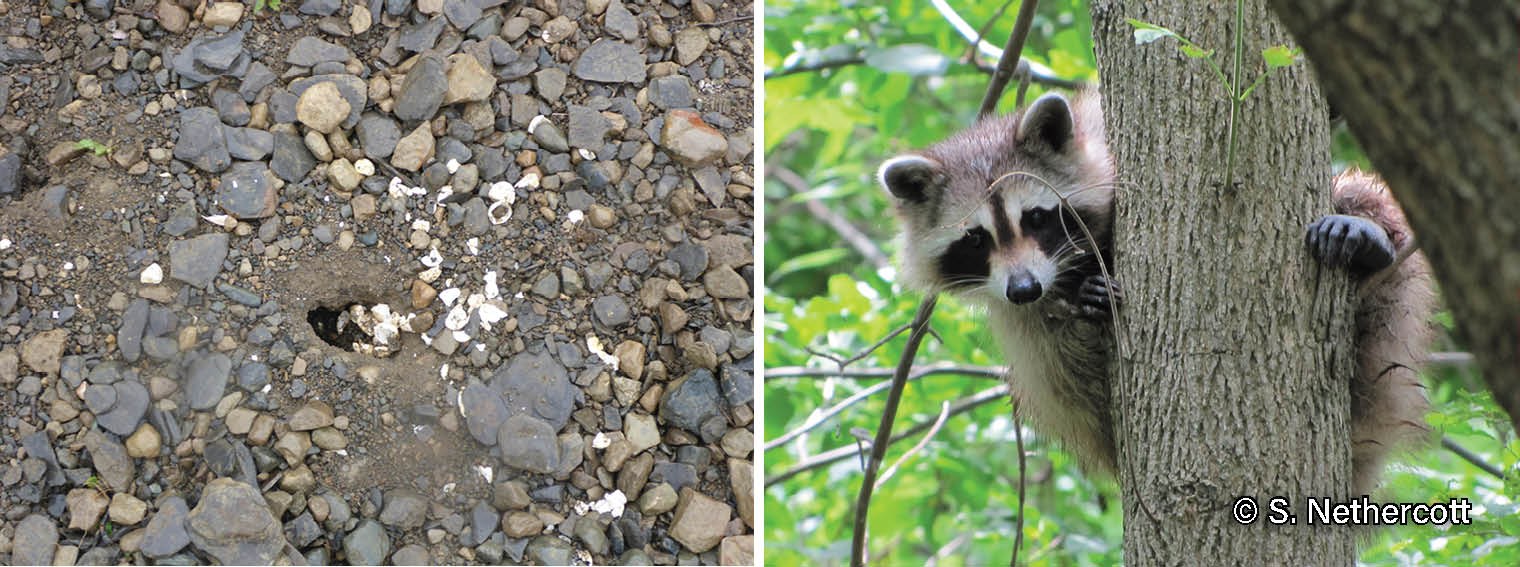
On the left is a photo of a turtle nest that was dug up and eaten by an egg predator, all that remains are empty eggshells scattered around the nesting site. Growing populations of egg predators like racoons (right photo), skunks, opossums, and coyotes – all species that fair well in human-impacted environments – have put increased pressure on Ontario’s turtles.
Recovery Efforts
Biologists have noted a lack of young turtles (known as “recruitment”) in the Sydenham River which is concerning to the future sustainability of these populations and the health of the watershed. To support local turtles, the St. Clair Region Conservation Authority (SCRCA) implements recovery efforts, with a focus on the endangered Spiny Softshell turtle. Efforts have included turtle population and habitat surveys, the creation of suitable nesting habitat, and a Captive Hatch and Release Program.
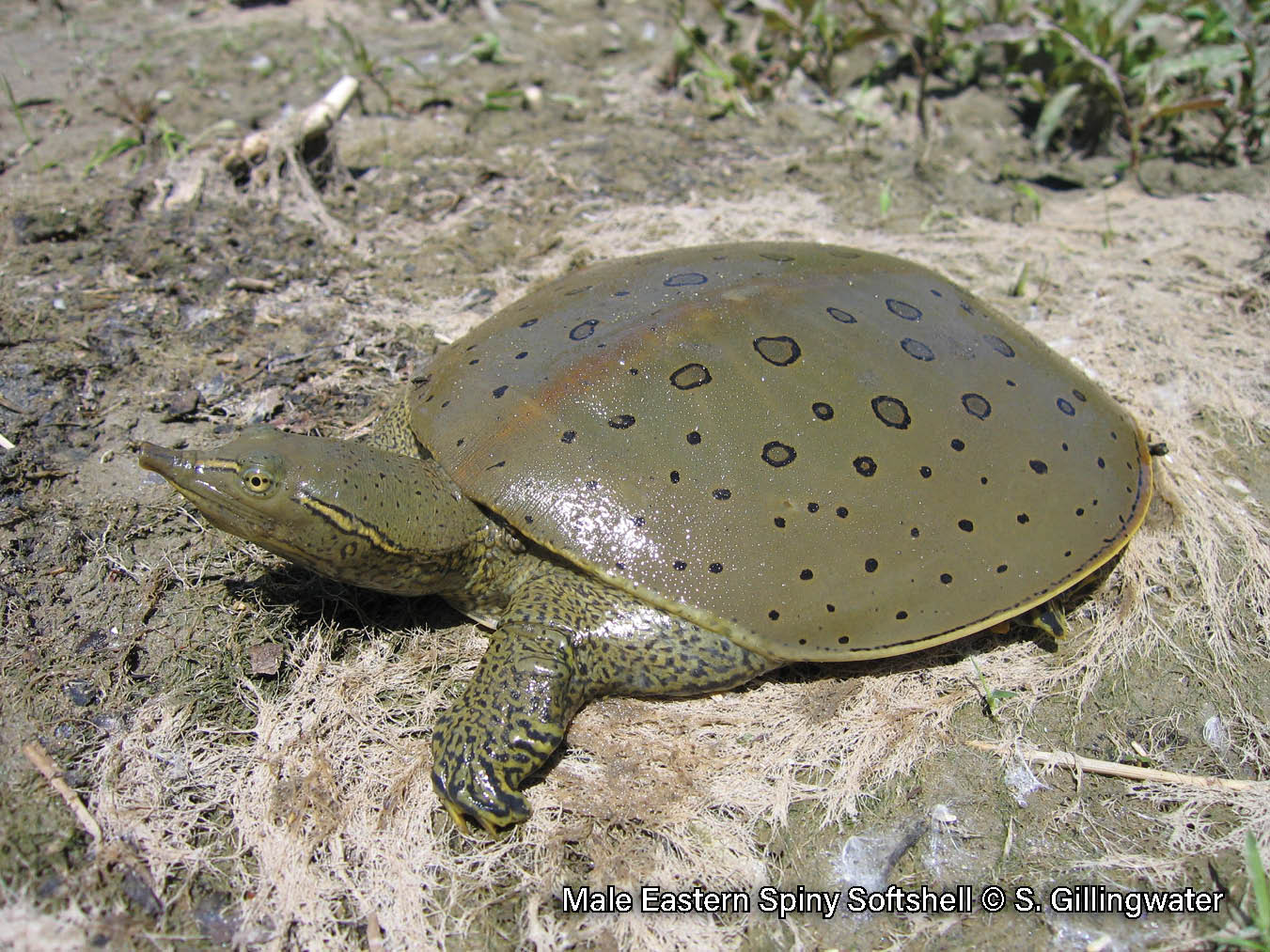
The endangered Eastern Spiny Softshell Turtle is the only species of leather-back turtle in Canada.
Supporting Populations of Turtles at Risk
The SCRCA’s Captive Hatch and Release Program rescues nests that are under imminent threat. This helps turtles at risk to get past some of the first hurdles that prevent turtles from reaching adulthood, including a lack of suitable nesting habitat, flooding, and egg predation.
Throughout the nesting season, biologists monitor for and receive calls about potential nesting sites and any eggs found to be under imminent threat are collected. The SCRCA has special permits to complete this work and partner with the Salthaven Wildlife Rehabilitation and Education Centre and Upper Thames River Conservation Authority to incubate the eggs.
Once hatched, the baby turtles are kept for a few days of observation to ensure they are healthy. As soon as the hatchlings are given the go ahead, they are returned to the original nesting site where they were found and released back into the wild.
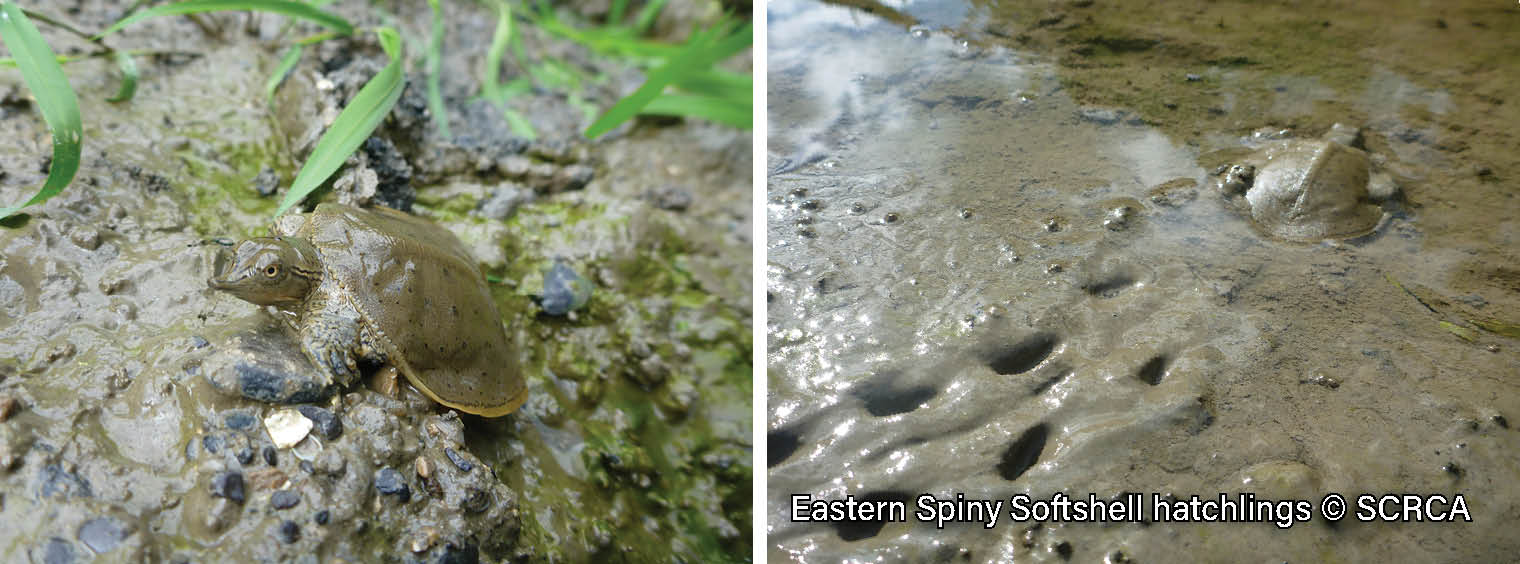
Spiny Softshell hatchlings are released at their original nest site