


Turtles’ Lives are on the Line
March 15, 2022 | SCRCA Biology Team
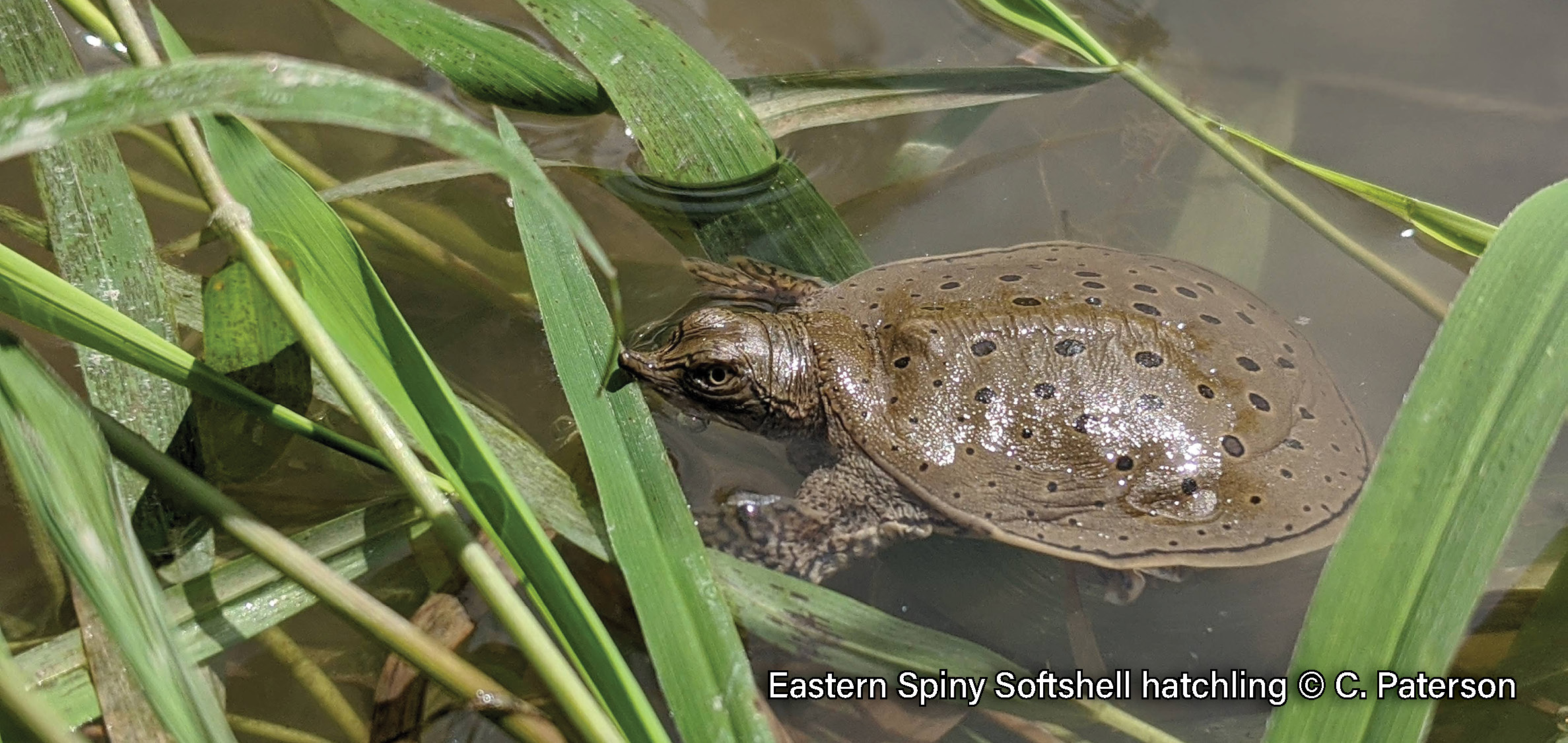
Spiny Softshell Turtles are just one of our turtle species that are endangered here in Ontario and all eight of our native turtles are considered Species at Risk.
During their field work, biologists sometimes come across turtles in distress. On one such occasion, our partners at the Upper Thames River Conservation Authority (UTRCA) encountered a female Spiny Softshell turtle that was acting strange. These shy turtles are very skittish and often dash to the water as soon as they see people but she just sat on the shore. It became clear why upon closer inspection – she had fishing line hanging out of her mouth and a very swollen cheek.
Spiny Softshell Turtles lack a hard shell so if they are unable to get away, they will try to bite to defend themselves when they feel threatened. In this situation, the biologists would normally have the turtle bite onto a stick in order to get their mouth open then, if possible, try to gently remove the fishing hook with pliers. Sadly, this girl had the fishing hook far down her throat, so the biologists carefully packed her up and brought her to a veterinarian that was qualified to work with reptiles.
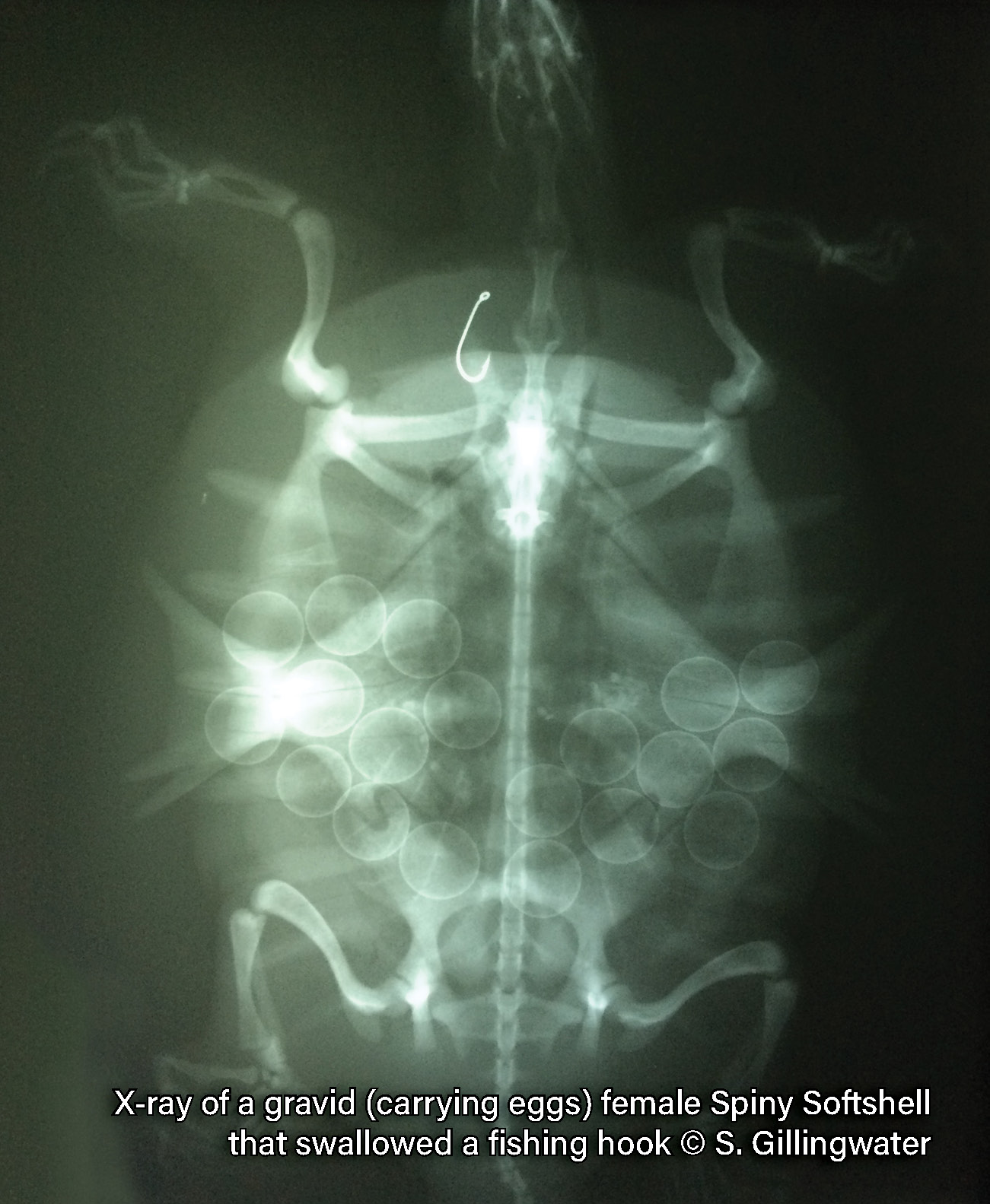
The vet found that she had a bad infection from swallowing the fishing hook and from having the fishing line rubbing and catching at her throat and mouth. The vet took this x-ray, which confirmed that the Spiny Softshell Turtle was pregnant (gravid) and that the fishing hook was very far down her throat.
If you’ve ever been fishing, you likely know how much it hurts to get a fishing hook in your finger. Imagine the pain of getting one stuck in your mouth or throat!
After treatment, the turtle was released back into the wild where she was originally found, able to return to her life and lay her eggs.
Over the years, a number of turtles—including multiple Spiny Softshell Turtles—have been found with swallowed hooks in Ontario. For the ones found alive, treatment usually involves surgery and a course of antibiotics.
What can you do?
Anglers can avoid accidentally hooking a turtle by steering clear of shoreline areas where turtles are basking or nesting, pausing fishing if a turtle is spotted until they leave the area, and cleaning up any snagged hooks or lines.
If a turtle does get hooked on your line, do not panic. Follow these instructions:

If the turtle requires medical attention, contact the Ontario Turtle Conservation Centre (they provide medical care at no charge and will help transport turtles from anywhere in Ontario).
We also ask anglers and nature enthusiasts alike to watch out for turtles that may be caught in this situation. Turtles take many years to reach maturity and even longer to become fully grown. On top of this, most of the young don’t make it to adulthood meaning that every one of these turtles is important to their population. By making the effort to remove fishing hooks from turtles or calling the Ontario Turtle Conservation Centre for assistance, you can make a difference to the survival and recovery of these Species at Risk.
Additional Resources:
- Ontario Turtle Conservation Centre
- Canadian Wildlife Federation poster on turtles and fishing hooks
- Canadian Herpetological Society – Fish Hooks